Back to Network

















4
Shared Docs
3
Same-Page
7 / 4
Mentions
Document Mentions (4 shared documents)
3 mentions1 same-page
Page ?Same page
the very few countries in the world whose citizens would prefer a Romney victory, perhaps as a result of tensions between Obama and Prime Minister Benjamin Netanyahu over the President's 2009 efforts to restart the peace process with the Palestinians. Comments made by Romney in a secretly recorded address to don
at or baffled by the odious audacity of psychopaths and pathological liars like Ayalon, his boss Avigdor Lieberman or, indeed, their Prime Minister Netanyahu. Needless to say, these people, like most other Israeli leaders, adopt mendacity — even in its most brazen form — as their modus operandi. I know m
unding for science and technology, a public-education system that was the envy of the world and generous immigration policies." Two Hostile Camps Zakaria's words resonate with the questions that have dominated this long election year, and have long sharply divided the country into two hostile camps,
3 mentions1 same-page
Page ?Same page
ee of those programs. On ABC World News TonightVi (5/20, lead story, 4:50, 5.47M), David Muir said President Biden spoke with Israeli Prime Minister Benjamin Netanyahu before the announcement, and later appeared "before the cameras, saying he supported Israel's right to defend itself, but also saying Israelis and
id it unanimously approved an Egyptian initiative for Israel and Hamas to simultaneously stop their attacks." Biden: "My conversation with President Netanyahu, I commended him for the decision to bring the current hostilities to a close." The AP (5/20) reports Biden "hailed the cease-fire in the fighting
ia writes in the Washington Post (5/20, 10.52M) that violence between the Israelis and Palestinians "can only be resolved through moral persuasion." Zakaria describes "a seismic shift that has taken place over the past few decades," which has left Israel as "the superpower of the Middle East." While "Is
2 mentions1 same-page
Page ?Same page
build a bomb for at least a decade, maybe longer. Still, there are two questions that a final deal would have to answer concretely. EFTA00860493 Netanyahu's unlikely allies in opposing the deal — the rulers of Saudi Arabia, Egypt, and other Sunni Muslim oligarchies — simply don't want a deal at all. Th
Islam legitimacy. And as Fareed Zakaria wrote in a recent op-ed in The Washington Post this is - An ideological war America must watch, not fight. Zakaria pointed out that "our" image of an ideological war comes from the Cold War, a titanic struggle between opposing worldviews. But the Cold War was so
Sponsored
Page HOUSE_OVERSIGHT_030063
el's political compass is guided to some degree by its sense of the American mood. That mood, beginning in the White House, is of growing impatience. Benjamin Netanyahu, the Israeli prime minister, will address Congress this month. He has responded to tumultuous events in the Middle East with vapid tactical sound bit
Page: HOUSE_OVERSIGHT_030063 →e White House, is of growing impatience. Benjamin Netanyahu, the Israeli prime minister, will address Congres
Page: HOUSE_OVERSIGHT_030063 →Page HOUSE_OVERSIGHT_030071
e beyond it. The king himself has expressed frustration many times over this, both in domestic speeches and in international appearances. When Fareed Zakaria asked him about the future of reform in Jordan in a World Economic Forum debate aired on CNN on February 7, 2010, the king volunteered the following
Page: HOUSE_OVERSIGHT_030071 →Sponsored
Mutual Connections (239)
Entities connected to both Benjamin Netanyahu and Zakaria
Barack Obama
PERSON272 w/ Benjamin·8 w/ Zakaria
Jeffrey Epstein
PERSON256 w/ Benjamin·4 w/ Zakaria
George W. Bush
PERSON214 w/ Benjamin·7 w/ Zakaria
United States
LOCATION203 w/ Benjamin·4 w/ Zakaria
Bill Clinton
PERSON199 w/ Benjamin·5 w/ Zakaria
Donald Trump
PERSON176 w/ Benjamin·5 w/ Zakaria
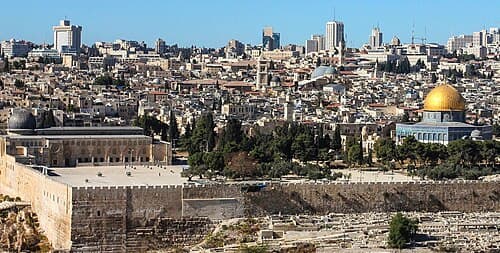
Jerusalem
LOCATION160 w/ Benjamin·3 w/ Zakaria
Bashar al-Assad
PERSON154 w/ Benjamin·3 w/ Zakaria
Joe Biden
PERSON151 w/ Benjamin·4 w/ Zakaria
Tehran
LOCATION145 w/ Benjamin·3 w/ Zakaria
Lebanon
LOCATION146 w/ Benjamin·2 w/ Zakaria
Marc Rich
PERSON133 w/ Benjamin·5 w/ Zakaria
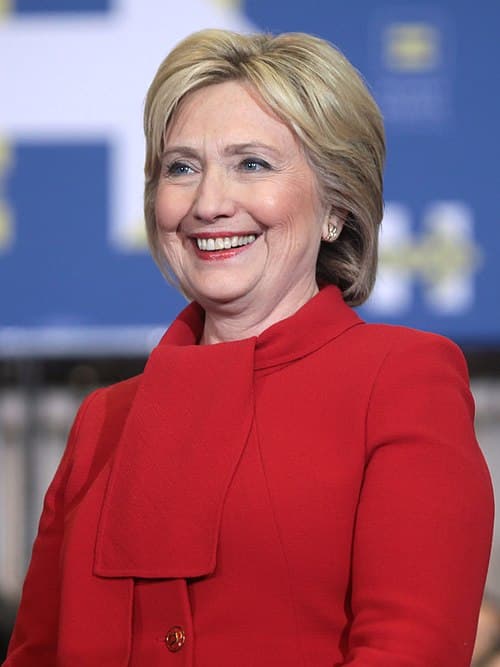
Hillary Clinton
PERSON130 w/ Benjamin·3 w/ Zakaria
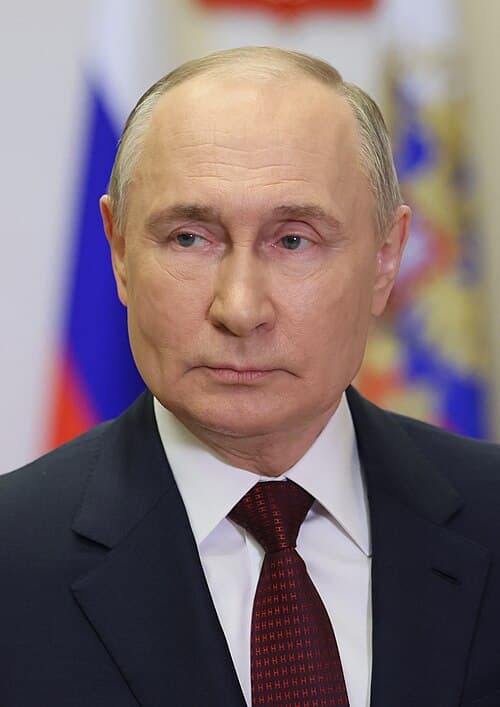
Vladimir Putin
PERSON126 w/ Benjamin·3 w/ Zakaria
Prince Andrew
PERSON126 w/ Benjamin·2 w/ Zakaria
LB
Leon Black
PERSON123 w/ Benjamin·4 w/ Zakaria
Prince Charles
PERSON121 w/ Benjamin·5 w/ Zakaria
Middle East
LOCATION115 w/ Benjamin·2 w/ Zakaria
Department of Justice
ORGANIZATION114 w/ Benjamin·3 w/ Zakaria
Cairo
LOCATION113 w/ Benjamin·2 w/ Zakaria