Back to Network















7
Shared Docs
4
Same-Page
17 / 7
Mentions
Document Mentions (7 shared documents)
4 mentions1 same-page
Page ?Same page
s, has provoked unprecedented criticism of US policy from two of its strongest Middle East allies: Israel and Saudi Arabia. Israeli Prime Minister Binyamin Netanyahu has called on his ministers and his supporters in the US to lobby Congress to oppose the agreement. Meanwhile, Saudi officials have accused the US
Benjamin Netanyahu, who traveled to Moscow to lobby the Kremlin to stop the Geneva deal from going forward. This may have been wishful thinking on Netanyahu's part, but he evidently thought it worth a try. "The Russians have already surprised us in the past," one senior Israeli official told YNet, "and
it in him. We all envy him." When Putin traveled to Israel in June 2012, he was the guest of honor at an unveiling ceremony in the coastal city of Netanya. What was unveiled was the first monument to the Red Army ever to be constructed since the fall of the Soviet Union. This memorial, which underscor
n welcome this development. Whether by openly endorsing Russian rhetoric about an end of the Cold War and the Great Game, as President Obama did at the U.N. General Assembly in September, or by coining new euphemisms for a reluctance to involve itself in regional wars ("leading from behind"), the current administration
4 mentions1 same-page
Page ?Same page
to be -- owned by the left. From Israeli premiers Menachem Begin to Yitzhak Rabin (breaker of bones during the first Intifada) to Ariel Sharon and Benjamin Netanyahu, the story of the Arab-Israeli negotiations is one of tough guys whose calculations were reshaped by necessity and self-interest, and who could de
els for Gaza's banks and support for Gaza's infrastructure. Jaabari had street cred and delivered for four years -- Abbas has little and couldn't. Netanyahu's Comfort Zone Bibi is who he is. Right now, he's a legitimate Israeli leader who may well be the only political figure capable of leading the cou
support for Gaza's infrastructure. Jaabari had street cred and delivered for four years -- Abbas has little and couldn't. Netanyahu's Comfort Zone Bibi is who he is. Right now, he's a legitimate Israeli leader who may well be the only political figure capable of leading the country. Whether he can
again on center stage. The Palestinian president is nowhere to be found. For all the attention paid to Abbas's statehood initiative this month at the U.N. General Assembly, it seems truly irrelevant now. And once again, this is confirmation of the fact that events on the ground determine what's up and down in Israel a
3 mentions1 same-page
Page ?Same page
ons with the unfreezing of certain Iranian assets held in Western banks. This would cause an uproar among hardliners -- the Israeli prime minister, Benjamin Netanyahu, would certainly be unhappy -- but the White House could state, truthfully, that it has not tampered with the sanctions. A one-time transfer of cas
n nuclear apparatus -- 15 or 20 or 30 different facilities, spread throughout the country -- would make it much harder for Obama (to say nothing of Netanyahu) to credibly threaten military force. It is the all-options-are-on-the-table threat that, with sanctions, is bringing Iran to the table. Al Jazeer
bama's reluctance to intervene in Syria has occasioned yet another round of soul-searching on America's role in the world. His reflective speech at the U.N. General Assembly has led commentators to wonder whether the United States remains willing to play its traditional and indispensable role in maintaining world order.
Sponsored
3 mentions1 same-page
Page ?Same page
t, and, in any case, continue to insist strongly that Iran is not on the verge of achieving a weapon. It is impossible to know what Prime Minister Benjamin Netanyahu is planning or why he has ignored American entreaties to give diplomacy a reasonable chance. There is, however, persistent speculation in Israel th
nning or why he has ignored American entreaties to give diplomacy a reasonable chance. There is, however, persistent speculation in Israel that Mr. Netanyahu wants to attack in the coming weeks in the belief that President Obama will be forced to support the decision because of his political needs in hi
rests. This September, New York will be forced once again to host Iran's President Mahmoud Ahmadinejad, who will undoubtedly use his speech before the U.N. General Assembly to spew anti- U.S. and anti-Semitic rhetoric. It is time for individual countries to prohibit international institutions from ignoring their own pr
Page HOUSE_OVERSIGHT_023517
1 26 May, 2011 Article 1. The Washington Post Where Netanyahu fails himself and Israel Fareed Zakaria Article 2. NYT Parties See Obama’s Israel Policy as Wedge for 2012 Jackie Calmes and Helene Cooper Antcle
Page: HOUSE_OVERSIGHT_023517 →Fareed Zakaria Article 2. NYT Parties See Obama’s Israel Policy as Wedge for 2012 Jackie Calmes and Helene Cooper Antcle S- | Foreign Policy Hey, Bibi: Calling Hamas the al Qaeda of Palestine isn't just wrong, it's stupid Daniel Byman Article 4. Bloomberg Why Palestinians Have Time on Their Side J
Page: HOUSE_OVERSIGHT_023517 →Page HOUSE_OVERSIGHT_023518
ngealing in Washington that President Obama was wrong to demarcate a shift in American policy toward Israel last week. In fact, it was Prime Minister Binyamin Netanyahu who broke with the past — in one of a series of diversions and obstacles Netanyahu has come up with anytime he is pressed. He wins in the short run,
Page: HOUSE_OVERSIGHT_023518 →Page HOUSE_OVERSIGHT_023519
’s future. The newsworthy, and real, shift in U.S. policy was Obama publicly condemning the Palestinian strategy to seek recognition as a state from the U.N. General Assembly in September. He also questioned the accord between Fatah and Hamas. Obama endorsed the idea of a demilitarized Palestinian state, a demand Israel ha
Page: HOUSE_OVERSIGHT_023519 →Page HOUSE_OVERSIGHT_031957
Obama's relationship with Prime Minister Benjamin Netanyahu has seemed very strained at times. In a recently
Page: HOUSE_OVERSIGHT_031957 →, the administration has confirmed that it will veto Palestine's statehood bid in the U.N. Security Council. Obama's relationship with Prime Minister Benjamin Netanyahu has seemed very strained at times. In a recently overheard conversation he told French President Nicolas Sarkozy, "You're fed up with him? I have to
Page: HOUSE_OVERSIGHT_031957 →Page HOUSE_OVERSIGHT_031958
istration confirmed a $5.8 billion package of arms sales for Taiwan that provoked a predictable Chinese backlash. Foreign aid: In his 2010 address to the U.N. General Assembly, Obama announced an overhaul of U.S. foreign aid policies, which he vowed will place them at the center of U.S. foreign policy. In the speech he call
Page: HOUSE_OVERSIGHT_031958 →Sponsored
Page HOUSE_OVERSIGHT_031917
s. HOUSE_OVERSIGHT_031916 --- PAGE BREAK --- 5 Article 2. Strattor Israeli-Arab Crisis Approaching George Friedman August 22, 2011 -- In September, the U.N. General Assembly will vote on whether to recognize Palestine as an independent and sovereign state with full rights in the United Nations. In many ways, this would ap
Page: HOUSE_OVERSIGHT_031917 →Page HOUSE_OVERSIGHT_031934
ent effect. A preemptive Israeli military strike to destroy the weapons does not appear technically feasible: Even if Israeli Prime Minister Benjamin Netanyahu were ready to change the status quo, Assad is believed to have stored bulk chemical agents and filled (or quickly filled) shells and bombs in undergr
Page: HOUSE_OVERSIGHT_031934 →Sponsored
Mutual Connections (1,049)
Entities connected to both Benjamin Netanyahu and the U.N. General Assembly
Barack Obama
PERSON272 w/ Benjamin·16 w/ the
Jeffrey Epstein
PERSON256 w/ Benjamin·10 w/ the
George W. Bush
PERSON214 w/ Benjamin·13 w/ the
United States
LOCATION203 w/ Benjamin·17 w/ the
Bill Clinton
PERSON199 w/ Benjamin·16 w/ the
Donald Trump
PERSON176 w/ Benjamin·11 w/ the
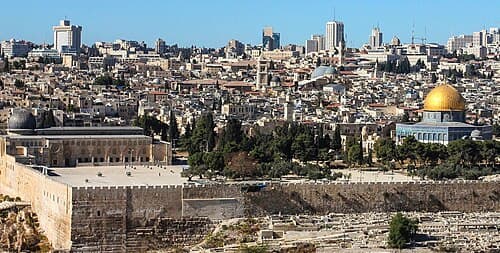
Jerusalem
LOCATION160 w/ Benjamin·4 w/ the
Bashar al-Assad
PERSON154 w/ Benjamin·7 w/ the
Joe Biden
PERSON151 w/ Benjamin·9 w/ the
Lebanon
LOCATION146 w/ Benjamin·13 w/ the
Tehran
LOCATION145 w/ Benjamin·13 w/ the
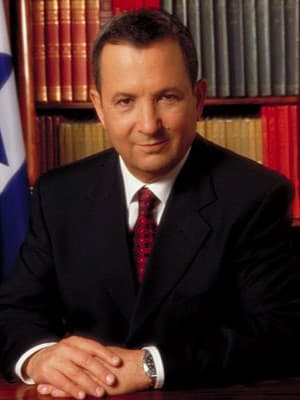
Ehud Barak
PERSON136 w/ Benjamin·3 w/ the
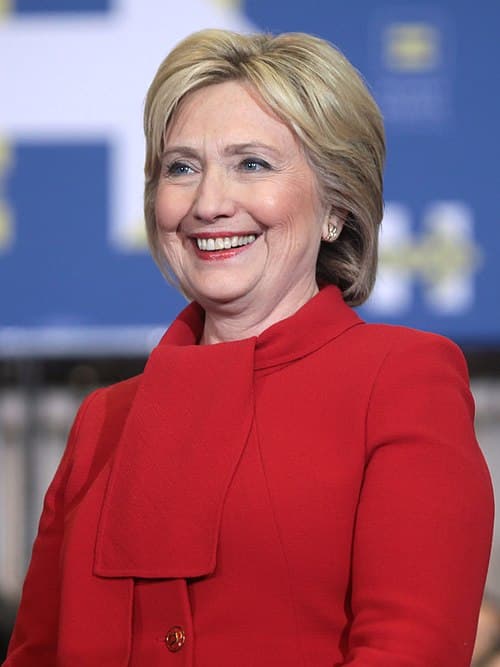
Hillary Clinton
PERSON130 w/ Benjamin·7 w/ the
Marc Rich
PERSON133 w/ Benjamin·3 w/ the
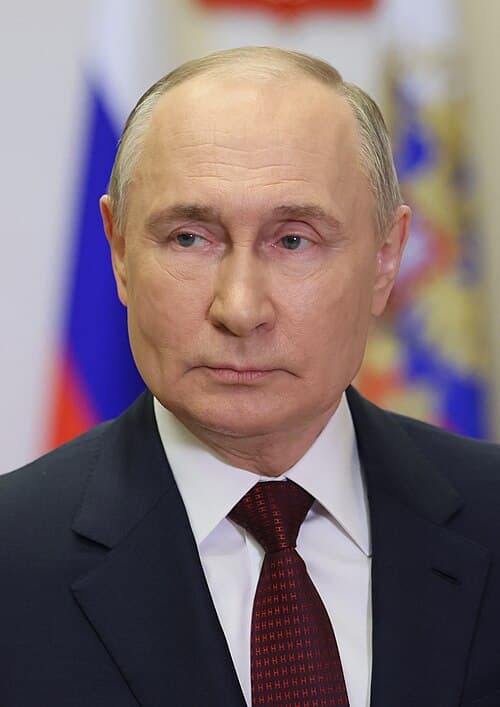
Vladimir Putin
PERSON126 w/ Benjamin·9 w/ the
Prince Andrew
PERSON126 w/ Benjamin·7 w/ the
LB
Leon Black
PERSON123 w/ Benjamin·9 w/ the
Prince Charles
PERSON121 w/ Benjamin·6 w/ the
Middle East
LOCATION115 w/ Benjamin·10 w/ the
Department of Justice
ORGANIZATION114 w/ Benjamin·10 w/ the