Back to Network















7
Shared Docs
7
Same-Page
12 / 7
Mentions
Document Mentions (7 shared documents)
3 mentions1 same-page
Page ?Same page
rize winners, are meeting in the U.S. Virgin Islands to debate the structure of the universe. Nobel prize winners Gerardus 't Hoeft, David Gross and Frank Wilczek, and experimental and theoretical physics pioneer Stephen Hawking are among the minds that have converged in the island of St. Thomas to discuss so
ions, such as the existence of black holes and alternate dimensions. "This is a remarkable group, as far as the level of people who are here," said Wilczek, who won the 2004 Nobel Prize in physics with Gross and H. David Politzer for their explanation of the force that binds particles inside the atomic
w to represent, organize, and use much of commonsense knowledge, let alone build a machine that could learn all of that automatically on its own. As John McCarthy noted long ago: "in order for a program to be capable of learning something, it must first be able to represent that knowledge." There arc very few
3 mentions1 same-page
Page ?Same page
Prize winners, are meeting in the U.S. Virgin Islands to debate the structure of the universe. Nobel prize winners Gerardo 't Hooft, David Gross and Frank Wilczek, and experimental and theoretical physics pioneer Stephen Hawking are among the minds that have converged in the island of St Thomas to discuss som
ions, such as the existence of black holes and alternate dimensions. "This is a remarkable group, as far as the level of people who arc here," said Wilczek, who won the 2004 Nobel Prize in physics with Gross and H. David Politzer for their explanation of the force that binds particles inside the atomic
w to represent, organize, and use much of commonsense knowledge, let alone build a machine that could learn all of that automatically on its own. As John McCarthy noted long ago: "in order for a program to be capable of learning something, it must first be able to represent that knowledge? There are very few
3 mentions1 same-page
Page ?Same page
AI—from Alison Gopnik and David Deutsch to Frank Wilczek and Stephen Wolfram— Deep Thinking 1s an ideal in
ry of Brockman’s profound engagement with the most important scientific minds who have been thinking about AI—from Alison Gopnik and David Deutsch to Frank Wilczek and Stephen Wolfram— Deep Thinking 1s an ideal introduction to the landscape of crucial issues AI presents. The collision between opposing perspecti
eagues, including John von Neumann and Claude Shannon, who were interested in the commercialization of the new technologies. Second, computer pioneer John McCarthy disliked Wiener and refused to use Wiener’s term “Cybernetics.” McCarthy, in turn, coined the term “artificial intelligence” and became a founding fa
Sponsored
3 mentions1 same-page
Page ?Same page
AI—from Alison Gopnik and David Deutsch to Frank Wilczek and Stephen Wolfram— Deep Thinking 1s an ideal in
ry of Brockman’s profound engagement with the most important scientific minds who have been thinking about AI—from Alison Gopnik and David Deutsch to Frank Wilczek and Stephen Wolfram— Deep Thinking 1s an ideal introduction to the landscape of crucial issues AI presents. The collision between opposing perspecti
eagues, including John von Neumann and Claude Shannon, who were interested in the commercialization of the new technologies. Second, computer pioneer John McCarthy disliked Wiener and refused to use Wiener’s term “Cybernetics.” McCarthy, in turn, coined the term “artificial intelligence” and became a founding fa
3 mentions1 same-page
Page ?Same page
rize winners, are meeting in the U.S. Virgin Islands to debate the structure of the universe. Nobel prize winners Gerardus 't Hooft, David Gross and Frank Wilczek, and experimental and theoretical physics pioneer Stephen Hawking are among the minds that have converged in the island of St. Thomas to discuss so
ions, such as the existence of black holes and alternate dimensions. "This is a remarkable group, as far as the level of people who are here," said Wilczek, who won the 2004 Nobel Prize in physics with Gross and H. David Politzer for their explanation of the force that binds particles inside the atomic
w to represent, organize, and use much of commonsense knowledge, let alone build a machine that could learn all of that automatically on its own. As John McCarthy noted long ago: "in order for a program to be capable of learning something, it must first be able to represent that knowledge." There are very few
2 mentions1 same-page
Page ?Same page
ied to children and the disabled.*° What prevents extension to other animals, organoids, machines, and hybrids? As we (e.g., Hawking, Musk, Tallinn, Wilczek, Tegmark) have promoted bans on “autonomous weapons,” we have demonized one type of “dumb” machine, while other machines—for instance, those composed
achines should not replace Homo in situations requiring respect, dignity, or care, while others (author Pamela McCorduck and computer scientists like John McCarthy and Bill Hibbard) replied that machines can be more impartial, calm, and consistent and less abusive or mischievous than people in such positions. E
Sponsored
2 mentions1 same-page
Page ?Same page
ied to children and the disabled.*° What prevents extension to other animals, organoids, machines, and hybrids? As we (e.g., Hawking, Musk, Tallinn, Wilczek, Tegmark) have promoted bans on “autonomous weapons,” we have demonized one type of “dumb” machine, while other machines—for instance, those composed
achines should not replace Homo in situations requiring respect, dignity, or care, while others (author Pamela McCorduck and computer scientists like John McCarthy and Bill Hibbard) replied that machines can be more impartial, calm, and consistent and less abusive or mischievous than people in such positions. E
Sponsored
Mutual Connections (1,229)
Entities connected to both Frank Wilczek and Joseph McCarthy
Jeffrey Epstein
PERSON100 w/ Frank·117 w/ Joseph
Prince Andrew
PERSON41 w/ Frank·114 w/ Joseph
MW
Martin Weinberg
PERSON37 w/ Frank·102 w/ Joseph
Donald Trump
PERSON21 w/ Frank·114 w/ Joseph
Marc Rich
PERSON20 w/ Frank·113 w/ Joseph
LB
Leon Black
PERSON12 w/ Frank·112 w/ Joseph
Jared Kushner
PERSON8 w/ Frank·105 w/ Joseph
Alexander Acosta
PERSON5 w/ Frank·107 w/ Joseph
J. Robert Oppenheimer
PERSON4 w/ Frank·106 w/ Joseph
Steve Bannon
PERSON3 w/ Frank·107 w/ Joseph
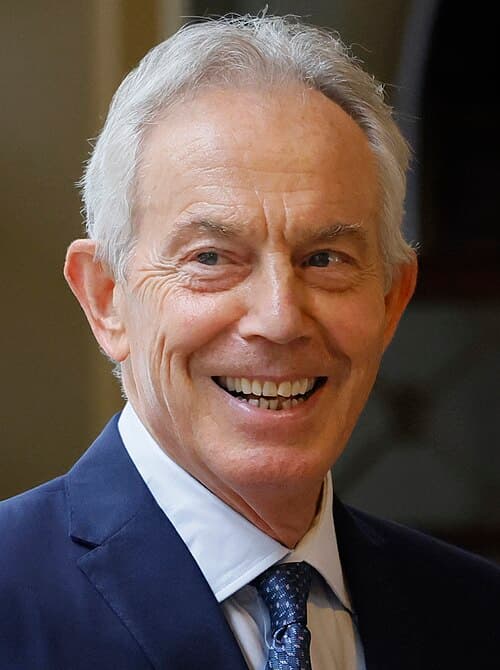
Tony Blair
PERSON3 w/ Frank·106 w/ Joseph
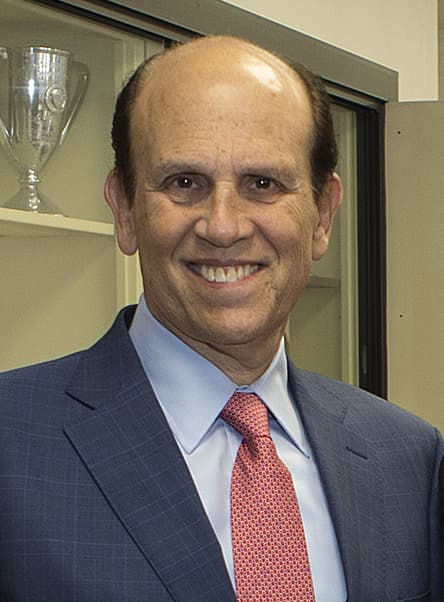
Michael Milken
PERSON3 w/ Frank·104 w/ Joseph
Michael Cohen
PERSON2 w/ Frank·105 w/ Joseph
Bear Stearns
ORGANIZATION4 w/ Frank·103 w/ Joseph
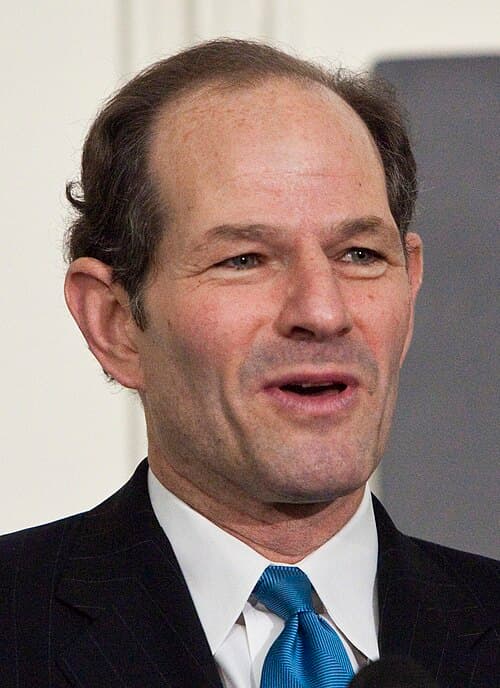
Eliot Spitzer
PERSON4 w/ Frank·101 w/ Joseph
Lawrence Krauss
PERSON79 w/ Frank·9 w/ Joseph
George W. Bush
PERSON25 w/ Frank·52 w/ Joseph
Stephen Hawking
PERSON63 w/ Frank·11 w/ Joseph
Justin Trudeau
PERSON5 w/ Frank·44 w/ Joseph
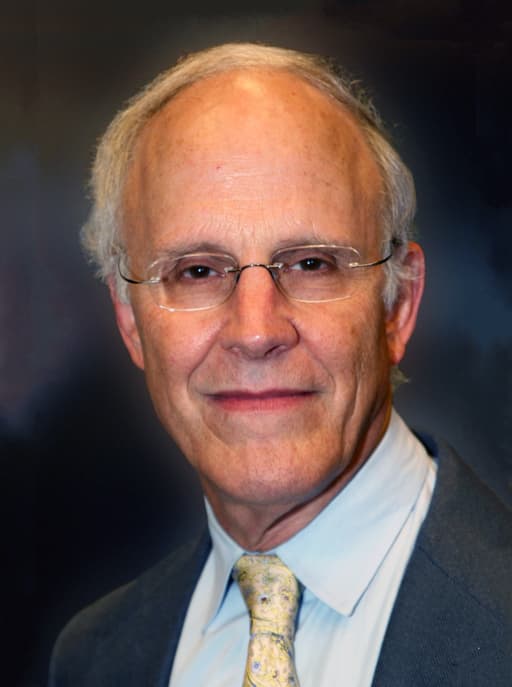
David Gross
PERSON44 w/ Frank·3 w/ Joseph