Back to Network


















4
Shared Docs
4
Same-Page
4 / 4
Mentions
Document Mentions (4 shared documents)
2 mentions1 same-page
Page ?Same page
inium 106 Garden of Eden 339 gate parity point 18 Gates, Bill 236 gears 42 Geiger counter 326 geometry 17
and Peace 129 Watson computer 8, 207 Watson Research Laboratory 5 wave interference 320 wavelength 102 weather predicting 168, 172 Wechsler Test 27 Weizenbaum, Joseph 25 West, Mae 78 Whitehead, Alfred North 195 Who Wants to be a Millionaire? 347 Wikipedia 8, 129, 231 Wilder, Billy 128 Wiles, Andrew xi, 75,
2 mentions1 same-page
Page ?Same page
ing you again and again ata child’s game. Hillis was an artist as much as an inventor - one reason he’d not become Bill Gates or Steve Jobs. (And why Gates and Jobs maintained a consistent, admiring respect for him.) He’d once spent a decade at Disney designing rides or thinking up new dreams as a kind o
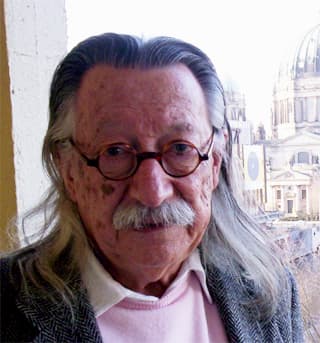
systems we are using. In 1965 the MIT computer scientist Joseph Weizenbaum found himself, somewhat unexpectedly, considering this same problem. 175 Weizenbaum had written a primitive computer program to perform what is now known as natural language processing, essentially a bit of code designed to translate
2 mentions1 same-page
Page ?Same page
ion when such a development might occur.” e You're just a Luddite. It’s an odd definition of Luddite that includes Turing, Wiener, Minsky, Musk, and Gates, who rank among the most prominent contributors to technological progress in the 20th and 21st centuries.* Furthermore, the epithet represents a comp
Age is also the Dysinformation Age. What can we do? We need to rethink our priorities with the help of the passionate but flawed analyses of Wiener, Weizenbaum, and the other serious critics of our technophilia. A key phrase, it seems to me, is Wiener’s almost offhand observation, above, that “these machines
Sponsored
2 mentions1 same-page
Page ?Same page
ion when such a development might occur.” e You're just a Luddite. It’s an odd definition of Luddite that includes Turing, Wiener, Minsky, Musk, and Gates, who rank among the most prominent contributors to technological progress in the 20th and 21st centuries.* Furthermore, the epithet represents a comp
Age is also the Dysinformation Age. What can we do? We need to rethink our priorities with the help of the passionate but flawed analyses of Wiener, Weizenbaum, and the other serious critics of our technophilia. A key phrase, it seems to me, is Wiener’s almost offhand observation, above, that “these machines
Sponsored
Mutual Connections (484)
Entities connected to both Robert Gates and Weizenbaum
Jeffrey Epstein
PERSON1,667 w/ Robert·2 w/ Weizenbaum
Bill Gates
PERSON1,023 w/ Robert·3 w/ Weizenbaum
Marc Rich
PERSON379 w/ Robert·4 w/ Weizenbaum
LB
Leon Black
PERSON371 w/ Robert·5 w/ Weizenbaum
Prince Andrew
PERSON323 w/ Robert·5 w/ Weizenbaum
Woody Allen
PERSON278 w/ Robert·2 w/ Weizenbaum
Alan Dershowitz
PERSON254 w/ Robert·5 w/ Weizenbaum
Michael Cohen
PERSON244 w/ Robert·2 w/ Weizenbaum
Donald Trump
PERSON217 w/ Robert·3 w/ Weizenbaum
Ghislaine Maxwell
PERSON203 w/ Robert·3 w/ Weizenbaum
George W. Bush
PERSON199 w/ Robert·5 w/ Weizenbaum
Julie K. Brown
PERSON183 w/ Robert·4 w/ Weizenbaum
Richard Kahn
PERSON184 w/ Robert·2 w/ Weizenbaum
Joe Biden
PERSON176 w/ Robert·4 w/ Weizenbaum
Prince Charles
PERSON165 w/ Robert·3 w/ Weizenbaum
Samantha Power
PERSON157 w/ Robert·4 w/ Weizenbaum
George Mitchell
PERSON153 w/ Robert·2 w/ Weizenbaum
Stephen Hawking
PERSON135 w/ Robert·5 w/ Weizenbaum
Barack Obama
PERSON134 w/ Robert·3 w/ Weizenbaum
MF
Maria Farmer
PERSON124 w/ Robert·3 w/ Weizenbaum