Back to Network


















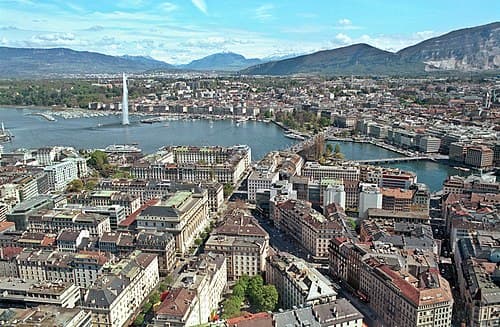
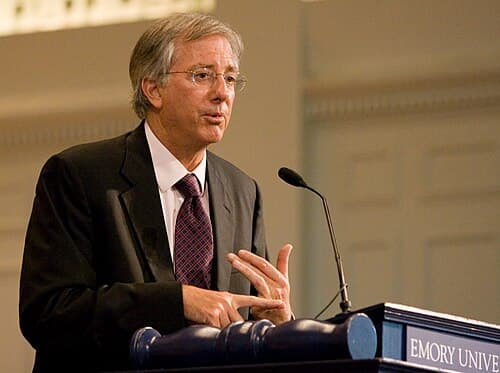
7
Shared Docs
7
Same-Page
7 / 7
Mentions
Document Mentions (7 shared documents)
2 mentions1 same-page
Page ?Same page
tive steps in order to be able to move forward," Mr. Kerry said during a visit to Morocco that had been postponed from last fall, when he rushed to Geneva to try to close a nuclear deal with Iran. With this latest round of talks at risk of collapse, Mr. Kerry faces a setback familiar to many secretar
and energy, food and water sources. I am disappointed that the Palestinians, Israelis and Americans have been unable to get beyond the old, failed Dennis Ross-style approach to diplomacy that saw the U.S. mediators tilt heavily towards Israeli demands rather than prod both sides to seek mutually acceptabl
2 mentions1 same-page
Page ?Same page
Mr. Abbas and Mr. Kerry held out hope on Tuesday night that they could still be salvaged. The agencies Mr. Abbas moved to join Tuesday included the Geneva and Vienna Conventions and those dealing with women's and children's rights. Israel has released 78 Palestinian prisoners as part of a deal to rest
ng Jonathan Pollard's release in Mideast peace talks is premature Editorial Article 3. The Washington Institute Pollard Release Seems Justified Dennis Ross Article 4. The American Interest Releasing Pollard: Don't Do It, Mr. Secretary Daniel Kurtzer Article 5. Hurriyet Turkey - Lessons from the ba
2 mentions1 same-page
Page ?Same page
tive steps in order to be able to move forward," Mr. Kerry said during a visit to Morocco that had been postponed from last fall, when he rushed to Geneva to try to close a nuclear deal with Iran. With this latest round of talks at risk of collapse, Mr. Kerry faces a setback familiar to many secretar
and energy, food and water sources. I am disappointed that the Palestinians, Israelis and Americans have been unable to get beyond the old, failed Dennis Ross-style approach to diplomacy that saw the U.S. mediators tilt heavily towards Israeli demands rather than prod both sides to seek mutually acceptabl
Sponsored
2 mentions1 same-page
Page ?Same page
uranium or monitor Iran's suspension of operations at the plant near Qum, known as Fordo. European Union and Iranian officials have already met in Geneva to prepare the agenda for the meeting in Baghdad. "You could really use the summer to have weekly, if not daily, meetings to get to the point wher
d to the momentum in Baghdad. "The Iranians are in the position of needing to pursue diplomacy, if anything, even more than they did before," said Dennis B. Ross, one of Mr. Obama's senior advisers on Iran until last year and now at the Washington Institute for Near East Policy. "It's not like they have any
2 mentions1 same-page
Page ?Same page
percent of the Jewish settlers to remain in the West Bank, while still giving Palestinians 100 percent of the land back. (For map examples see: the Geneva Parameters or David Makovsky's at: http://washingtoninstitute.orgLpubPDFs/StrategicReport06.p&.) By Palestinians engaging in nonviolent civil disob
t. The second noteworthy development last week helps explain why this kind of behavior occurs. It was an opinion article in the Washington Post by Dennis Ross and David Makovsky, of the Washington Institute for Near East Policy (WINEP), entitled, "The U.S. can meet Israel halfway on Iran." It laid out a s
2 mentions1 same-page
Page ?Same page
r. President Clinton agreed to present the map to Assad in what we both hoped would be a step to reopening the path for peace. The two of them met in Geneva in late March. Though the President also came with full details of our positions on the other negotiating issues, he began by telling Assad that I ha
ly with the President, something I know sometimes frustrated other senior US negotiators like Secretary of State Madeleine Albright and Mideast envoy Dennis Ross. This was not out of any disrespect for them. It was because the decisions on which negotiations would succeed or fail would have to be made at the t
Sponsored
2 mentions1 same-page
Page ?Same page
r. President Clinton agreed to present the map to Assad in what we both hoped would be a step to reopening the path for peace. The two of them met in Geneva in late March. Though the President also came with full details of our positions on the other negotiating issues, he began by telling Assad that I ha
ly with the President, something I know sometimes frustrated other senior US negotiators like Secretary of State Madeleine Albright and Mideast envoy Dennis Ross. This was not out of any disrespect for them. It was because the decisions on which negotiations would succeed or fail would have to be made at the t
Sponsored
Mutual Connections (553)
Entities connected to both Geneva and Dennis Ross
Jeffrey Epstein
PERSON985 w/ Geneva·15 w/ Dennis
John F. Kennedy
PERSON260 w/ Geneva·8 w/ Dennis
George W. Bush
PERSON117 w/ Geneva·22 w/ Dennis
United States
LOCATION116 w/ Geneva·23 w/ Dennis
Marc Rich
PERSON104 w/ Geneva·12 w/ Dennis
Barack Obama
PERSON58 w/ Geneva·26 w/ Dennis
Terje Rod-Larsen
PERSON65 w/ Geneva·16 w/ Dennis
Prince Andrew
PERSON73 w/ Geneva·3 w/ Dennis
Bashar al-Assad
PERSON44 w/ Geneva·25 w/ Dennis
Lebanon
LOCATION40 w/ Geneva·26 w/ Dennis
Bill Clinton
PERSON41 w/ Geneva·25 w/ Dennis
Benjamin Netanyahu
PERSON39 w/ Geneva·26 w/ Dennis
Condoleezza Rice
PERSON56 w/ Geneva·5 w/ Dennis
DI
Darren Indyke
PERSON56 w/ Geneva·2 w/ Dennis
Wilbur Ross
PERSON24 w/ Geneva·33 w/ Dennis
Samantha Power
PERSON50 w/ Geneva·5 w/ Dennis
George Mitchell
PERSON48 w/ Geneva·6 w/ Dennis
Jerusalem
LOCATION32 w/ Geneva·21 w/ Dennis
Donald Trump
PERSON50 w/ Geneva·3 w/ Dennis
Tehran
LOCATION36 w/ Geneva·17 w/ Dennis