Back to Network




















4
Shared Docs
4
Same-Page
4 / 4
Mentions
Document Mentions (4 shared documents)
2 mentions1 same-page
Page ?Same page
hani was his country's nuclear negotiator, Iran offered concessions to the West to limit its program. At that time, Iran had about 164 centrifuges. The United States and Israel refused that deal and decided to squeeze harder. Today, Iran has 19,000 centrifuges. Now, U.S. officials fear a similar process will rep
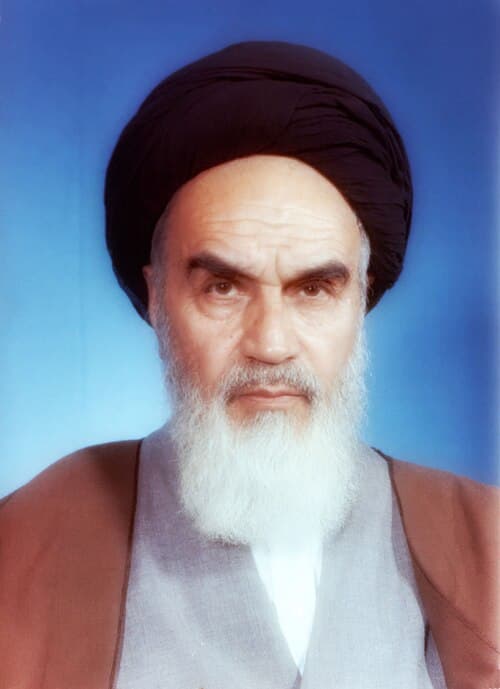
Although Iran is often caricatured as a nation of irrational, would-be martyrs, its behavior has been ruthlessly rational for the most part. Even Ayatollah Ruhollah Khomeini -- a far more committed ideologue than his successor, Ayatollah Ali Khamenei -- agreed to end the Iran-h War in 1988 when his subordinates told hi
2 mentions1 same-page
Page ?Same page
ivil war," was also designed as another milksop to Russia. The speech used precisely the language that the Kremlin uses whenever it wants to accuse the United States of acting like a superpower: "This is not a zero-sum endeavor," Obama said of the current geopolitical landscape. "We are no longer in a Cold War.
, and Bahrain. Although Iranian-Saudi enmity dates back many decades, it became acute after the 1979 Islamic Revolution when Iran's Supreme Leader, Ayatollah Ruhollah Khomeini, began to spread his revolutionary brand of Shia Islam across the region. The impact was not immediately evident. Iran's war with Iraq in the 1980
2 mentions1 same-page
Page ?Same page
permanent legacy of the Arab Spring. This question isn't trivial, as the political fortunes of Egypt, Syria, Iraq and Lebanon, and the interests of the United States, hang in the balance. A window onto the question of whether it will be political Islam or secular nationalism that will emerge strengthened from th
ood. And in Iran in 1979, individuals who were ardent secular nationalists donned Islamic garb and supported the Islamic Revolution and its leader Ayatollah Ruhollah Khomeini. For them, Islam became a more potent outlet for nationalist ambitions than the Shah, Mohammed Reza Pahlavi, who had lost political legitimacy. Th
Sponsored
2 mentions1 same-page
Page ?Same page
y traumatic, it was a cheap investment that cost America dearly in lives and treasure. It also transformed the national security infrastructure of the United States more profoundly than any event since the start of the Cold War. Whole new bureaucracies have been created, including the Department of Homeland Sec
ran's opposition leaders are limited in their ambitions: they remain committed to the Islamic Revolution and the principles of its leader, the late Ayatollah Ruhollah Khomeini, but they want to reform the establishment within that framework. "The Green opposition is not questioning the foundation of the system as happene
Sponsored
Mutual Connections (76)
Entities connected to both United States and Ayatollah Ruhollah Khomeini
George W. Bush
PERSON2,223 w/ United·4 w/ Ayatollah
Department of Justice
ORGANIZATION1,116 w/ United·2 w/ Ayatollah
Prince Andrew
PERSON906 w/ United·2 w/ Ayatollah
John F. Kennedy
PERSON829 w/ United·2 w/ Ayatollah
Bill Clinton
PERSON528 w/ United·2 w/ Ayatollah
Julie K. Brown
PERSON494 w/ United·2 w/ Ayatollah
Samantha Power
PERSON458 w/ United·2 w/ Ayatollah
Barack Obama
PERSON419 w/ United·5 w/ Ayatollah
Michael Cohen
PERSON383 w/ United·2 w/ Ayatollah
Michael Jackson
PERSON377 w/ United·2 w/ Ayatollah
Bloomberg L.P.
ORGANIZATION279 w/ United·2 w/ Ayatollah
Vladimir Putin
PERSON211 w/ United·4 w/ Ayatollah
Benjamin Netanyahu
PERSON203 w/ United·3 w/ Ayatollah
Middle East
LOCATION201 w/ United·3 w/ Ayatollah
Lebanon
LOCATION185 w/ United·3 w/ Ayatollah
Tehran
LOCATION176 w/ United·3 w/ Ayatollah
Bashar al-Assad
PERSON171 w/ United·3 w/ Ayatollah
Yemen
LOCATION130 w/ United·4 w/ Ayatollah
Cairo
LOCATION128 w/ United·2 w/ Ayatollah
Jerusalem
LOCATION127 w/ United·2 w/ Ayatollah