Back to Network













3
Shared Docs
3
Same-Page
6 / 3
Mentions
Document Mentions (3 shared documents)
5 mentions1 same-page
Page HOUSE_OVERSIGHT_023489
r weapons. Significant political hurdles must be overcome to make progress on these last two aims. In the case of the CTBT, we must build support in the US Senate by showing that the treaty will advance American interests, especially by limiting the current nuclear build-up in Asia. Meanwhile if a deal t
Page: HOUSE_OVERSIGHT_023489 →Page HOUSE_OVERSIGHT_023491Same page
arly in the twentieth century, when Norman Angell’s The Great Illusion (reprinted in 1933) was required reading in intellectual and policy circles in the United States and Europe. Seventy-six years before Barack Obama was honored in Oslo, Norman Angell also won the Nobel Prize, having come to prominence with the arg
Page: HOUSE_OVERSIGHT_023491 →ternational aggression by simply outlawing war. Less than two years after the pact entered into force in 1929, one of the signatories, Japan, invaded Manchuria. The world “community’—that is, the rest of the treaty parties—did nothing. HOUSE_OVERSIGHT_023491 --- PAGE BREAK --- 6 Other signatories followe
Page: HOUSE_OVERSIGHT_023491 →Page HOUSE_OVERSIGHT_023498
r abandon plans to acquire them altogether—that ignores history, logic, and politics. One important reason why most friends and allies of the United States (Britain and France being the exceptions) have not sought nuclear weapons of their own has been our readiness to extend the protection of our nuclear
Page: HOUSE_OVERSIGHT_023498 →rtail or abandon plans to acquire them altogether—that ignores history, logic, and politics. One important reason why most friends and allies of the United States (Britain and France being the exceptions) have not sought nuclear weapons of their own has been our readiness to extend the protection of our
Page: HOUSE_OVERSIGHT_023498 →2 mentions1 same-page
Page ?Same page
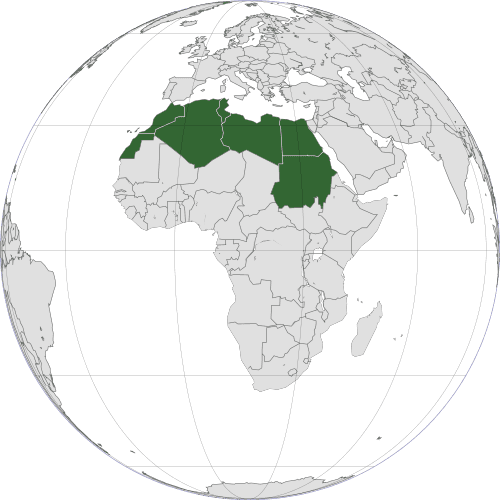
and North Africa's transitional democracies. Yet to do so effectively requires U.S. policymakers to recognize both the strengths and weaknesses of the United States' development machinery. The United States can and should exploit its expertise across its public and private sectors, but it should not always pair
. Kaplan writes that China's ability to project power into the Pacific is made possible by its dominance over its Central Asian land borders, "from Manchuria counterclockwise around to Tibet." He explains: "Merely by going to sea in the manner that it is, China demonstrates its favorable position on the
2 mentions1 same-page
Page ?Same page
y predictions, the government of Mohammed Morsi did not abrogate the Egyptian peace treaty with Israel, nor did it seek to interrupt relations with the United States, although it did move to distance itself to some extent from Washington. In some areas, notably in calls for the international community to offer s
ld remain open to working with each, yet these initiatives also hide an obstacle in the path to partnership. Set when Russia acquired a portion of Manchuria in the nineteenth century, a demographic time-bomb may bring any marriage of convenience to an unhappy end. In the grand scope of Chinese history,
Sponsored
Mutual Connections (23)
Entities connected to both United States and Manchuria
George W. Bush
PERSON2,223 w/ United·3 w/ Manchuria
Marc Rich
PERSON626 w/ United·3 w/ Manchuria
Barack Obama
PERSON419 w/ United·3 w/ Manchuria
Middle East
LOCATION201 w/ United·3 w/ Manchuria
Lebanon
LOCATION185 w/ United·2 w/ Manchuria
Tehran
LOCATION176 w/ United·2 w/ Manchuria
Bashar al-Assad
PERSON171 w/ United·2 w/ Manchuria
John Kerry
PERSON122 w/ United·2 w/ Manchuria
Vietnam
LOCATION120 w/ United·2 w/ Manchuria
The New York Times
ORGANIZATION110 w/ United·2 w/ Manchuria
Terje Rod-Larsen
PERSON108 w/ United·2 w/ Manchuria
Tunisia
LOCATION97 w/ United·3 w/ Manchuria
Hosni Mubarak
PERSON96 w/ United·2 w/ Manchuria
West Bank
LOCATION85 w/ United·2 w/ Manchuria
Osama bin Laden
PERSON82 w/ United·2 w/ Manchuria
Eleanor Roosevelt
PERSON59 w/ United·2 w/ Manchuria
Henry Kissinger
PERSON55 w/ United·2 w/ Manchuria
North Africa
LOCATION50 w/ United·2 w/ Manchuria
Ankara
LOCATION46 w/ United·2 w/ Manchuria
South Asia
LOCATION34 w/ United·2 w/ Manchuria