Back to Network



















3
Shared Docs
1
Same-Page
7 / 3
Mentions
Document Mentions (3 shared documents)
3 mentions1 same-page
Page ?Same page
ther and son), and Libya's Muammar al-Qaddafi. America sought to check and constrain their power, even removing one through invasion. But at times, the United States found common ground with them too. (See: cooperation with Saddam against the Iranian mullahs, and dancing with Assad on the peace process.) As pure
TA00660287 From Washington's vantage point, the Arab world wasn't so much divided into countries as it was broken down into personalities. Each of Americas' authoritarians had a role to play and a dramatic persona to accompany it. There was the good King Hussein, the wily but indispensable Arafat, the
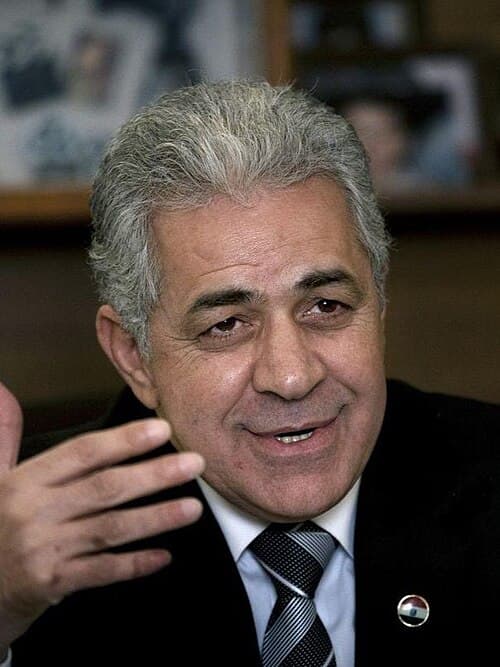
might otherwise have voted for Suleiman. Perhaps the only candidate left who qualifies as a secularist without regime ties is longtime Nasserist MP Hamdeen Sabahi, who boasts opposition credentials dating back to his days as a student activist under the late President Anwar Sadat. But the Muslim Brotherhood i
Page HOUSE_OVERSIGHT_018091
avert wars, conflicts and attendant tribulations? Surely it is no coincidence that a leading Nasserist Arab nationalist and presidential candidate, Hamdeen Sabahi, has stated several times that he has no intention of opening hostilities against Israel and every intention instead of waging war on poverty and fig
Page: HOUSE_OVERSIGHT_018091 →Page HOUSE_OVERSIGHT_018106
llies-in-arms at the ready, or go it alone, even actively dissuading Israel from joining an attack? What would the domestic political situation be in the United States? Would there be an internal political consensus to act, or would there be an active, acrimonious debate? Would the American people be prepared for th
Page: HOUSE_OVERSIGHT_018106 →Page HOUSE_OVERSIGHT_018108
his leads to yet another layer of complexity and uncertainty: Whose war would this be? A U.S.-Iranian war would probably not be fought by the United States and Iran alone. Each would have partners or allies, both willing and not-so-willing. Pre-conflict commitments, longstanding HOUSE_OVERSIGHT_018107
Page: HOUSE_OVERSIGHT_018108 →orld. This leads to yet another layer of complexity and uncertainty: Whose war would this be? A U.S.-Iranian war would probably not be fought by the United States and Iran alone. Each would have partners or allies, both willing and not-so-willing. Pre-conflict commitments, longstanding HOUSE_OVERSIGHT_0
Page: HOUSE_OVERSIGHT_018108 →Page HOUSE_OVERSIGHT_030031
sibly close to double that number - is likely to have a major impact on the regional structure of power. The need to contain pressure from the United States and Israel, for decades the all-consuming concern of Syria's leadership, has suddenly been displaced by an explosion of popular protest highlighting
Page: HOUSE_OVERSIGHT_030031 →and possibly close to double that number - is likely to have a major impact on the regional structure of power. The need to contain pressure from the United States and Israel, for decades the all-consuming concern of Syria's leadership, has suddenly been displaced by an explosion of popular protest highli
Page: HOUSE_OVERSIGHT_030031 →Page HOUSE_OVERSIGHT_030049
d admired for his uncompromising opposition to Mubarak, Nour nonetheless enjoys less of a national reputation than Moussa and ElBaradei. And there is Hamdeen Sabahi, the founder of the Karama Party, a breakaway from the Nasserist Party that has long sought official HOUSE_OVERSIGHT_030048 --- PAGE BREAK --- 20 l
Page: HOUSE_OVERSIGHT_030049 →Sponsored
Mutual Connections (44)
Entities connected to both United States and Hamdeen Sabahi
George W. Bush
PERSON2,223 w/ United·3 w/ Hamdeen
Marc Rich
PERSON626 w/ United·3 w/ Hamdeen
Bill Clinton
PERSON528 w/ United·3 w/ Hamdeen
Barack Obama
PERSON419 w/ United·3 w/ Hamdeen
Michael Cohen
PERSON383 w/ United·2 w/ Hamdeen
Hillary Clinton
PERSON218 w/ United·2 w/ Hamdeen
Benjamin Netanyahu
PERSON203 w/ United·2 w/ Hamdeen
Lebanon
LOCATION185 w/ United·2 w/ Hamdeen
Tehran
LOCATION176 w/ United·2 w/ Hamdeen
Bashar al-Assad
PERSON171 w/ United·3 w/ Hamdeen
Yemen
LOCATION130 w/ United·3 w/ Hamdeen
Cairo
LOCATION128 w/ United·3 w/ Hamdeen
Robert Gates
PERSON116 w/ United·2 w/ Hamdeen
Damascus
LOCATION114 w/ United·2 w/ Hamdeen
Terje Rod-Larsen
PERSON108 w/ United·2 w/ Hamdeen
North Korea
LOCATION104 w/ United·2 w/ Hamdeen
Mitt Romney
PERSON99 w/ United·2 w/ Hamdeen
Tunisia
LOCATION97 w/ United·3 w/ Hamdeen
Bahrain
LOCATION98 w/ United·2 w/ Hamdeen
Hosni Mubarak
PERSON96 w/ United·3 w/ Hamdeen