Back to Network
















8
Shared Docs
8
Same-Page
17 / 8
Mentions
Document Mentions (8 shared documents)
5 mentions1 same-page
Page ?Same page
ould certainly consider such an offer. Eventually President Kennedy appointed someone else, deeming Taylor too libera
cases; * played a role, sometimes large, sometimes small, in some of the most cataclysmic events of the last half century—from the assassination of JFK, to the forced resignation of Richard Nixon, to the Chappaquiddick investigation of Ted Kennedy, to the impeachment of President Clinton, to the war
heard the “I have a dream” speech of Martin Luther King, was close to the Cuban Missile Crisis, and partook of events following the assassination of John F. Kennedy. As a young lawyer, I played a role in the Pentagon Papers case, the forced resignation of Richard Nixon, and the anti-war prosecutions of Dr. Spock
appointed but he knew it would have taken a miracle to overcome the objections of the Justice Department, and he didn’t have close connections to the Kennedys. “Good for you. Not so good for me. And good for the country,” is how he summarized the appointment to me a few days later. Good for me, because the
re, his private barber was cutting his hair. I was seated next to him while he got his haircut, and he dictated notes to me. It wasn’t as bad as what Lyndon Johnson would do, requiring aides to join him in the bathroom. While working at Kay, Scholer, I had the first fancy restaurant meal of my life. I was asked
4 mentions1 same-page
Page ?Same page
l Pain and Dysfunction: The Trigger Point Manual with David G. Simons, MD, and Lois Simons" and served as a physician in the White House, first to John F. Kennedy and then to Lyndon Johnson. President Kennedy had severe back pain stemming from wounds suffered when he served in the Navy in World War II. His fi
David G. Simons, MD, and Lois Simons" and served as a physician in the White House, first to John F. Kennedy and then to Lyndon Johnson. President Kennedy had severe back pain stemming from wounds suffered when he served in the Navy in World War II. His fifth and final surgical procedure in September
to John F. Kennedy and then to Lyndon Johnson. President Kennedy had severe back pain stemming from wounds suffer
Trigger Point Manual with David G. Simons, MD, and Lois Simons" and served as a physician in the White House, first to John F. Kennedy and then to Lyndon Johnson. President Kennedy had severe back pain stemming from wounds suffered when he served in the Navy in World War II. His fifth and final surgical pro
3 mentions1 same-page
Page ?Same page
D. Eisenhower had served two full terms. John F. Kennedy was assassinated. Lyndon Johnson, overwhelmed by
of the Presidency, and the experience of recent incumbents offered no guidance. No President since Dwight D. Eisenhower had served two full terms. John F. Kennedy was assassinated. Lyndon Johnson, overwhelmed by the war in Vietnam, had declined to run for reelection in 1968. Richard Nixon resigned less than s
ence of recent incumbents offered no guidance. No President since Dwight D. Eisenhower had served two full terms. John F. Kennedy was assassinated. Lyndon Johnson, overwhelmed by the war in Vietnam, had declined to run for reelection in 1968. Richard Nixon resigned less than seventeen months into his second
Sponsored
3 mentions1 same-page
Page ?Same page
have been an easy win in Syria cannot be explained by them in any other way. This is dangerous. Just as Nikita Khrushchev concluded that President Kennedy was weak and incompetent after the Bay of Pigs failure and the botched Vienna summit, and then proceeded to test the American president from Cuba
gerous. Just as Nikita Khrushchev concluded that President Kennedy was weak and incompetent after the Bay of Pigs f
grand strategy would demonstrate once and for all that liberal Democrats were capable stewards of American foreign policy. The bad memories of the Lyndon Johnson and EFTA_R1_00441461 EFTA01964622 Jimmy Carter presidencies would at last be laid to rest; with the public still unhappy with George W. Bush's f
3 mentions1 same-page
Page ?Same page
At the height of the Civil Rights Movement of the 1960s, the restrictive immigration laws were seen as an embarrassment by, among others, President John F. Kennedy, who called the then-quota-system "nearly intolerable".[5] After Kennedy's assassination, President Lyndon Johnson signed the bill at the foot of t
ion laws were seen as an embarrassment by, among others, President John F. Kennedy, who called the then-quota-system "nearly intolerable".[5] After Kennedy's assassination, President Lyndon Johnson signed the bill at the foot of the Statue of Liberty. 11:58:02 pm 2017/01/29 Lawrence Krauss Because w
ent by, among others, President John F. Kennedy, who called the then-quota-system "nearly intolerable".[5] After Kennedy's assassination, President Lyndon Johnson signed the bill at the foot of the Statue of Liberty. 11:58:02 pm 2017/01/29 Lawrence Krauss Because we are emitting approx 30 Gigatons (use abo
3 mentions1 same-page
Page ?Same page
n." In 2007, at the start of Obama's Presidential campaign, the historian Doris Kearns Goodwin and her husband, Richard Goodwin, who worked in the Kennedy and Johnson Administrations, visited him in his Senate office. "I have no desire to be one of those Presidents who are just on the list—you see the
used everything from the promise of appointment to bald-faced political threats to win passage of the legislative agenda that had languished under John Kennedy, including Medicare, a tax cut, and a civil-rights bill. Publicly, Johnson said of Kennedy, "I had to take the dead man's program and turn it into
n party, the G.O.P.— couldn't fail to summon a contrasting portrait. The biographer Robert Caro has also been a guest. Caro's ongoing volumes about Lyndon Johnson portray a President who used everything from the promise of appointment to bald-faced political threats to win passage of the legislative agenda th
Sponsored
2 mentions1 same-page
Page ?Same page
declared in his Iowa speech, echoing the advice of his pollsters and strategists. "This party—the party of Jefferson and Jackson; of Roosevelt and Kennedy—has always made the biggest difference in the lives of the American people EFTA00712759 when we led, not by polls, but by principle; not by calcu
nship between a sitting President and his living predecessors is rarely easy. According to "The Presidents Club," by Nancy Gibbs and Michael Duffy, Lyndon Johnson sometimes drafted the popular former President Dwight D. Eisenhower into his publicity schemes, which frustrated Ike, who complained to aides about
2 mentions1 same-page
Page ?Same page
W. Bush for the GOP nomination and Sen. Edward M. Kennedy was challenging Carter for the Democratic nomina
cks were registered to vote in 1960. This suppression continued until the Voting Rights Act of 1965 was signed on August 6, 1965 by which President Lyndon Johnson outlawing discriminatory voting practices in the United EFTA00667299 States. As a result; by 1970 60% of eligible blacks in Mississippi were regis
Sponsored
Mutual Connections (335)
Entities connected to both John F. Kennedy and Lyndon Johnson
Jeffrey Epstein
PERSON6,914 w/ John·6 w/ Lyndon
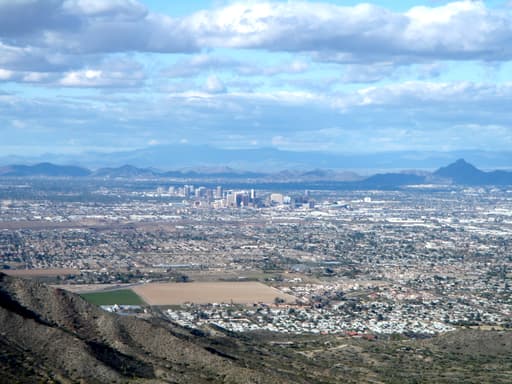
Phoenix
LOCATION2,103 w/ John·2 w/ Lyndon
George W. Bush
PERSON2,074 w/ John·16 w/ Lyndon
Prince Charles
PERSON1,636 w/ John·5 w/ Lyndon
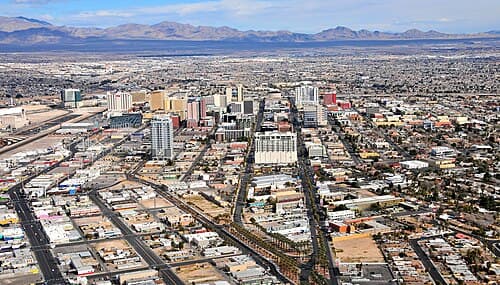
Las Vegas
LOCATION1,135 w/ John·2 w/ Lyndon
Marc Rich
PERSON836 w/ John·7 w/ Lyndon
United States
LOCATION829 w/ John·12 w/ Lyndon
LB
Leon Black
PERSON784 w/ John·5 w/ Lyndon
Prince Andrew
PERSON641 w/ John·10 w/ Lyndon
Woody Allen
PERSON606 w/ John·3 w/ Lyndon
Hawaii
LOCATION575 w/ John·2 w/ Lyndon
Donald Trump
PERSON401 w/ John·8 w/ Lyndon
George Mitchell
PERSON383 w/ John·6 w/ Lyndon
Ehud Barak
PERSON372 w/ John·2 w/ Lyndon
MF
Maria Farmer
PERSON360 w/ John·3 w/ Lyndon
Bill Clinton
PERSON337 w/ John·12 w/ Lyndon
Harry Reid
PERSON341 w/ John·3 w/ Lyndon
Alan Dershowitz
PERSON334 w/ John·3 w/ Lyndon
Michael Jackson
PERSON325 w/ John·6 w/ Lyndon
Eric Trump
PERSON321 w/ John·4 w/ Lyndon