Back to Network

















6
Shared Docs
6
Same-Page
11 / 6
Mentions
Document Mentions (6 shared documents)
3 mentions1 same-page
Page ?Same page
a and Iran to stop enabling Mr. Assad's savagery. The Washington Post rian intervention is justifiable, and just Anne-Marie Slaughter June 9 -- Henry Kissinger recently argued against intervention in Syria ["The perils of intervention in Syria," Sunday Opinion, June 3] on the grounds that it would imperil
violence in Iraq resulted in large part from the U.S. determination to destroy those institutions along with Saddam Hussein. As a cautionary tale, Kissinger and others point not only to Iraq but also to Libya. Kissinger lumped Libya in with Yemen, Somalia and northern Mali as a "blank space" on the map
lopment arrangement focused on Central Asia. (In a coincidence of scheduling, Hillary Clinton was meeting some of her allies on the Syrian issue in Istanbul at the same time.) How to handle Syria, Iran and the U.S. were topics for discussion in Beijing. Russia's Bind Putin has vowed that Syria will not
3 mentions1 same-page
Page ?Same page
re Management University and Copenhagen Business School. Anicle 2. The Washington Post Putin's Ukraine gambit Charles Krauthammer EFTA00684331 Henry Kissinger once pointed out that since Peter the Great, Russia had been expanding at the rate of one Belgium per year. All undone, of course, by the collapse
e to Kiev: We can shut down your agricultural exports today, your natural gas supplies tomorrow. We can make you broke and we can make you freeze. Kissinger once also said, "In the end, peace can be achieved only by hegemony or by balance of power." Either Ukraine will fall to Russian hegemony or finall
egedly telling his son to hide large sums of money has created a crisis for the once-unassailable leader just weeks before key elections. 2.27.14 ISTANBUL-It was Recep Tayyip Erdogan's 60th birthday this week, but the Turkish Prime Minister could be forgiven for not being in the mood for celebrations.
3 mentions1 same-page
Page ?Same page
ate: Mon, 23 Apr 2012 21:26:17 +0000 23 April, 2012 Article 1. The Washington Post Nuclear weapon reductions must be part of strategic analysis Henry A. Kissinger and Brent Scowcroft Article 2. The National Interest The Fantasy of Zero Nukes Amitai Etzioni Article 3. The Weekly Standard Negotiations That
atification of the START treaty. We favor verification of agreed reductions and procedures that enhance predictability and transparency. One of us (Kissinger) has supported working toward the elimination of nuclear weapons, albeit with the proviso that a series of verifiable intermediate steps that maint
t Matter Reuel Marc Gerecht April 30, 2012 -- Since we don't know what Saeed Jalili, Iran's chief nuclear negotiator, said at the recent confab in Istanbul, we can't be sure that Israeli prime minister Bibi Netanyahu was right to dismiss the powwow as a "freebie" for Tehran. Also, the Islamic Republic
Sponsored
3 mentions1 same-page
Page ?Same page
archer at the University of Otago in New Zealand. Anicic 5. Project Syndicate The Paranoid Style in Chinese Politics Minxin Pei 17 April 2012 — Henry Kissinger, who learned a thing or two about political paranoia as Richard Nixon's national security adviser and Secretary of State, famously said that even a
inese Politics Minxin Pei 17 April 2012 — Henry Kissinger, who learned a thing or two about political para
he edge of the cliff, but they don't seem eager to jump. The mechanics of an eventual settlement are clear enough after Saturday's first session in Istanbul: Iran would agree to stop enriching uranium to the 20 percent level and to halt work at an underground facility near Qom built for higher enrichmen
3 mentions1 same-page
Page ?Same page
but they never quite step up to the task of jointly solving problems. It seems they prefer to let things fester rather than take decisive action. Henry Kissinger argues in his new book, "On China," that the Chinese are culturally unfamiliar with the experience of being allies. Other nations were regarded chi
tribute payments to the Middle Kingdom, and China didn't even have a foreign ministry EFTA_R1_02029354 EFTA02689729 22 until the 19th century, Kissinger says. The Obama administration may be asking for a kind of cooperation that China does not yet know how to give. The same partnership deficit has
omic Forum in Davos is a case in point. Erdogan accused Peres of "knowing well how to kill," and then stormed off the stage and boarded a plane to Istanbul. He returned to a hero's welcome. The highly publicized spat earned the AKP a badly needed boost ahead of local elections in March 2009. Erdogan's
2 mentions1 same-page
Page ?Same page
the parties to something like binding arbitration, stop speaking about psychological breakthrough, and start implementing American policy—more Dr. Kissinger, less Dr. Phil. The breakdown Kerry described, after all, is not in actual negotiations but in a contrived show of reciprocity that masks how negot
cial democrat Republican People's Party (known as CHP, for its Turkish initials), polling 26 percent nationwide. CHP was unable to wrest control of Istanbul from AKP and even in Ankara, where the incumbent AKP mayor appeared weak, the two parties' candidates just about tied, and votes are still being co
Sponsored
Mutual Connections (956)
Entities connected to both Henry Kissinger and Istanbul
Jeffrey Epstein
PERSON143 w/ Henry·256 w/ Istanbul
Prince Charles
PERSON50 w/ Henry·227 w/ Istanbul
John F. Kennedy
PERSON48 w/ Henry·141 w/ Istanbul
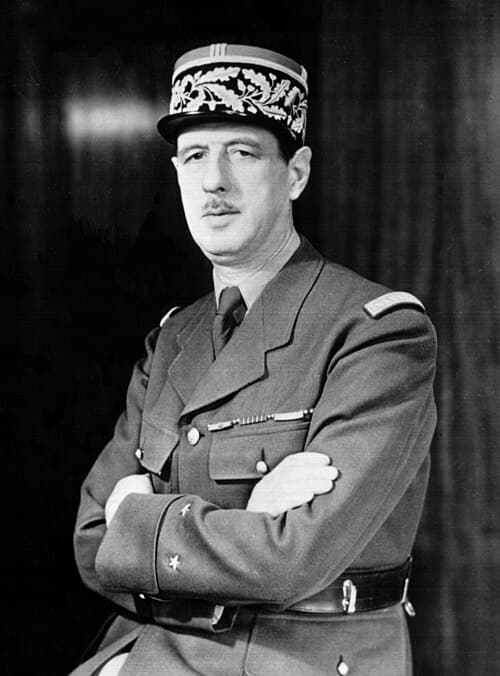
Charles De Gaulle
LOCATION14 w/ Henry·169 w/ Istanbul
George W. Bush
PERSON66 w/ Henry·109 w/ Istanbul
United States
LOCATION55 w/ Henry·89 w/ Istanbul
Bill Clinton
PERSON70 w/ Henry·59 w/ Istanbul
Barack Obama
PERSON53 w/ Henry·72 w/ Istanbul
Marc Rich
PERSON67 w/ Henry·46 w/ Istanbul
Donald Trump
PERSON55 w/ Henry·52 w/ Istanbul
LB
Leon Black
PERSON52 w/ Henry·50 w/ Istanbul
Lesley Groff
PERSON30 w/ Henry·69 w/ Istanbul
American Express
ORGANIZATION2 w/ Henry·89 w/ Istanbul
Prince Andrew
PERSON46 w/ Henry·42 w/ Istanbul
Bashar al-Assad
PERSON38 w/ Henry·48 w/ Istanbul
Joe Biden
PERSON45 w/ Henry·36 w/ Istanbul
Hillary Clinton
PERSON41 w/ Henry·39 w/ Istanbul
Benjamin Netanyahu
PERSON30 w/ Henry·48 w/ Istanbul
Samantha Power
PERSON37 w/ Henry·38 w/ Istanbul
Tehran
LOCATION25 w/ Henry·49 w/ Istanbul