Back to Network



















3
Shared Docs
2
Same-Page
7 / 3
Mentions
Document Mentions (3 shared documents)
4 mentions1 same-page
Page ?Same page
policies. But the internet in particular was seen as an irresistible force that could render censorship of any kind impossible. In 2000, President Bill Clinton compared China's efforts to control inter- net content to "trying to nail Jell-O to the wall." Third, a growing number of experts began to identify
atements by then secretary of state Hillary Clinton were meant as a signal to the opposition to launch a color revolution in Russia. (The theme of Clinton as the puppet master behind a plot aimed at regime change in Russia was revived during the 2016 U.S. presidential campaign, when the Russian media
ing the 2016 U.S. presidential campaign, when the Russian media displayed a clear preference for Republi- can candidate Donald Trump and disdain for Clinton.3) For Putin, the events of late 2011 and early 2012 were evidence of weakness and political incompetence. A ruling partywhose triumph requires that
vil Society in Russia,' Human Rights Watch, February 24, 2017, Ittps://www.hrw.org/ news/2017/02/24/briefine-shrinkine-spacecivil-society-russia. 10. Tanya Lokshina, 'Russia Civil Society Deemed 'Undesirable,- Open Democracy, May 20, 2015, https://www.hrw.ore/ news/7015/05/20/ressian.rivil.sociev-deemed-undesir
3 mentions1 same-page
Page ?Same page
ated into reports (which had a distinctive blue stripe to signify their impor- tance) that had been provided to Ronald Reagan, George H. W. Bush, and Bill Clinton. Even more shocking, in tracing the path of this disinformation, the inspector general found that the “senior CIA @ officers responsible for these r
9780451494566_2p_all_r.indd 215 @ 9/30/16 8:13AM | | HOUSE_OVERSIGHT_019703 216 | HOW AMERICA LOST ITS SECRETS tions to private companies, but the Clinton administration in 1996 had privatized background checks for government employees requiring security clearances. The idea, backed by Vice President Al
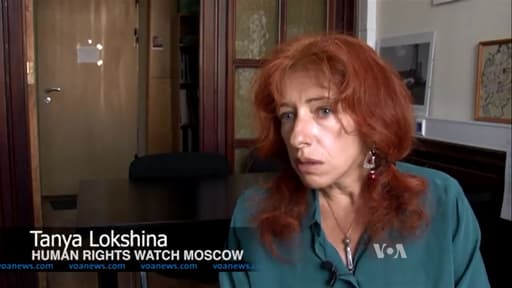
ose associates, pro- government activists, and representatives of both Amnesty Inter- national and Human Rights Watch. “It was totally bizarre,” said Tanya Lokshina, the deputy director of Human Rights Watch, who attended. “Although it was billed as a press conference,” she recalled, “there was no press or photog
HOUSE_OVERSIGHT_019233 - HOUSE_OVERSIGHT_019296
FH_Authoritarians_Report_2017.indd
3 mentions
Page HOUSE_OVERSIGHT_019243
al policies. But the internet in particular was seen as an irresistible force that could render censorship of any kind impossible. In 2000, President Bill Clinton compared China's efforts to control inter- net content to “trying to nail Jell-O to the wall.”” Third, a growing number of experts began to identify
Page: HOUSE_OVERSIGHT_019243 →Page HOUSE_OVERSIGHT_019245
statements by then secretary of state Hillary Clinton were meant as a signal to the opposition to launch a color revolution in Russia. (The theme of Clinton as the puppet master behind a plot aimed at regime change in Russia was revived during the 2016 U.S. presidential campaign, when the Russian media d
Page: HOUSE_OVERSIGHT_019245 →Page HOUSE_OVERSIGHT_019262
l Society in Russia,” Human Rights Watch, February 24, 2017, https:/Awww.hrw.org/ news/2017/02/24/briefing-shrinking-space-civil-society-russia. 10. Tanya Lokshina, “Russia Civil Society Deemed ‘Undesirable,” Open Democracy, May 20, 2015, https://www.hrw.org/ news/2015/05/20/russian-civil-society-deemed-undesira
Page: HOUSE_OVERSIGHT_019262 →Sponsored
Mutual Connections (399)
Entities connected to both Bill Clinton and Tanya Lokshina
Jeffrey Epstein
PERSON2,372 w/ Bill·2 w/ Tanya
Prince Andrew
PERSON997 w/ Bill·3 w/ Tanya
Donald Trump
PERSON951 w/ Bill·3 w/ Tanya
George W. Bush
PERSON800 w/ Bill·2 w/ Tanya
Hillary Clinton
PERSON777 w/ Bill·2 w/ Tanya
Barack Obama
PERSON648 w/ Bill·4 w/ Tanya
Alan Dershowitz
PERSON629 w/ Bill·3 w/ Tanya
Marc Rich
PERSON599 w/ Bill·3 w/ Tanya
LB
Leon Black
PERSON566 w/ Bill·3 w/ Tanya
United States
LOCATION528 w/ Bill·4 w/ Tanya
Department of Justice
ORGANIZATION477 w/ Bill·3 w/ Tanya
Julie K. Brown
PERSON457 w/ Bill·2 w/ Tanya
Bradley Edwards
PERSON439 w/ Bill·2 w/ Tanya
Virginia Giuffre
PERSON408 w/ Bill·2 w/ Tanya
John F. Kennedy
PERSON337 w/ Bill·2 w/ Tanya
George Mitchell
PERSON285 w/ Bill·3 w/ Tanya
Bloomberg L.P.
ORGANIZATION252 w/ Bill·2 w/ Tanya
Woody Allen
PERSON244 w/ Bill·2 w/ Tanya
Vicky Ward
PERSON242 w/ Bill·2 w/ Tanya
Vladimir Putin
PERSON231 w/ Bill·4 w/ Tanya