Back to Network


















5
Shared Docs
5
Same-Page
8 / 5
Mentions
Document Mentions (5 shared documents)
3 mentions1 same-page
Page ?Same page
t networks. @ Following the 9/11 attacks on the Pentagon and the World Trade Center, the surveillance of the Internet became an integral part of the Bush administration’s war on terrorism. In October 2001, Con- gress expanded the NSA’s mandate by passing the USA Patriot Act. As I described earlier, Sec
hat had been provided to Ronald Reagan, George H. W. Bush, and Bill Clinton. Even more shocking, in tr
source, including Micah Lee, the Berkeley-based technology operative for the Freedom of the Press Foundation; Jacob Appelbaum, the Tor proselytizer; Ben Wizner, the ACLU lawyer; Barton Gellman; and Glenn Greenwald. “It is not me that can’t keep a secret,” Abraham Lincoln joked. “It’s the people I | | Epst_9
3 mentions1 same-page
Page ?Same page
ing by the New York Times in December 2005. After President Bush’s own Justice Department then held that such surv
btain "tangible things" such as "books, records, papers, documents, and other items." Under the interpretation of this section of the law by both the Bush and Obama administrations, the FISA court was enabled by Congress to issue warrants to telephone companies demanding that they turn over to the NSA t
ld from, as he put it, “secret pervasive surveillance.” That higher duty transcended him any narrower legal definitions of law-breaking. For example, Ben Wizner, a lawyer from the American Civil Liberties Union who represented Snowden since November 2013, argues that Snowden’s taking of classified documents w
3 mentions1 same-page
Page ?Same page
hree American Presidents, Ronald Reagan, George H.W. Bush and Bill Clinton. Even more shocking, in tra
ernment networks. Following the 9/11 attack on the Pentagon and World Trade Center, the surveillance of the Internet also became an integral part of Bush’ administration’s war on terrorism. In October 2001, Congress expanded the NSA’s mandate by passing the USA Patriot Act. Section 215 of the act direc
r asked Kucherena in Moscow why Snowden changed his story in direct contradiction of what Kucherena had stated, he said “Wizner.” He was referring to Ben Wizner, a top-drawer ACLU lawyer based in Washington D.C. Wizner had joined the ACLU in August 2001 after graduating NYU law school and clerking for a Feder
Sponsored
2 mentions1 same-page
Page ?Same page
btain “tangible things” such as “books, records, papers, documents, and other items.” Under the interpretation of this section of the law by both the Bush and the Obama administrations, the FISA court was enabled by Congress to issue warrants to telephone companies demanding that they turn over to the N
tries in the world from, as he put it, “secret pervasive surveillance.” That higher duty transcended any narrower legal definitions of law- breaking. Ben Wizner, a lawyer from the American Civil Liberties Union who has represented Snowden since October 2013, argues that Snowden’s taking of classified document
2 mentions1 same-page
Page ?Same page
Oct. 8, 2015. 51 Silk Road, which acted: Holman W. Jenkins Jr, “The Anti-hero of Silk Road,” Wall St
Ed Snowden’s Life on Ars Technica.” 117 “an act of civil disobedience”: Mayer, “Snowden Calls Russian-Spy Story ‘Absurd’ in Exclusive Interview.” 117 Ben Wizner, a lawyer: Wizner called his representation of Snowden the “work of a lifetime.” Hill, “How ACLU Lawyer Ben Wizner Became Snowden’s Lawyer.” 118 “We'
Sponsored
Mutual Connections (453)
Entities connected to both George W. Bush and Ben Wizner
Jeffrey Epstein
PERSON5,075 w/ George·5 w/ Ben
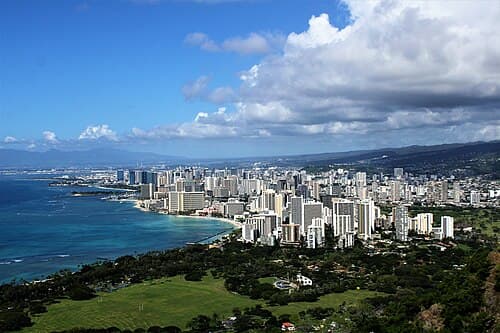
Honolulu
LOCATION2,486 w/ George·4 w/ Ben
United States
LOCATION2,223 w/ George·5 w/ Ben
John F. Kennedy
PERSON2,074 w/ George·6 w/ Ben
Hawaii
LOCATION1,251 w/ George·6 w/ Ben
Prince Charles
PERSON1,166 w/ George·5 w/ Ben
Donald Trump
PERSON954 w/ George·5 w/ Ben
Bradley Edwards
PERSON907 w/ George·3 w/ Ben
LB
Leon Black
PERSON901 w/ George·4 w/ Ben
Alan Dershowitz
PERSON865 w/ George·6 w/ Ben
Marc Rich
PERSON853 w/ George·4 w/ Ben
Prince Andrew
PERSON817 w/ George·2 w/ Ben
Bill Clinton
PERSON800 w/ George·4 w/ Ben
Joe Biden
PERSON770 w/ George·3 w/ Ben
Julie K. Brown
PERSON750 w/ George·4 w/ Ben
Department of Justice
ORGANIZATION689 w/ George·6 w/ Ben
Barack Obama
PERSON635 w/ George·6 w/ Ben
Stephen Hawking
PERSON535 w/ George·4 w/ Ben
Richard Kahn
PERSON521 w/ George·4 w/ Ben
Virginia Giuffre
PERSON499 w/ George·5 w/ Ben