Back to Network



3
Shared Docs
3
Same-Page
3 / 3
Mentions
Document Mentions (3 shared documents)
2 mentions1 same-page
Page ?Same page
uch as a proof of Fermat’s Last Theorem. In 1996, Andrew Wiles succeeded in finding a solution to this pro
to be, to call it - or should I say ‘him - intelligent? How could I judge this had happened? Alan Turing proposed an ingenious test in his 1950 paper Computing Machinery and Intelligence using “The Imitation Game? We now call the Turing Test. If we ask a series of questions to a computer and we cannot tell its respon
2 mentions1 same-page
Page ?Same page
Math 58 (1936): 345-63. ———. “Systems of Logic Based on Ordinals.” Proceedings of the London Mathematical Society 2, no. 1 (1939): 161-228. Wiles, Andrew. “Modular Elliptic Curves and Fermat’s Last Theorem.” Annals of Mathematics-Second Series 141, no. 3 (1995): 443-552. Chapter 12 Burgin, Mark. Supe
The World of Mathematics 4 (1956): 2099-2123. ———. “Computability and A-Definability? The Journal of Symbolic Logic 2, no. 4 (1937): 153-63. ———. “Computing Machinery and Intelligence?’ Mind, 1950, 433-60. ———. “Computing Machinery and Intelligence.’ In Computers & Thought, 11-35. MIT Press, 1995. http://dl.acm.or
2 mentions1 same-page
Page ?Same page
ophy,” cybersecurity researchers Stephen Cobb and Andrew Lee have written, “so we are unaware of the corre
machine, passing Turing’s Test — thinking like a human - was an interesting challenge. But more interesting 257 “Can machines think”: A. M. Turing, “Computing Machinery and Intelligence” Mind 49 (1950), 433 188 HOUSE_OVERSIGHT_018420 was a machine that could think in ways a human could never understand, let alone
Sponsored
Mutual Connections (101)
Entities connected to both Prince Andrew and Computing Machinery
Jeffrey Epstein
PERSON9,960 w/ Prince·2 w/ Computing
Marc Rich
PERSON1,327 w/ Prince·2 w/ Computing
LB
Leon Black
PERSON1,263 w/ Prince·3 w/ Computing
Donald Trump
PERSON1,068 w/ Prince·2 w/ Computing
Alan Dershowitz
PERSON982 w/ Prince·4 w/ Computing
George W. Bush
PERSON817 w/ Prince·2 w/ Computing
Michael Cohen
PERSON808 w/ Prince·2 w/ Computing
Virginia Giuffre
PERSON687 w/ Prince·3 w/ Computing
Prince Charles
PERSON679 w/ Prince·4 w/ Computing
Joe Biden
PERSON655 w/ Prince·3 w/ Computing
Stephen Hawking
PERSON627 w/ Prince·4 w/ Computing
George Mitchell
PERSON583 w/ Prince·2 w/ Computing
Julie K. Brown
PERSON573 w/ Prince·2 w/ Computing
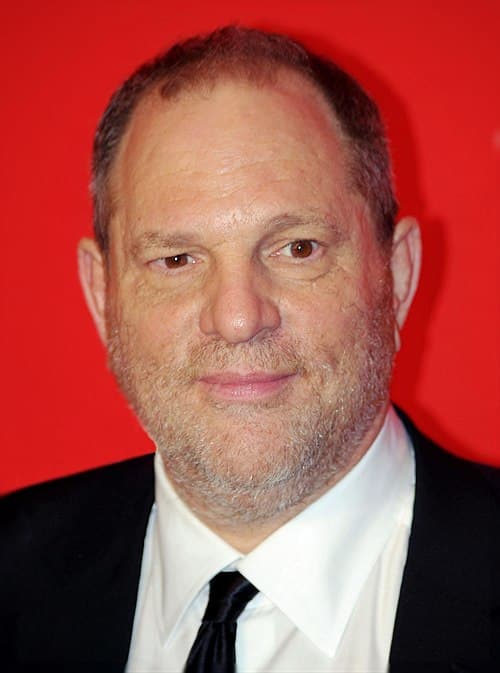
Harvey Weinstein
PERSON439 w/ Prince·2 w/ Computing
ET
Emmy Taylor
PERSON380 w/ Prince·2 w/ Computing
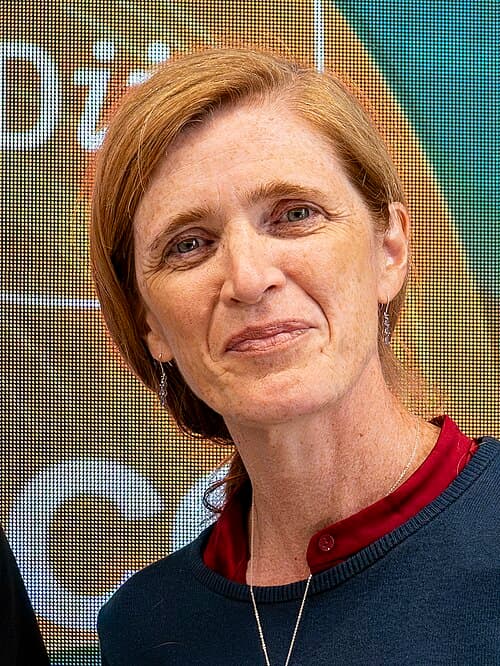
Samantha Power
PERSON332 w/ Prince·3 w/ Computing
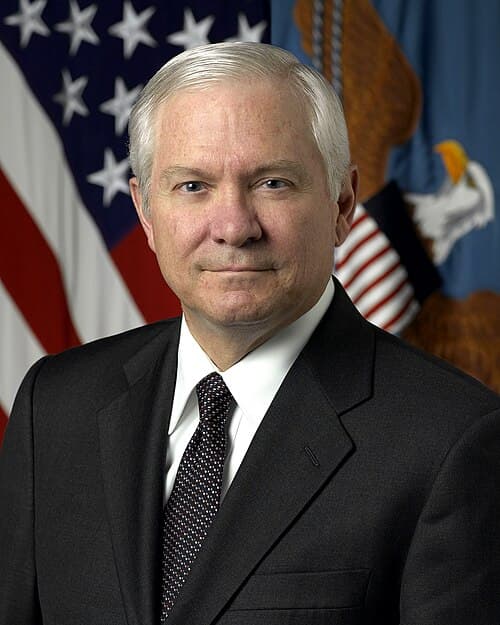
Robert Gates
PERSON323 w/ Prince·3 w/ Computing
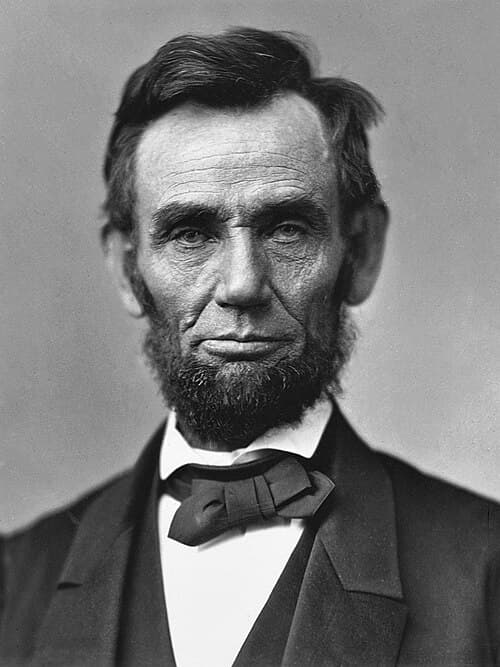
Abraham Lincoln
PERSON284 w/ Prince·2 w/ Computing
Michael Douglas
PERSON274 w/ Prince·2 w/ Computing
Condoleezza Rice
PERSON244 w/ Prince·2 w/ Computing