Back to Network






5
Shared Docs
5
Same-Page
5 / 5
Mentions
Document Mentions (5 shared documents)
2 mentions1 same-page
Page ?Same page
bers 243 PSPACE problem 168 traveling salesman problem 166 truth and rules 193, 200, 206 Matiyasevich, Yuri 248, 251 Mattapoisett 89 Maude, Isabel 14 Maxwell 298 Mayan astronomers 70 maze 164, 165 McChrystal, General Stanley A 54 McGinn, Colin 324 McGurk Effect 114 McLaughlin, Dan 37 Mehrabian, Albert 84 m
computation: Computing Beyond the Church- Turing Barrier. Softcover reprint of hardcover 1st ed. 2008. Springer, 2010. Chapter 13 Shannon, C.E., and Warren Weaver. The Mathematical Theory of Communication. University of Illinois Press, 1949. Chapter 14 Boden, Margaret A. The Creative Mind: Myths and Mechanism
2 mentions1 same-page
Page ?Same page
mbitions for cybernetic concepts, however, and in 7he Human Use of Human Beings he spells out his thoughts on its application to topics as diverse as Maxwell’s Demon, human language, the brain, insect metabolism, the legal system, the role of technological innovation in government, and religion. These broa
Doubt and Certainty in Science in which he said that we create tools and we mold ourselves through our use of them. The other text he recommended was Warren Weaver and Claude Shannon’s 1949 paper “Recent Contributions to the Mathematical Theory of Communication,” which begins: “The word communication will be use
2 mentions1 same-page
Page ?Same page
n around since the Enlightenment (boosted by the Industrial Revolution). The names in this lineage include Descartes, Leibniz, Sadi Carnot, Clausius, Maxwell, and Watt. Wiener’s coinage nonetheless had profound cultural effects.4”7 The ubiquity today of the prefix “cyber-” confirms the desire for a crisp s
had published a pair of lengthy articles in the Be// System Technical Journal. Introducing the new work to a broad readership in 1949, mathematician Warren Weaver explained that in Shannon’s formulation, “the word information...is used in a special sense that must not be confused with its ordinary usage. In par
Sponsored
2 mentions1 same-page
Page ?Same page
mbitions for cybernetic concepts, however, and in 7he Human Use of Human Beings he spells out his thoughts on its application to topics as diverse as Maxwell’s Demon, human language, the brain, insect metabolism, the legal system, the role of technological innovation in government, and religion. These broa
Doubt and Certainty in Science in which he said that we create tools and we mold ourselves through our use of them. The other text he recommended was Warren Weaver and Claude Shannon’s 1949 paper “Recent Contributions to the Mathematical Theory of Communication,” which begins: “The word communication will be use
2 mentions1 same-page
Page ?Same page
n around since the Enlightenment (boosted by the Industrial Revolution). The names in this lineage include Descartes, Leibniz, Sadi Carnot, Clausius, Maxwell, and Watt. Wiener’s coinage nonetheless had profound cultural effects.4”7 The ubiquity today of the prefix “cyber-” confirms the desire for a crisp s
had published a pair of lengthy articles in the Be// System Technical Journal. Introducing the new work to a broad readership in 1949, mathematician Warren Weaver explained that in Shannon’s formulation, “the word information...is used in a special sense that must not be confused with its ordinary usage. In par
Sponsored
Mutual Connections (706)
Entities connected to both Ghislaine Maxwell and Warren Weaver
Prince Andrew
PERSON2,544 w/ Ghislaine·6 w/ Warren
George W. Bush
PERSON1,138 w/ Ghislaine·6 w/ Warren
Alan Dershowitz
PERSON966 w/ Ghislaine·6 w/ Warren
Marc Rich
PERSON898 w/ Ghislaine·5 w/ Warren
Donald Trump
PERSON882 w/ Ghislaine·2 w/ Warren
LB
Leon Black
PERSON868 w/ Ghislaine·6 w/ Warren
Eric Trump
PERSON732 w/ Ghislaine·6 w/ Warren
Julie K. Brown
PERSON724 w/ Ghislaine·5 w/ Warren
Virginia Giuffre
PERSON683 w/ Ghislaine·2 w/ Warren
MF
Maria Farmer
PERSON627 w/ Ghislaine·3 w/ Warren
DB
Doug Band
PERSON578 w/ Ghislaine·5 w/ Warren
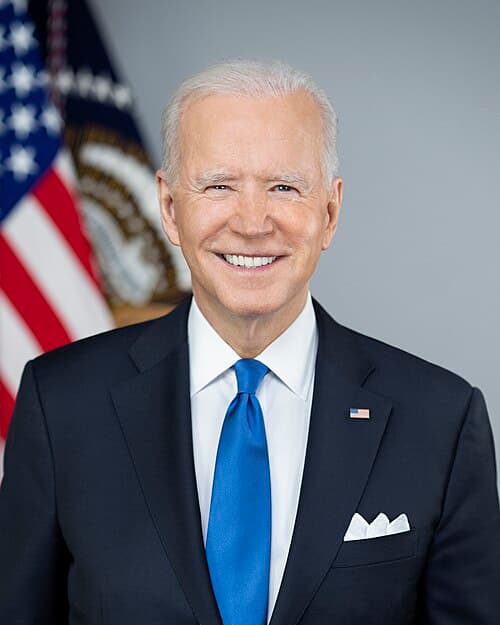
Joe Biden
PERSON495 w/ Ghislaine·3 w/ Warren
Vicky Ward
PERSON458 w/ Ghislaine·2 w/ Warren
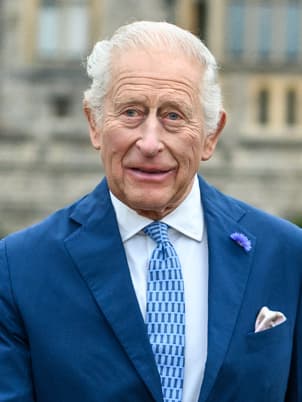
Prince Charles
PERSON450 w/ Ghislaine·2 w/ Warren
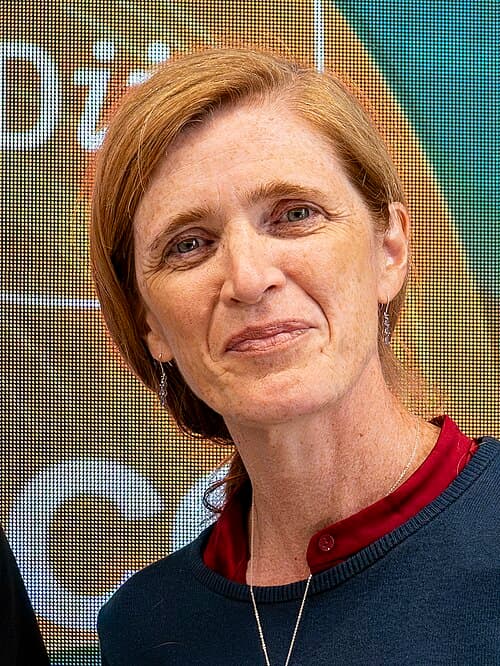
Samantha Power
PERSON445 w/ Ghislaine·5 w/ Warren
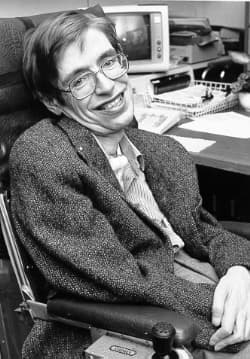
Stephen Hawking
PERSON421 w/ Ghislaine·6 w/ Warren
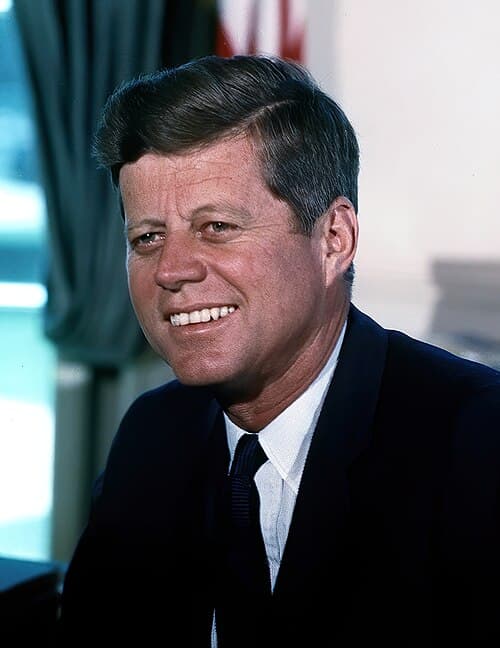
John F. Kennedy
PERSON403 w/ Ghislaine·3 w/ Warren
Richard Kahn
PERSON383 w/ Ghislaine·2 w/ Warren
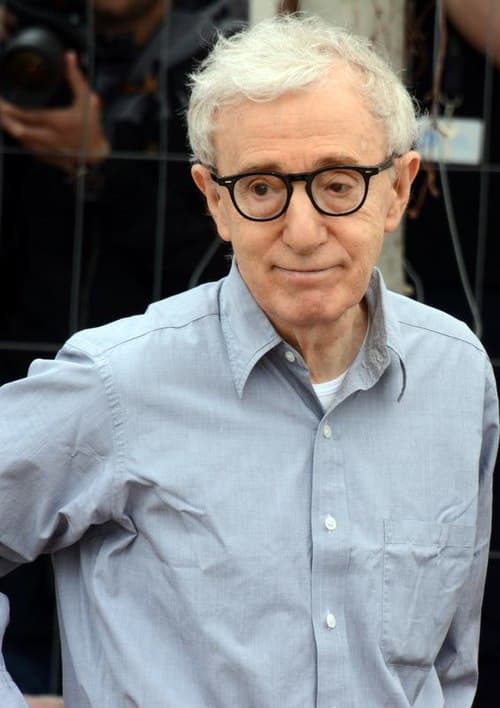
Woody Allen
PERSON367 w/ Ghislaine·2 w/ Warren
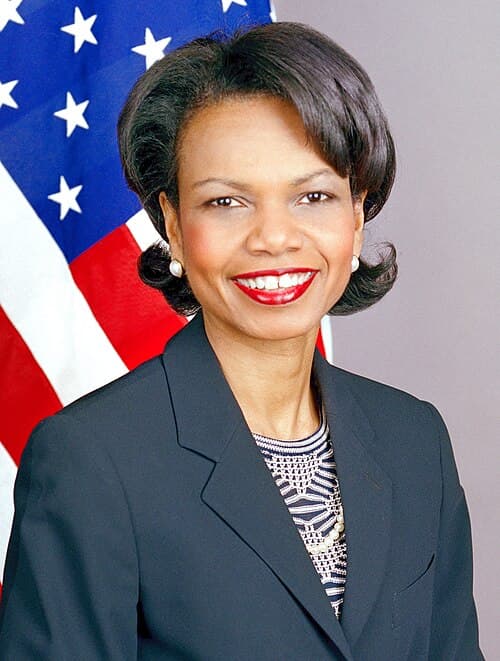
Condoleezza Rice
PERSON350 w/ Ghislaine·2 w/ Warren