Back to Network












3
Shared Docs
3
Same-Page
3 / 6
Mentions
Document Mentions (3 shared documents)
3 mentions1 same-page
Page ?Same page
lhor's Pre-condition Model (1984); Marshall and Barbaree's Integrated Theory• (1990); and Hall and Hirschman's Quadripartite Model (1992). In 2002, Ward and Siegert proposed a more comprehensive theory of child sexual abuse by "knitting together" the strengths of each of the above theories. They prop
le person cause for concern that any meeting with a child arising from the conduct would be for unlawful purposes. (O'Connell, 2003, p. 6) Second, Howitt suggests that: Grooming... is the steps taken by paedophiles to "entrap" their victims and is in somew•ays analogous to adult courtship. (Howitt, 1
er life (Berliner & Conte, 1990; Leberg, 1997). The abuser builds the child's trust (Christiansen & Blake, 1990; Leberg, 1997; Wyre, 1987, cited in Howitt, 1995; van Dam, 2001), makes him or her feel good (Warner, 2000) and then starts to violate boundaries (Christiansen & Blake, 1990; van Dam, 2001).
3 mentions1 same-page
Page ?Same page
Experts agree that sexual grooming has been deemed a significant component of the cycle of CSA, (Finkelhor 1984; Hall and Hirschman 1992; Ward 2002; Ward and Siegert 2002; Williams 2015), as the few empirical studies that have examined the use of sexual grooming tactics found these were used by appro
oming behaviors as solely pre-offense actions thereby limiting the scope of sexual grooming tactics employed by offenders (e.g., Brackenridge 2001; Howitt and Sheldon 2007). Therefore, a definition of sexual grooming should note that maintenance behaviors may be enacted after the sexual abuse has occur
and victim. Some of the prior definitions have narrowly defined the type of offender or victim involved in the sexual grooming process. For example, Howitt (1995) used the term "pedophile," which typically refers to individuals who are primarily or exclusively sexually attracted to prepubescent childre
3 mentions1 same-page
Page ?Same page
elhor's Pre-condition Model (1984); Marshall and Barbaree's Integrated Theory (1990); and Hall and Hirschman's Quadripartite Model (1992). In 2002, Ward and Siegert proposed a more comprehensive theory of child sexual abuse by "knitting together" the strengths of each of the above theories. They prop
er life (Berliner & Conte, 1990; Leberg, 1997). The abuser builds the child's trust (Christiansen & Blake, 1990; Leberg, 1997; Wyre, 1987, cited in Howitt, 1995; van Dam, 2001), makes him or her feel good (Warner, 2000) and then starts to violate boundaries (Christiansen & Blake, 1990; van Dam, 2001).
kinds of definitional features are pro- posed. For example, one definition mentions "betrayal" (Salter, 1995) while another references "courtship" (Howitt, 1995). Some proposed definitions give concrete examples of grooming (Gallagher, 1999; Sgroi, 1982), while others try to give abstract properties t
Sponsored
Mutual Connections (120)
Entities connected to both Vicky Ward and Howitt
George W. Bush
PERSON433 w/ Vicky·4 w/ Howitt
New York
LOCATION194 w/ Vicky·2 w/ Howitt
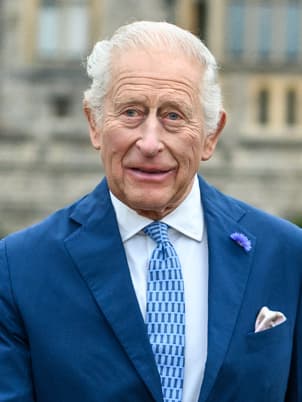
Prince Charles
PERSON176 w/ Vicky·2 w/ Howitt
Scarlett Johansson
PERSON103 w/ Vicky·2 w/ Howitt
Stanford University
LOCATION95 w/ Vicky·2 w/ Howitt
ET
Emmy Taylor
PERSON91 w/ Vicky·3 w/ Howitt
Harvard University
ORGANIZATION36 w/ Vicky·2 w/ Howitt
New Zealand
LOCATION31 w/ Vicky·2 w/ Howitt
Wales
LOCATION29 w/ Vicky·3 w/ Howitt
MO
Morrison
PERSON29 w/ Vicky·2 w/ Howitt
BL
Blake
PERSON28 w/ Vicky·3 w/ Howitt
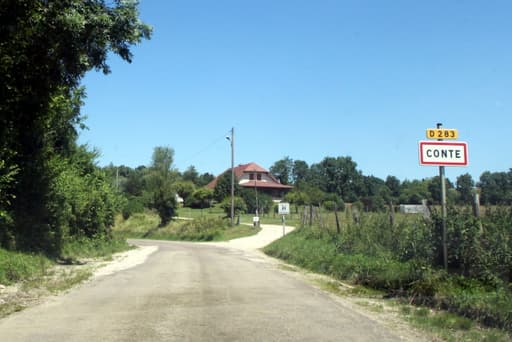
Conte
PERSON19 w/ Vicky·4 w/ Howitt
Springfield
LOCATION20 w/ Vicky·2 w/ Howitt
Hudson
PERSON20 w/ Vicky·2 w/ Howitt
Lexington
LOCATION19 w/ Vicky·2 w/ Howitt
Wellington
LOCATION15 w/ Vicky·2 w/ Howitt
Gallagher
PERSON14 w/ Vicky·3 w/ Howitt
HE
Herman
PERSON13 w/ Vicky·3 w/ Howitt
Warner
ORGANIZATION12 w/ Vicky·2 w/ Howitt
Routledge
ORGANIZATION10 w/ Vicky·4 w/ Howitt