Back to Network





4
Shared Docs
4
Same-Page
4 / 4
Mentions
Document Mentions (4 shared documents)
2 mentions1 same-page
Page ?Same page
the Nobel Prize in Chemistry (2009); current president of the Royal Society; and the author of Gene Machine: The Race to Discover the Secrets of the Ribosome. HOUSE_OVERSIGHT_016806 Stuart Russell is a professor of computer science and Smith-Zadeh Professor in Engineering at UC Berkeley. He is the coauth
ing a place to begin. New Technologies=New Perceptions Before AI, there was Cybernetics—the idea of automatic, self-regulating control, laid out in Norbert Wiener’s foundational text of 1948. I can date my own serious exposure to it to 1966, when the composer John Cage invited me and four or five other young arts
2 mentions1 same-page
Page ?Same page
the Nobel Prize in Chemistry (2009); current president of the Royal Society; and the author of Gene Machine: The Race to Discover the Secrets of the Ribosome. A former colleague of mine, Gérard Bricogne, used to joke that carbon-based intelligence was simply a catalyst for the evolution of silicon-based i
agic or mysticism of an earlier age— as by their modern-sounding insights. I detect that same doubleness—the zig-zag origami folds of old and new—in Norbert Wiener’s classic The Human Use of Human Beings. First published in 1950 and revised in 1954, the book is in many ways extraordinarily prescient. Wiener, the M
2 mentions1 same-page
Page ?Same page
the Nobel Prize in Chemistry (2009); current president of the Royal Society; and the author of Gene Machine: The Race to Discover the Secrets of the Ribosome. HOUSE_OVERSIGHT_016223 Stuart Russell is a professor of computer science and Smith-Zadeh Professor in Engineering at UC Berkeley. He is the coauth
ing a place to begin. New Technologies=New Perceptions Before AI, there was Cybernetics—the idea of automatic, self-regulating control, laid out in Norbert Wiener’s foundational text of 1948. I can date my own serious exposure to it to 1966, when the composer John Cage invited me and four or five other young arts
Sponsored
2 mentions1 same-page
Page ?Same page
the Nobel Prize in Chemistry (2009); current president of the Royal Society; and the author of Gene Machine: The Race to Discover the Secrets of the Ribosome. A former colleague of mine, Gérard Bricogne, used to joke that carbon-based intelligence was simply a catalyst for the evolution of silicon-based i
agic or mysticism of an earlier age— as by their modern-sounding insights. I detect that same doubleness—the zig-zag origami folds of old and new—in Norbert Wiener’s classic The Human Use of Human Beings. First published in 1950 and revised in 1954, the book is in many ways extraordinarily prescient. Wiener, the M
Sponsored
Mutual Connections (688)
Entities connected to both Ribosome and Norbert Wiener’s
Quantum
ORGANIZATION4 w/ Ribosome·4 w/ Norbert
Turing
PERSON4 w/ Ribosome·4 w/ Norbert
Genetics
ORGANIZATION4 w/ Ribosome·4 w/ Norbert
BA
Bateson
PERSON4 w/ Ribosome·4 w/ Norbert
Marc Rich
PERSON4 w/ Ribosome·4 w/ Norbert
CG
Clement Greenberg
PERSON4 w/ Ribosome·4 w/ Norbert
LB
Leon Black
PERSON4 w/ Ribosome·4 w/ Norbert
Harvard-MIT
ORGANIZATION4 w/ Ribosome·4 w/ Norbert
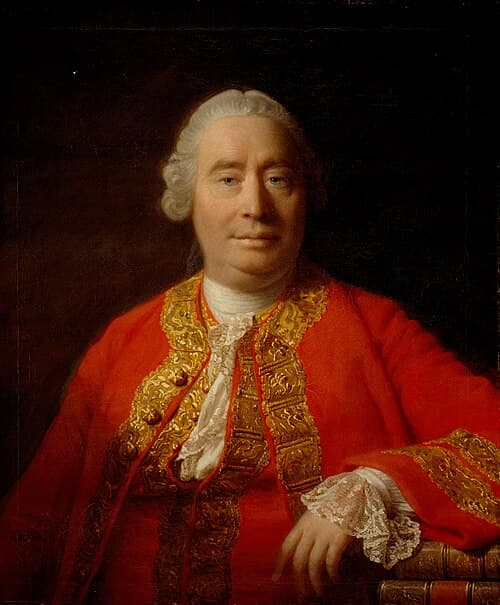
David Hume
PERSON4 w/ Ribosome·4 w/ Norbert
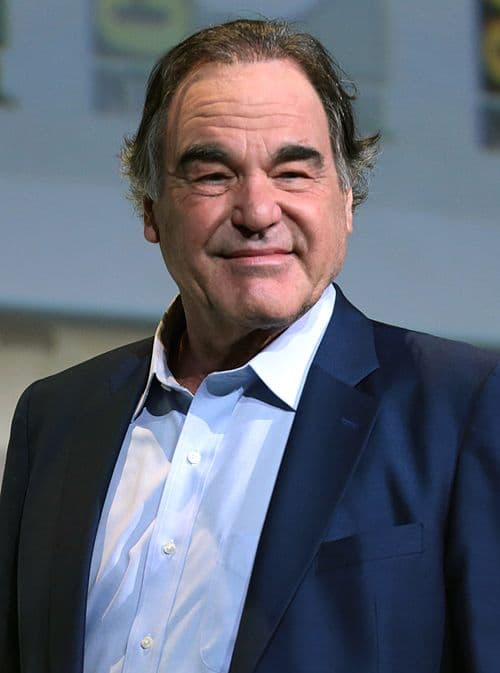
Oliver Stone
PERSON4 w/ Ribosome·4 w/ Norbert
J. Robert Oppenheimer
PERSON4 w/ Ribosome·4 w/ Norbert
UC Berkeley
ORGANIZATION4 w/ Ribosome·4 w/ Norbert
Elon Musk
PERSON4 w/ Ribosome·4 w/ Norbert
Makers
ORGANIZATION4 w/ Ribosome·4 w/ Norbert
Julie K. Brown
PERSON4 w/ Ribosome·4 w/ Norbert
Joseph Pellegrino University
ORGANIZATION4 w/ Ribosome·4 w/ Norbert
the Black Hole Initiative
ORGANIZATION4 w/ Ribosome·4 w/ Norbert
McLuhan
PERSON4 w/ Ribosome·4 w/ Norbert
Walter Pitts
PERSON4 w/ Ribosome·4 w/ Norbert
the Royal Society
ORGANIZATION4 w/ Ribosome·4 w/ Norbert