Back to Network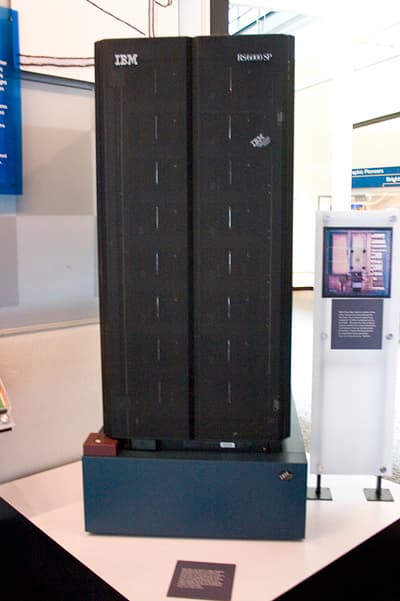












5
Shared Docs
5
Same-Page
5 / 5
Mentions
Document Mentions (5 shared documents)
2 mentions1 same-page
Page ?Same page
y "Ws° • evaluations with Monte-Carlo rollouts. Our uitar-sha browsing g p loud, soft, complex, plain. Not a single track." ed coloring program AlphaGo integrates these components purpose-built software robots like those that play checkers, chess, backgammon, and Go. These are intended to show that
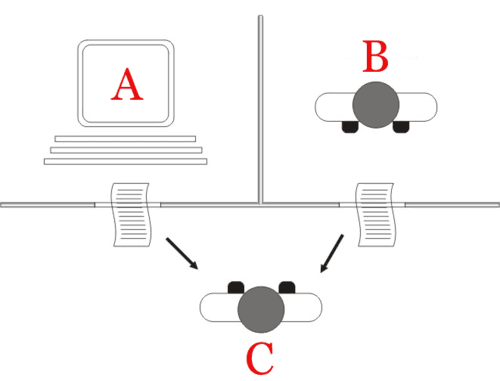
long with them more revisions. Over those months InkWell produced a lot more haiku, and I selected fourteen of them to add to the above four for a Turing Test. In October 1950, the British journal Mind published an essay by Alan M. Turing titled, "Computing Machinery and Intelligence," in which Turing pr
2 mentions1 same-page
Page ?Same page
o communicate with other humans, learn from them, instruct them, and motivate them in our own native language. If our robots will all be as opaque as AlphaGo, we won’t be able to hold a meaningful conversation with them, and that would be unfortunate. We will need to retrain them whenever we make a slight
his past behavior includes quirks and habits of the human pilot, thus a mechanized device can predict the behavior of humans. Like Alan Turing, whose Turing Test suggested that computing machines could give responses to questions which were indistinguishable from human responses, Wiener was fascinated by the n
2 mentions1 same-page
Page ?Same page
rs relied a great deal on intuition and a feel for position, so proficiency was thought to require a particularly human kind of intelligence. But the AlphaGo program produced by DeepMind, after being trained on thousands of high-level Go games played by humans and then millions of games with itself, was ab
to you. They have to know what the human is confused about. What has long been difficult for me to understand is, What’s the point of a conventional Turing Test? What’s the motivation? As a toy, one could make a little chat bot that people could chat with. That will be the next thing. The current round of dee
Sponsored
2 mentions1 same-page
Page ?Same page
o communicate with other humans, learn from them, instruct them, and motivate them in our own native language. If our robots will all be as opaque as AlphaGo, we won’t be able to hold a meaningful conversation with them, and that would be unfortunate. We will need to retrain them whenever we make a slight
his past behavior includes quirks and habits of the human pilot, thus a mechanized device can predict the behavior of humans. Like Alan Turing, whose Turing Test suggested that computing machines could give responses to questions which were indistinguishable from human responses, Wiener was fascinated by the n
2 mentions1 same-page
Page ?Same page
rs relied a great deal on intuition and a feel for position, so proficiency was thought to require a particularly human kind of intelligence. But the AlphaGo program produced by DeepMind, after being trained on thousands of high-level Go games played by humans and then millions of games with itself, was ab
to you. They have to know what the human is confused about. What has long been difficult for me to understand is, What’s the point of a conventional Turing Test? What’s the motivation? As a toy, one could make a little chat bot that people could chat with. That will be the next thing. The current round of dee
Sponsored
Mutual Connections (688)
Entities connected to both AlphaGo and Turing Test
Deep Blue
PERSON8 w/ AlphaGo·5 w/ Turing
Stephen Hawking
PERSON6 w/ AlphaGo·7 w/ Turing
Alan Dershowitz
PERSON5 w/ AlphaGo·7 w/ Turing
Elon Musk
PERSON5 w/ AlphaGo·6 w/ Turing
Oliver Stone
PERSON5 w/ AlphaGo·6 w/ Turing
Garry Kasparov
PERSON6 w/ AlphaGo·5 w/ Turing
Marvin Minsky
PERSON4 w/ AlphaGo·6 w/ Turing
Samantha Power
PERSON5 w/ AlphaGo·5 w/ Turing
Turing
PERSON5 w/ AlphaGo·5 w/ Turing
Stephen Wolfram
PERSON4 w/ AlphaGo·6 w/ Turing
Julie K. Brown
PERSON4 w/ AlphaGo·6 w/ Turing
the Royal Society
ORGANIZATION5 w/ AlphaGo·5 w/ Turing
Prince Andrew
PERSON4 w/ AlphaGo·6 w/ Turing
Jeopardy
ORGANIZATION5 w/ AlphaGo·5 w/ Turing
George W. Bush
PERSON4 w/ AlphaGo·6 w/ Turing
Daniel Dennett
PERSON4 w/ AlphaGo·6 w/ Turing
Robert Gates
PERSON5 w/ AlphaGo·5 w/ Turing
Marc Rich
PERSON4 w/ AlphaGo·6 w/ Turing
Danny Hillis
PERSON5 w/ AlphaGo·4 w/ Turing
Cambridge University
ORGANIZATION5 w/ AlphaGo·4 w/ Turing