Back to Network












5
Shared Docs
5
Same-Page
5 / 5
Mentions
Document Mentions (5 shared documents)
2 mentions1 same-page
Page ?Same page
r, and Singh, Push 2002. An Architecture of Diversity for Commonsense Reasoning. IBM Systems Journal, 41(3):530-539. Minsky, Marvin. (forthcoming). The Emotion Machine. Pantheon, New York. Several chapters are on-line at http://web.media.mit.edu/people/minsIcy Minsky, Marvin 1992. Future of AI Technology. Toshiba
protocols to support the interoperation of such a diverse array of methods. Erik Mueller suggested that such an organization could be modeled after the World Wide Web Consortium (W3C), and its job would largely be to assess, standardize and publish the protocols and underlying tools that such a distributed effort would dema
2 mentions1 same-page
Page ?Same page
a new paradigm in programming and The Society of Mind, the theory that intelligence could be a product of the interaction of non-intelligent parts. The Emotion Machine, published in 2006, critiques popular theories of how the human mind works and suggests alternative and more theories. MIT Al Lab and Media Lab Th
ompanies, including 3Com, Lotus Development Corporation, RSA Data Security, Akamai, iRobot, Meraki, ITA Software and Vertica. CSAIL is also home to the World Wide Web Consortium (W3C), directed by Tim Bemers-Lee, inventor of the Web and a CSAIL member. Under the direction of Professor Daniela Rus, CSAIL members conduct rese
2 mentions1 same-page
Page ?Same page
r; and Singh, Push 2002. An Architecture of Diversity for Commonsense Reasoning. IBM Systems Journal, 41(3):530-539. Minsky, Marvin. (forthcoming). The Emotion Machine. Pantheon, New York. Several chapters are on-line at http://web.media.mitedu/peopleiminsIcy Minsky, Marvin 1992. Future of Al Technology. Toshiba R
protocols to support the interoperation of such a diverse array of methods. Erik Mueller suggested that such an organization could be modeled after the World Wide Web Consortium (W3C), and its job would largely be to assess, standardize and publish the protocols and underlying tools that such a distributed effort would dema
Sponsored
2 mentions1 same-page
Page ?Same page
a new paradigm in programming and The Society of Mind, the theory that intelligence could be a product of the interaction of non-intelligent parts. The Emotion Machine, published in 2006, critiques popular theories of how the human mind works and suggests alternative and more theories. MIT AI Lab and Media Lab Th
ompanies, including 3Com, Lotus Development Corporation, RSA Data Security, Akamai, iRobot, Meraki, ITA Software and Vertica. CSAIL is also home to the World Wide Web Consortium (W3C), directed by Tim Berners-Lee, inventor of the Web and a CSAIL member. Under the direction of Professor Daniela Rus, CSAIL members conduct res
2 mentions1 same-page
Page ?Same page
r; and Singh, Push 2002. An Architecture of Diversity for Commonsense Reasoning. IBM Systems Journal, 41(3):530-539. Minsky, Marvin. (forthcoming). The Emotion Machine. Pantheon, New York. Several chapters are on-line at hitp://web.media.mit.edu/people/minsky Minsky, Marvin 1992. Future of AI Technologl. Toshiba R
protocols to support the interoperation of such a diverse array of methods. Erik Mueller suggested that such an organization could be modeled after the World Wide Web Consortium (W3C), and its job would largely be to assess, standardize and publish the protocols and underlying tools that such a distributed effort would dema
Sponsored
Mutual Connections (579)
Entities connected to both The Emotion Machine and the World Wide Web Consortium
Marvin Minsky
PERSON10 w/ The·5 w/ the
The Society of Mind
ORGANIZATION9 w/ The·5 w/ the
Jeffrey Epstein
PERSON6 w/ The·5 w/ the
the Japan Prize
ORGANIZATION5 w/ The·5 w/ the
George W. Bush
PERSON7 w/ The·3 w/ the
Woody Allen
PERSON6 w/ The·4 w/ the
Marc Rich
PERSON7 w/ The·3 w/ the
Stephen Hawking
PERSON6 w/ The·3 w/ the
Michael Douglas
PERSON6 w/ The·3 w/ the
Julie K. Brown
PERSON6 w/ The·3 w/ the
Alan Dershowitz
PERSON6 w/ The·3 w/ the
Joseph McCarthy
PERSON5 w/ The·4 w/ the
MIT Press
ORGANIZATION6 w/ The·3 w/ the
Bill Richardson
PERSON5 w/ The·3 w/ the
Prince Charles
PERSON5 w/ The·3 w/ the
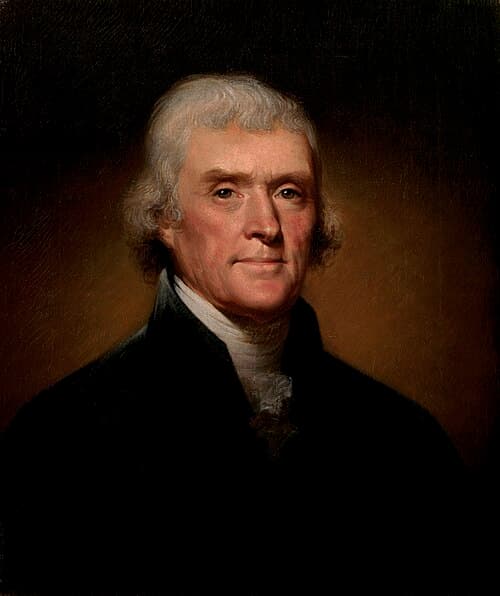
Thomas Jefferson
PERSON5 w/ The·3 w/ the
Blocks World
ORGANIZATION5 w/ The·3 w/ the
GA
Gardner
PERSON5 w/ The·3 w/ the
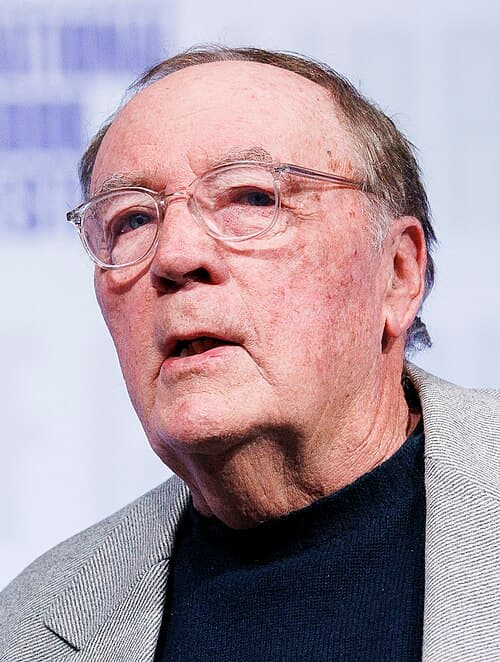
James Patterson
PERSON5 w/ The·3 w/ the
EF
E. Fredkin
PERSON5 w/ The·3 w/ the