Back to Network












3
Shared Docs
3
Same-Page
3 / 3
Mentions
Document Mentions (3 shared documents)
2 mentions1 same-page
Page ?Same page
y and A-Definability? The Journal of Symbolic Logic 2, no. 4 (1937): 153-63. ———. “Computing Machinery and Intelligence?’ Mind, 1950, 433-60. ———. “Computing Machinery and Intelligence.’ In Computers & Thought, 11-35. MIT Press, 1995. http://dl.acm.org/citation.cfm?id=216410. ———. “Intelligent Machines.” Ince, DC (Ed.) 5 (1992). ht
rly Journal of Mechanics and Applied Mathematics 1, no. 1 (1948): 287-308. Turing, Alan Mathison. “On Computable Numbers, with an Application to the Entscheidungsproblem.” J. of Math 58 (1936): 345-63. ———. “Systems of Logic Based on Ordinals.” Proceedings of the London Mathematical Society 2, no. 1 (1939): 161-228.
2 mentions1 same-page
Page ?Same page
peration, Norbert Wiener imagined the future we now contend with in impressive detail and with few clear mistakes. Alan Turing’s famous 1950 article “Computing Machinery and Intelligence,” in the philosophy journal Mind, foresaw the development of AI, and so did Wiener, but Wiener saw farther and deeper, recognizing that AI would not
e. Turing contributed a fundamental model of computation—now known as a Turing Machine—in his paper “On Computable Numbers with an Application to the Entscheidungsproblem,” written and revised in 1936 and published in 1937. In these machines, a linear tape of symbols from a finite alphabet encodes the input for a compu
Sponsored
Mutual Connections (420)
Entities connected to both Computing Machinery and Intelligence and Entscheidungsproblem
Alan Dershowitz
PERSON5 w/ Computing·5 w/ Entscheidungsproblem
George W. Bush
PERSON5 w/ Computing·5 w/ Entscheidungsproblem
Robert Gates
PERSON5 w/ Computing·5 w/ Entscheidungsproblem
Michael Douglas
PERSON5 w/ Computing·4 w/ Entscheidungsproblem
Stephen Hawking
PERSON5 w/ Computing·4 w/ Entscheidungsproblem
Prince Andrew
PERSON5 w/ Computing·4 w/ Entscheidungsproblem
Eric Trump
PERSON5 w/ Computing·4 w/ Entscheidungsproblem
Brooks
PERSON5 w/ Computing·4 w/ Entscheidungsproblem
Bill Gates
PERSON4 w/ Computing·4 w/ Entscheidungsproblem
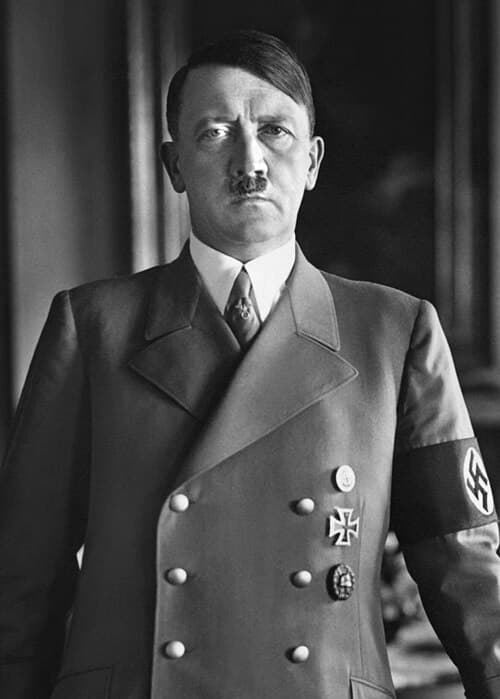
Adolf Hitler
PERSON3 w/ Computing·4 w/ Entscheidungsproblem
LB
Leon Black
PERSON3 w/ Computing·4 w/ Entscheidungsproblem
John Brockman
PERSON4 w/ Computing·3 w/ Entscheidungsproblem
Elon Musk
PERSON4 w/ Computing·3 w/ Entscheidungsproblem
Quantum
ORGANIZATION3 w/ Computing·4 w/ Entscheidungsproblem
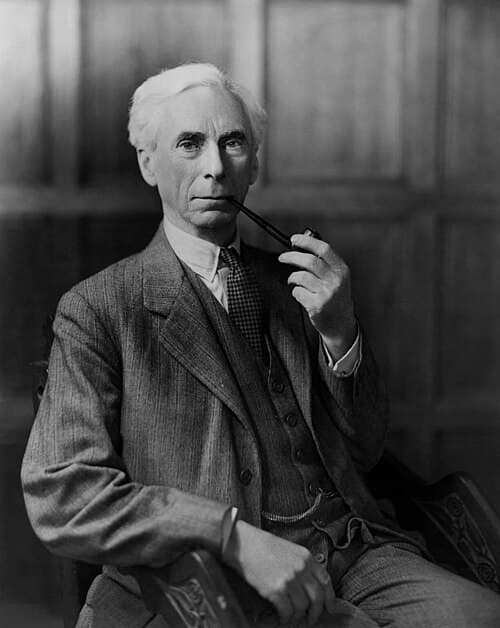
Bertrand Russell
PERSON3 w/ Computing·4 w/ Entscheidungsproblem
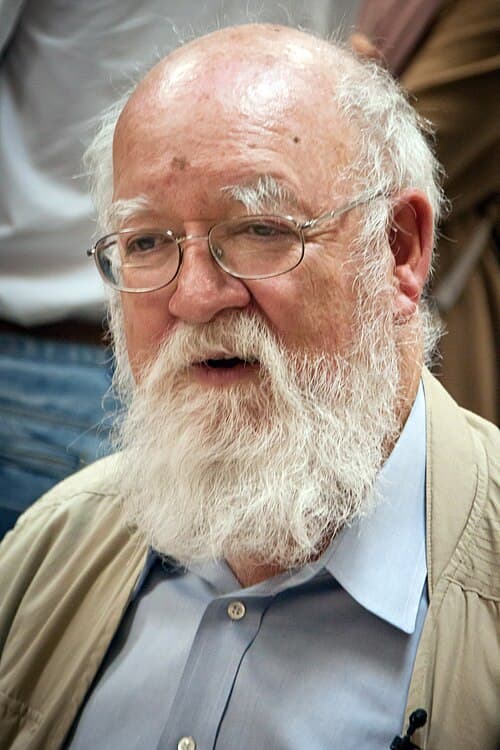
Daniel Dennett
PERSON4 w/ Computing·3 w/ Entscheidungsproblem
W. Daniel Hillis
PERSON4 w/ Computing·3 w/ Entscheidungsproblem
Marvin Minsky
PERSON3 w/ Computing·4 w/ Entscheidungsproblem
Stephen Wolfram
PERSON4 w/ Computing·3 w/ Entscheidungsproblem
William Shakespeare
PERSON3 w/ Computing·4 w/ Entscheidungsproblem