Back to Network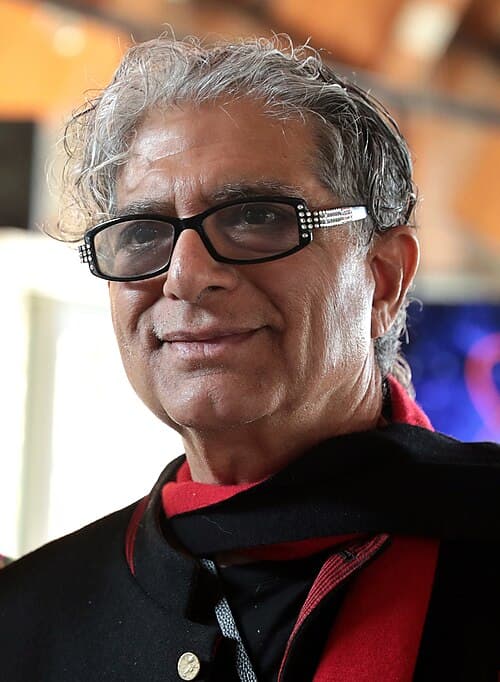




6
Shared Docs
6
Same-Page
6 / 6
Mentions
Document Mentions (6 shared documents)
2 mentions1 same-page
Page ?Same page
ould have some way of articulating the hidden reality we know as mind. The concepts involved go beyond back-action, which in Peirce's terminology is Secondness, and include his Thirdness, which corresponds to Yardley's `pi'. See https://en.wikipedia.org/wiki/ Semiotic_ elements and_ classes_ of_ signs#Semi
ating the hidden reality we know as mind. The concepts involved go beyond back-action, which in Peirce's terminology is Secondness, and include his Thirdness, which corresponds to Yardley's `pi'. See https://en.wikipedia.org/wiki/ Semiotic_ elements and_ classes_ of_ signs#Semiotic elements for details ab
2 mentions1 same-page
Page ?Same page
ould have some way of articulating the hidden reality we know as mind. The concepts involved go beyond back-action, which in Peirce's terminology is Secondness, and include his Thirdness, which corresponds to Yardley's 'pi'. See https://en.wikipedia.org/wiki/ Semiotic elements and classes_of signstiSemioti
ating the hidden reality we know as mind. The concepts involved go beyond back-action, which in Peirce's terminology is Secondness, and include his Thirdness, which corresponds to Yardley's 'pi'. See https://en.wikipedia.org/wiki/ Semiotic elements and classes_of signstiSemiotic elements for details about
2 mentions1 same-page
Page ?Same page
ould have some way of articulating the hidden reality we know as mind. The concepts involved go beyond back-action, which in Peirce's terminology is Secondness, and include his Thirdness, which corresponds to Yardley's 'pi'. See https://en.wikipedia.org/wiki/Semiotic_elements and_classes_of signstiSemiotic
ating the hidden reality we know as mind. The concepts involved go beyond back-action, which in Peirce's terminology is Secondness, and include his Thirdness, which corresponds to Yardley's 'pi'. See https://en.wikipedia.org/wiki/Semiotic_elements and_classes_of signstiSemiotic_elements for details about
Sponsored
2 mentions1 same-page
Page ?Same page
ould have some way of articulating the hidden reality we know as mind. The concepts involved go beyond back-action, which in Peirce's terminology is Secondness, and include his Thirdness, which corresponds to Yardley's `pi'. See https://en.wikipedia.org/wiki/ Semiotic elements and classes_of signs#Semiotic
ating the hidden reality we know as mind. The concepts involved go beyond back-action, which in Peirce's terminology is Secondness, and include his Thirdness, which corresponds to Yardley's `pi'. See https://en.wikipedia.org/wiki/ Semiotic elements and classes_of signs#Semiotic elements for details about
2 mentions1 same-page
Page ?Same page
uld have some way of articulating the hidden reality we know as mind. The concepts involved go beyond back-action, which in Peirce's terminology is Secondness, and include his Thirdness, which corresponds to Yardley's `pi'. See https://en.wikipedia.org/wiki/ Semiotic elements_ and_ classes_of signs#Semiot
ting the hidden reality we know as mind. The concepts involved go beyond back-action, which in Peirce's terminology is Secondness, and include his Thirdness, which corresponds to Yardley's `pi'. See https://en.wikipedia.org/wiki/ Semiotic elements_ and_ classes_of signs#Semiotic elements for details abou
2 mentions1 same-page
Page ?Same page
n be represented diagrammatically as shown below: f g REALITY: Reality as Is -> Reality as Experienced ----> Reality as Modeled (Firstness) (Secondness) (Thirdness) <Object> <Sign> <Interpretant> A EFTA_R1_01353564 EFTA02361639 h Figure 1. The postulate that Reality is irreducibly triadic,
ted diagrammatically as shown below: f g REALITY: Reality as Is -> Reality as Experienced ----> Reality as Modeled (Firstness) (Secondness) (Thirdness) <Object> <Sign> <Interpretant> A EFTA_R1_01353564 EFTA02361639 h Figure 1. The postulate that Reality is irreducibly triadic, i.e., Reality
Sponsored
Mutual Connections (12)
Entities connected to both Secondness and Thirdness
PE
Peirce
PERSON6 w/ Secondness·6 w/ Thirdness
Deepak Chopra
PERSON6 w/ Secondness·6 w/ Thirdness
Yardley
PERSON5 w/ Secondness·5 w/ Thirdness
Sergey Brin
PERSON5 w/ Secondness·5 w/ Thirdness
Penrose
PERSON5 w/ Secondness·5 w/ Thirdness
JO
Josephson
PERSON5 w/ Secondness·5 w/ Thirdness
SK
Stanley A. KLEIN
PERSON5 w/ Secondness·5 w/ Thirdness
BJ
Brian Josephson
PERSON5 w/ Secondness·5 w/ Thirdness
Samantha Power
PERSON5 w/ Secondness·5 w/ Thirdness
Jeffrey Epstein
PERSON4 w/ Secondness·4 w/ Thirdness
INtemet
ORGANIZATION3 w/ Secondness·3 w/ Thirdness
CW
Courtney Wild
PERSON2 w/ Secondness·2 w/ Thirdness