Back to Network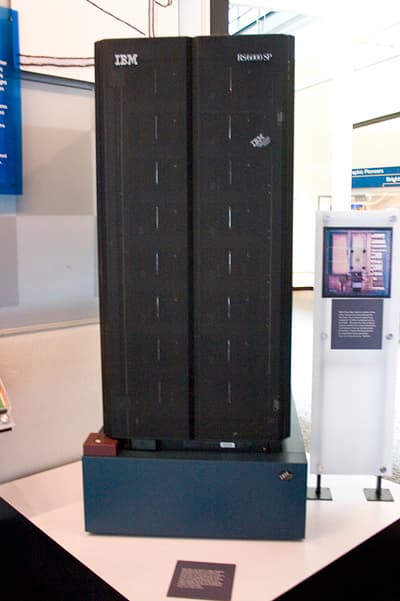










4
Shared Docs
4
Same-Page
4 / 4
Mentions
Document Mentions (4 shared documents)
2 mentions1 same-page
Page ?Same page
t its consequences are intimately bound up in the idea of an impending technological singularity. His work on neuroscience and his initial support of McCulloch and Pitts adumbrated the startlingly effective deep-learning methods of the present day. Over the past decade, and particularly in the last five year
o communicate with other humans, learn from them, instruct them, and motivate them in our own native language. If our robots will all be as opaque as AlphaGo, we won’t be able to hold a meaningful conversation with them, and that would be unfortunate. We will need to retrain them whenever we make a slight
2 mentions1 same-page
Page ?Same page
It’s fun to show it an abstract painting and see what it says. But it does a pretty good job. It works using the same neural-network technology that McCulloch and Pitts imagined in 1943 and lots of us worked on in the early eighties. Back in the 1980s, people successfully did OCR—optical character recogniti
rs relied a great deal on intuition and a feel for position, so proficiency was thought to require a particularly human kind of intelligence. But the AlphaGo program produced by DeepMind, after being trained on thousands of high-level Go games played by humans and then millions of games with itself, was ab
2 mentions1 same-page
Page ?Same page
t its consequences are intimately bound up in the idea of an impending technological singularity. His work on neuroscience and his initial support of McCulloch and Pitts adumbrated the startlingly effective deep-learning methods of the present day. Over the past decade, and particularly in the last five year
o communicate with other humans, learn from them, instruct them, and motivate them in our own native language. If our robots will all be as opaque as AlphaGo, we won’t be able to hold a meaningful conversation with them, and that would be unfortunate. We will need to retrain them whenever we make a slight
Sponsored
2 mentions1 same-page
Page ?Same page
It’s fun to show it an abstract painting and see what it says. But it does a pretty good job. It works using the same neural-network technology that McCulloch and Pitts imagined in 1943 and lots of us worked on in the early eighties. Back in the 1980s, people successfully did OCR—optical character recogniti
rs relied a great deal on intuition and a feel for position, so proficiency was thought to require a particularly human kind of intelligence. But the AlphaGo program produced by DeepMind, after being trained on thousands of high-level Go games played by humans and then millions of games with itself, was ab
Sponsored
Mutual Connections (689)
Entities connected to both McCulloch and AlphaGo
Deep Blue
PERSON4 w/ McCulloch·8 w/ AlphaGo
Oliver Stone
PERSON6 w/ McCulloch·5 w/ AlphaGo
Samantha Power
PERSON6 w/ McCulloch·5 w/ AlphaGo
George W. Bush
PERSON7 w/ McCulloch·4 w/ AlphaGo
Stephen Hawking
PERSON5 w/ McCulloch·6 w/ AlphaGo
Turing
PERSON5 w/ McCulloch·5 w/ AlphaGo
Garry Kasparov
PERSON4 w/ McCulloch·6 w/ AlphaGo
Wilbur Ross
PERSON6 w/ McCulloch·4 w/ AlphaGo
Elon Musk
PERSON5 w/ McCulloch·5 w/ AlphaGo
Harvey Weinstein
PERSON6 w/ McCulloch·4 w/ AlphaGo
Hans Ulrich Obrist
PERSON5 w/ McCulloch·5 w/ AlphaGo
John Brockman
PERSON5 w/ McCulloch·5 w/ AlphaGo
Marc Rich
PERSON6 w/ McCulloch·4 w/ AlphaGo
Eric Trump
PERSON5 w/ McCulloch·4 w/ AlphaGo
LB
Leon Black
PERSON5 w/ McCulloch·4 w/ AlphaGo
Jaan Tallinn
PERSON5 w/ McCulloch·4 w/ AlphaGo
Julie K. Brown
PERSON5 w/ McCulloch·4 w/ AlphaGo
David Kaiser
PERSON5 w/ McCulloch·4 w/ AlphaGo
Frank Wilczek
PERSON5 w/ McCulloch·4 w/ AlphaGo
Prince Andrew
PERSON5 w/ McCulloch·4 w/ AlphaGo