Back to Network












5
Shared Docs
5
Same-Page
5 / 5
Mentions
Document Mentions (5 shared documents)
2 mentions1 same-page
Page ?Same page
ween humans and the machinery in response speed when the signal was given that "buzzing in" was permitted. Watson was able to use the many previous Jeopardy! games it was tested with to be able to better predict where Daily Doubles were, and it was able to do better betting based on game theory. The so
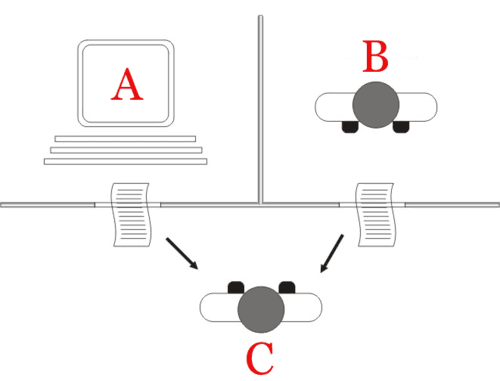
long with them more revisions. Over those months InkWell produced a lot more haiku, and I selected fourteen of them to add to the above four for a Turing Test. In October 1950, the British journal Mind published an essay by Alan M. Turing titled, "Computing Machinery and Intelligence," in which Turing pr
2 mentions1 same-page
Page ?Same page
ages, it uses thousands of times more energy than a human brain (a technological limitation that, as he also notes, may be temporary). Its victory in Jeopardy! was a genuine triumph, made possible by the formulaic restrictions of the Jeopardy! rules, but in order for it to compete, even these rules had to b
his past behavior includes quirks and habits of the human pilot, thus a mechanized device can predict the behavior of humans. Like Alan Turing, whose Turing Test suggested that computing machines could give responses to questions which were indistinguishable from human responses, Wiener was fascinated by the n
2 mentions1 same-page
Page ?Same page
its of beam-fabrication methods at around 10-nanometer feature size. Power (energy consumption) issues are also apparent: The great Watson, winner of Jeopardy!, used 85,000 watts real time, while the human brains were using 20 watts each. To be fair, the human body needs 100 watts to operate and twenty year
to you. They have to know what the human is confused about. What has long been difficult for me to understand is, What’s the point of a conventional Turing Test? What’s the motivation? As a toy, one could make a little chat bot that people could chat with. That will be the next thing. The current round of dee
Sponsored
2 mentions1 same-page
Page ?Same page
ages, it uses thousands of times more energy than a human brain (a technological limitation that, as he also notes, may be temporary). Its victory in Jeopardy! was a genuine triumph, made possible by the formulaic restrictions of the Jeopardy! rules, but in order for it to compete, even these rules had to b
his past behavior includes quirks and habits of the human pilot, thus a mechanized device can predict the behavior of humans. Like Alan Turing, whose Turing Test suggested that computing machines could give responses to questions which were indistinguishable from human responses, Wiener was fascinated by the n
2 mentions1 same-page
Page ?Same page
its of beam-fabrication methods at around 10-nanometer feature size. Power (energy consumption) issues are also apparent: The great Watson, winner of Jeopardy!, used 85,000 watts real time, while the human brains were using 20 watts each. To be fair, the human body needs 100 watts to operate and twenty year
to you. They have to know what the human is confused about. What has long been difficult for me to understand is, What’s the point of a conventional Turing Test? What’s the motivation? As a toy, one could make a little chat bot that people could chat with. That will be the next thing. The current round of dee
Sponsored
Mutual Connections (694)
Entities connected to both Jeopardy and Turing Test
Silicon Valley
LOCATION21 w/ Jeopardy·2 w/ Turing
Marc Rich
PERSON12 w/ Jeopardy·6 w/ Turing
George W. Bush
PERSON10 w/ Jeopardy·6 w/ Turing
Stephen Hawking
PERSON9 w/ Jeopardy·7 w/ Turing
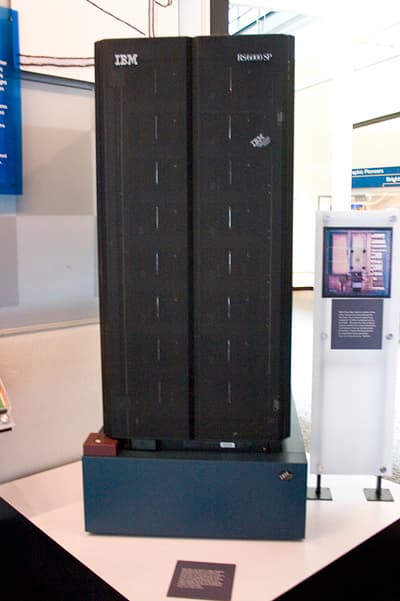
Deep Blue
PERSON10 w/ Jeopardy·5 w/ Turing
Prince Andrew
PERSON8 w/ Jeopardy·6 w/ Turing
Ghislaine Maxwell
PERSON9 w/ Jeopardy·4 w/ Turing
Barack Obama
PERSON9 w/ Jeopardy·4 w/ Turing
Julie K. Brown
PERSON7 w/ Jeopardy·6 w/ Turing
Alan Dershowitz
PERSON6 w/ Jeopardy·7 w/ Turing
Marvin Minsky
PERSON6 w/ Jeopardy·6 w/ Turing
Samantha Power
PERSON7 w/ Jeopardy·5 w/ Turing
Elon Musk
PERSON5 w/ Jeopardy·6 w/ Turing
Daniel Dennett
PERSON5 w/ Jeopardy·6 w/ Turing
Garry Kasparov
PERSON6 w/ Jeopardy·5 w/ Turing
DB
Doug Band
PERSON7 w/ Jeopardy·4 w/ Turing
Eric Trump
PERSON7 w/ Jeopardy·4 w/ Turing
Turing
PERSON6 w/ Jeopardy·5 w/ Turing
Oliver Stone
PERSON5 w/ Jeopardy·6 w/ Turing
Robert Gates
PERSON6 w/ Jeopardy·5 w/ Turing