Back to Network








4
Shared Docs
4
Same-Page
10 / 7
Mentions
Document Mentions (4 shared documents)
6 mentions1 same-page
Page ?Same page
ing used as the basis for an open-source software project called OpenCog, which is being worked on by software developers around the world. Right now OpenCog embodies only a percentage of the overall CogPrime design as described here. But if OpenCog continues to attract sufficient funding or volunteer inte
at the ideas presented here are not mere armchair speculation — they are currently being used as the basis for an open-source software project called OpenCog, which is being worked on by software developers around the world. Right now OpenCog embodies only a percentage of the overall CogPrime design as des
be validated or refuted via practice. (As a related note: here and there in this book, we will refer to the "current" CogPrime implementation (in the OpenCog framework); in all cases this refers to OpenCog as of late 2013.) To state one believes one knows a workable path to creating a human-level (and pot
oduction .......00..000 000 tte teen ee 271 14.2: Key Vertex atid Edge Typé$ casas cuine cs ce ees ee ses ems es emo ws Meee MERE OE 271 14.3 Derived Hypergraphs .......... 0.000. c cece tenet eae 272 14.3.1 SMEPH Vertices .........000 0000. tte 272 14.3.2 SMEPH Edges ...... 0... ee eee eens 273 14.4 Implicat
works... .......0.000. 0022 c cee ee 268 13.6.4 Neural-Symbolic Glocality in CogPrime ............. 0000.0 269 14 Representing Implicit Knowledge via Hypergraphs ....................... 271 14.1 Introduction .......00..000 000 tte teen ee 271 14.2: Key Vertex atid Edge Typé$ casas cuine cs ce ees ee ses ems es
epresentation...................... 245 13.1 Introduction ..........000 0002 eens 245 13.2 Localized Knowledge Representation using Weighted, Labeled Hypergraphs .... 246 13.2.1 Weighted, Labeled Hypergraphs............... 0000: c eee eee eee eee 246 13.3 Atoms: Their Types and Weights ............ 0.00. cee
5 mentions1 same-page
Page ?Same page
g used as the basis for an open-source software project called OpenCog, which is being worked on by software developers around the world. Right now OpenCog embodies only a percentage of the overall CogPrime design as described here. But if OpenCog continues to attract sufficient funding or volunteer in
the ideas presented here are not mere armchair speculation - they are currently being used as the basis for an open-source software project called OpenCog, which is being worked on by software developers around the world. Right now OpenCog embodies only a percentage of the overall CogPrime design as d
validated or refuted via practice. (As a related note: here and there in this book, we will refer to the "current" CogPrime implementation (in the OpenCog framework); in all cases this refers to OpenCog as of late 2013.) To state one believes one knows a workable path to creating a human-level (and po
the Brain 263 13.6.3 Glocal Hopfield Networks 268 13.6.4 Neural-Symbolic Glocality in CogPrime 269 14 Representing Implicit Knowledge via Hypergraphs 271 14.1 Introduction 271 14.2 Key Vertex and Edge Types 271 14.3 Derived Hypergraphs 272 14.3.1 SMEPH Vertices 272 14.3.2 SMEPH Ed
13 Local, Global and Glocal Knowledge Representation 245 13.1 Introduction 245 13.2 Localized Knowledge Representation using Weighted, Labeled Hypergraphs 246 13.2.1 Weighted, Labeled Hypergraphs 246 13.3 Atoms: Their Types and Weights 247 13.3.1 Some Basic Atom Types 247 13.3.2 Variable At
3 mentions1 same-page
Page ?Same page
us to attractor neural nets. The OpenCog design also contains a mechanism called Psynese (not yet implemented), in- tended to make it easier for one OpenCog instance to translate its personal thoughts into the mental language of another OpenCog instance. This translation process may be quite subtle, sin
representation, with an explicit (uncertain) logical aspect as well as an explicit subsymbolic aspect more analogous to attractor neural nets. The OpenCog design also contains a mechanism called Psynese (not yet implemented), in- tended to make it easier for one OpenCog instance to translate its persona
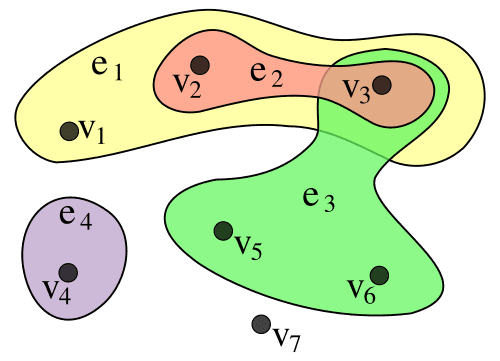
algorithms for creating localist knowledge from globalist knowledge are described 13.2 Localized Knowledge Representation using Weighted, Labeled Hypergraphs There are many different mechanisms for representing knowledge in AI systems in an explicit, localized way, most of them descending from various va
Sponsored
3 mentions1 same-page
Page ?Same page
us to attractor neural nets. The OpenCog design also contains a mechanism called Psynese (not yet implemented), in- tended to make it easier for one OpenCog instance to translate its personal thoughts into the mental language of another OpenCog instance. This translation process may be quite subtle, since
d representation, with an explicit (uncertain) logical aspect as well as an explicit subsymbolic aspect more analogous to attractor neural nets. The OpenCog design also contains a mechanism called Psynese (not yet implemented), in- tended to make it easier for one OpenCog instance to translate its persona
n” algorithms for creating localist knowledge from globalist knowledge are described 13.2 Localized Knowledge Representation using Weighted, Labeled Hypergraphs There are many different mechanisms for representing knowledge in AI systems in an explicit, localized way, most of them descending from various var
Sponsored
Mutual Connections (365)
Entities connected to both OpenCog and Hypergraphs
Jeffrey Epstein
PERSON86 w/ OpenCog·2 w/ Hypergraphs
Joscha Bach
PERSON40 w/ OpenCog·2 w/ Hypergraphs
Marc Rich
PERSON23 w/ OpenCog·4 w/ Hypergraphs
Novamente LLC
ORGANIZATION23 w/ OpenCog·2 w/ Hypergraphs
Xiamen
LOCATION19 w/ OpenCog·2 w/ Hypergraphs
CogPrime
ORGANIZATION14 w/ OpenCog·4 w/ Hypergraphs
DeSTIN
ORGANIZATION16 w/ OpenCog·2 w/ Hypergraphs
Novamente
ORGANIZATION16 w/ OpenCog·2 w/ Hypergraphs
Marvin Minsky
PERSON13 w/ OpenCog·2 w/ Hypergraphs
ConceptNodes
ORGANIZATION12 w/ OpenCog·2 w/ Hypergraphs
George W. Bush
PERSON10 w/ OpenCog·4 w/ Hypergraphs
Joel Pitt
PERSON9 w/ OpenCog·4 w/ Hypergraphs
Stephen Hawking
PERSON9 w/ OpenCog·4 w/ Hypergraphs
Hopfield
ORGANIZATION8 w/ OpenCog·4 w/ Hypergraphs
Linas Vepstas
PERSON10 w/ OpenCog·2 w/ Hypergraphs
Hebbian Learning
ORGANIZATION7 w/ OpenCog·4 w/ Hypergraphs
Vince Foster
PERSON7 w/ OpenCog·4 w/ Hypergraphs
CP
Cassio Pennachin
PERSON9 w/ OpenCog·2 w/ Hypergraphs
BH
Bill Hibbard
PERSON6 w/ OpenCog·4 w/ Hypergraphs
Vladimir Putin
PERSON6 w/ OpenCog·4 w/ Hypergraphs