Back to Network







5
Shared Docs
5
Same-Page
12 / 5
Mentions
Document Mentions (5 shared documents)
4 mentions1 same-page
Page ?Same page
g used as the basis for an open-source software project called OpenCog, which is being worked on by software developers around the world. Right now OpenCog embodies only a percentage of the overall CogPrime design as described here. But if OpenCog continues to attract sufficient funding or volunteer in
the ideas presented here are not mere armchair speculation - they are currently being used as the basis for an open-source software project called OpenCog, which is being worked on by software developers around the world. Right now OpenCog embodies only a percentage of the overall CogPrime design as d
validated or refuted via practice. (As a related note: here and there in this book, we will refer to the "current" CogPrime implementation (in the OpenCog framework); in all cases this refers to OpenCog as of late 2013.) To state one believes one knows a workable path to creating a human-level (and po
Supercompilation 319 18.3.1 Three Aspects of Supercompilation 321 18.3.2 Supercompilation for Goal-Directed Program Modification 322 18.4 Self-Modification via Theorem-Proving 323 A Glossary 325 A.1 List of Specialized Acronyms 325 A.2 Glossary of Specialized Terms 326 References 343 EFTA006
4 mentions1 same-page
Page ?Same page
ing used as the basis for an open-source software project called OpenCog, which is being worked on by software developers around the world. Right now OpenCog embodies only a percentage of the overall CogPrime design as described here. But if OpenCog continues to attract sufficient funding or volunteer inte
at the ideas presented here are not mere armchair speculation — they are currently being used as the basis for an open-source software project called OpenCog, which is being worked on by software developers around the world. Right now OpenCog embodies only a percentage of the overall CogPrime design as des
be validated or refuted via practice. (As a related note: here and there in this book, we will refer to the "current" CogPrime implementation (in the OpenCog framework); in all cases this refers to OpenCog as of late 2013.) To state one believes one knows a workable path to creating a human-level (and pot
cts of Supercompilation .............0..00 000022 eee eee ee 321 18.3.2 Supercompilation for Goal-Directed Program Modification............. 322 18.4 Self-Modification via Theorem-Proving ........... 0.00 eee eee eee 323 A Glossary ..... 0.00000 tne teen eee 325 A.1 List of Specialized Acronyms.........0.. 00 0c ce
3 mentions1 same-page
Page ?Same page
his nature that can be effective in this context We have not yet done any sophisticated experiments in this regard - our current experiments using OpenCog to control robots involve cruder integration of OpenCog with perceptual and motor subsystems, rather than the tight hybridization described in Chapt
obabilistic evolutionary program learn- Mg is an effective method The probabilistic evolutionary program learning method we have worked with most in OpenCog is MOSES, and significant evidence has been gathered showing it to be dramatically more effective than genetic programming on relevant classes of p
, ImplicationLink, etc.) or a fuzzy value (as in MemberLink, EvaluationLink). • Strong Self-Modification: This is generally used as synonymous with Self-Modification, in a CogPrime context. • Subsymbolic: Involving processing of data using elements that have no correspondence to natural language terms, nor abst
Sponsored
3 mentions1 same-page
Page ?Same page
zed Terms • Abduction: A general form of inference that goes from data describing something to a hypothesis that accounts for the data. Often in an OpenCog context, this refers to the PLN abduction rule, a specific First-Order PLN rule (If A implies C, and B implies C, then maybe A is B), which embodie
bility. EFTA00624100 Appendix A Glossary A.1 List of Specialized Acronyms This includes acronyms that are commonly used in discussing CogPrime, OpenCog and related ideas, plus sonic that occur here and there in the text for relatively ephemeral reasons. • AA: Attention Allocation • ADF: Automatica
cision graph looks like: Input: List L Output: List If ( P1 (L) ) N1(L) Else If ( P2 (L) ) N2 (L) Else If ( Pk (L) ) Nk(L) EFTA00624098 18.4 Self-Modification via Theorem-Proving 323 where the Pi are predicates, and the Ni are schemata corresponding to other nodes of the decision graph (children of the c
3 mentions1 same-page
Page ?Same page
HOUSE_OVERSIGHT_013240 Appendix A Glossary A.1 List of Specialized Acronyms This includes acronyms that are commonly used in discussing CogPrime, OpenCog and related ideas, plus some that occur here and there in the text for relatively ephemeral reasons. AA: Attention Allocation ADF: Automatically De
alized Terms Abduction: A general form of inference that goes from data describing something to a hypothesis that accounts for the data. Often in an OpenCog context, this refers to the PLN abduction rule, a specific First-Order PLN rule (If A implies C, and B implies C, then maybe A is B), which embodies
nt decision graphs. The decision graph leading to maximal optimization, may not be the one that leads CogPrime cognition in optimal directions. 18.4 Self-Modification via Theorem-Proving Supercompilation is a potentially very valuable tool for self-modification. If one wants to take an existing schema and graduall
Sponsored
Mutual Connections (834)
Entities connected to both OpenCog and Self-Modification
Jeffrey Epstein
PERSON86 w/ OpenCog·2 w/ Self-Modification
Joscha Bach
PERSON40 w/ OpenCog·5 w/ Self-Modification
Marc Rich
PERSON23 w/ OpenCog·5 w/ Self-Modification
Novamente LLC
ORGANIZATION23 w/ OpenCog·2 w/ Self-Modification
DeSTIN
ORGANIZATION16 w/ OpenCog·5 w/ Self-Modification
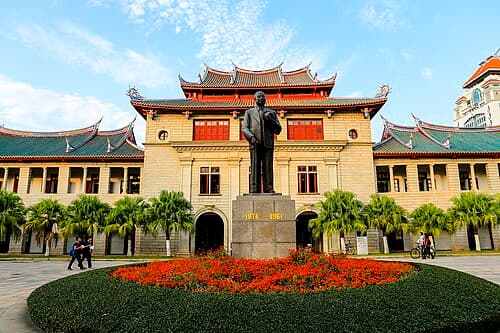
Xiamen
LOCATION19 w/ OpenCog·2 w/ Self-Modification
CogPrime
ORGANIZATION14 w/ OpenCog·5 w/ Self-Modification
Marvin Minsky
PERSON13 w/ OpenCog·5 w/ Self-Modification
Novamente
ORGANIZATION16 w/ OpenCog·2 w/ Self-Modification
ConceptNodes
ORGANIZATION12 w/ OpenCog·3 w/ Self-Modification
Itamar
PERSON13 w/ OpenCog·2 w/ Self-Modification
George W. Bush
PERSON10 w/ OpenCog·5 w/ Self-Modification
CP
Cassio Pennachin
PERSON9 w/ OpenCog·5 w/ Self-Modification
Stephen Hawking
PERSON9 w/ OpenCog·5 w/ Self-Modification
Shane Legg
PERSON8 w/ OpenCog·5 w/ Self-Modification
Artificial General Intelligence
ORGANIZATION8 w/ OpenCog·5 w/ Self-Modification
MI
MindAgents
PERSON10 w/ OpenCog·3 w/ Self-Modification
Joel Pitt
PERSON9 w/ OpenCog·4 w/ Self-Modification
Ray Kurzweil
PERSON10 w/ OpenCog·3 w/ Self-Modification
NG
Nil Geisweiller
PERSON8 w/ OpenCog·5 w/ Self-Modification