Back to Network

















7
Shared Docs
7
Same-Page
7 / 8
Mentions
Document Mentions (7 shared documents)
3 mentions1 same-page
Page ?Same page
ran's regime gains legitimacy by demonising foreign powers. The cold war seems stable by comparison with a nuclear Middle East—and yet America and the Soviet Union were sometimes scarily close to Armageddon. No wonder some people want a pre-emptive strike. But military action is not the solution to a nuclear
solution short of stripping Iran of even a peaceful nuclear capacity." What's more, says Friedman, the non-binding status may be temporary. "Often AIPAC-backed Congressional initiatives start as non-binding language (in a resolution or a letter) and then show up in binding legislation. Once members
clude producing weapons. Even Dennis Ross--who has rarely, in his long career as a Mideast diplomat, left much daylight between his positions and AIPAC's, and who once categorically opposed Iranian enrichment--now realizes that a diplomatic solution may have to include enrichment. Last week in a Ne
2 mentions1 same-page
Page ?Same page
ally in the region, Iran. Historically, first under the tsars and then under the Soviets, Tehran feared Russian expansionism. With the break-up of the Soviet Union, however, relations improved greatly, as Russian and Iranian interests began to substantially converge—particularly when it came to limiting Americ
uture state for the Palestinian people. And with each new BDS headline, the ferocious reaction from the movement's critics, with Netanyahu and his AIPAC fulminations in the vanguard, has risen exponentially. I think it's safe to say BDS is in the "then they fight you" stage. Some wrongly portray the
2 mentions1 same-page
Page ?Same page
de after the Berlin Wall was breached, a EFTA00678426 weakened and disorganized Russia watched first as the Warsaw Pact disintegrated and then as the Soviet Union itself did. In both regions, especially Central Europe, the Kremlin might have responded with military force as it had before, possibly even with t
uclear facilities becomes necessary. Yet this is a debate about the American national interest, and most American Israel Public Affairs Committee (AIPAC) supporters do not want it to degenerate into a debate about Israel. Most agree with former Israeli Ambassador Itamar Rabinovitch that, "It's bad f
Sponsored
2 mentions1 same-page
Page ?Same page
formulation to its apex with great initiatives that shaped the international landscape, such as the Marshall Plan, the containment policy vis-a-vis the Soviet Union and the creation of the United Nations. Can we emulate today, admittedly in different historical circumstances, that bridge from conflict managemen
igns of softening their positions. Their demands to maintain the current measures reflect, in part, the success of a concerted lobbying campaign by AIPAC. The pro-Israel group has sat out some recent potential fights over large- scale U.S. weapons sales to Saudi Arabia and the United Arab Emirates in
2 mentions1 same-page
Page ?Same page
kraine from turning towards the West. EFTA00684328 For those in doubt, suffice to recall President Putin's statement in 2006 that the collapse of the Soviet Union was "the greatest geopolitical catastrophe" of the twentieth century. Ukraine firmly anchored in the Western system, on its way towards membership
now there was a decade of Jewish power!—is quite shocking. (His Abba Hillel Silver is just an early version of Howard Kohr, in consonance with his AIPAC-centric view of the world.) The truth is that no amount of sympathy for Palestinians requires this amount of antipathy to Israelis. Remember Rosa L
2 mentions1 same-page
Page ?Same page
ill having made great strides toward nuclear capability. Such seemingly sober calculations miss the fact that the United States is not dealing with the Soviet Union but a beleaguered middling power that may still be coerced into more expansive concessions. In more than a decade of nuclear diplomacy, some analy
crease the chance that America would have to resort to military means to prevent Iran from developing nuclear weapons. EFTA00684598 In the past, AIPAC generally got what it wanted from Congress, and that appeared to be the case this time around, as well. Fully fifty senators signed on before Presi
Sponsored
2 mentions1 same-page
Page ?Same page
itarian countries are bound to either democratize or run out of economic steam. Indeed, Acemoglu and Robinson predict that China will go the way of the Soviet Union: exhausting its current economic success before transforming into a politically inclusive state. This tale sounds good, but it is simplistic. Altho
e problem, he goes on, is that there is too little trust that the United States will act. He advises that "even statements" could help, but "not to AIPAC;" instead, "a declaration to the Congress, that if the steps the administration is relying upon today ... do not achieve success by the summer of 2
Sponsored
Mutual Connections (298)
Entities connected to both the Soviet Union and AIPAC
Barack Obama
PERSON88 w/ the·22 w/ AIPAC
United States
LOCATION86 w/ the·20 w/ AIPAC
George W. Bush
PERSON80 w/ the·19 w/ AIPAC
Bill Clinton
PERSON72 w/ the·17 w/ AIPAC
Jeffrey Epstein
PERSON63 w/ the·9 w/ AIPAC
Benjamin Netanyahu
PERSON52 w/ the·19 w/ AIPAC
LB
Leon Black
PERSON61 w/ the·10 w/ AIPAC
Bashar al-Assad
PERSON51 w/ the·18 w/ AIPAC
Lebanon
LOCATION51 w/ the·17 w/ AIPAC
Marc Rich
PERSON57 w/ the·10 w/ AIPAC
Department of Justice
ORGANIZATION50 w/ the·11 w/ AIPAC
Joe Biden
PERSON55 w/ the·6 w/ AIPAC
Middle East
LOCATION47 w/ the·12 w/ AIPAC
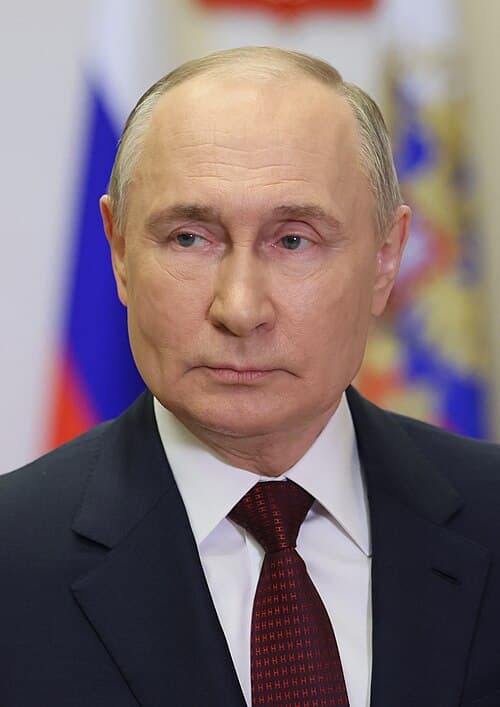
Vladimir Putin
PERSON51 w/ the·7 w/ AIPAC
Tehran
LOCATION41 w/ the·15 w/ AIPAC
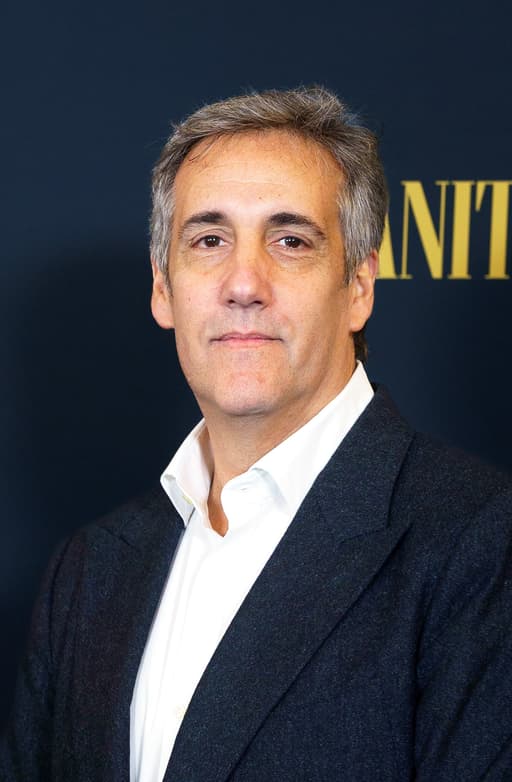
Michael Cohen
PERSON50 w/ the·5 w/ AIPAC
Donald Trump
PERSON45 w/ the·8 w/ AIPAC
Stephen Hawking
PERSON45 w/ the·7 w/ AIPAC
John F. Kennedy
PERSON48 w/ the·4 w/ AIPAC
Julie K. Brown
PERSON47 w/ the·4 w/ AIPAC