Back to Network












4
Shared Docs
4
Same-Page
6 / 4
Mentions
Document Mentions (4 shared documents)
3 mentions1 same-page
Page ?Same page
The cognitive interview: Novice police officers' witness/victim interviewing practices. Psychology. Crime & Law 15 679-696. Dando, C., Wilcock, R., Milne, R., & Henry, L. (2009a). The cognitive interview: The efficacy of a modified mental reinstatement of context procedure for frontline police invest
K. (2003). Behavioral confirmation in the interrogation room: On the dangers of presuming guilt. Law & Human Behavior, 87 187-203. Kebbell, M. R., Milne, R. & Wagstaff, G. F. (1999). The Cognitive Interview: A Survey of its Forensic Effectiveness. Psychology, Crime and Law, 5 101-115. Kebbell, M. R.
y, K.E., & Geiselman, R.E. (1990). Improving eyewitness recall for license plates, Applied Cognitive Psychology, 4, 129-140. Maras, K. L. & Bowler, D. M. (2010). The cognitive interview for eyewitnesses with autism spectrum disorder. Journal of Autism and Developmental Disorders, 40, 1350-1360. Maras
3 mentions1 same-page
Page ?Same page
interview eyewitnesses? Interview objectives and the evaluation of eyewitness performance. The Journal of Psychology, 131, 595-601. Koehnken, G., Milne, R., Memon, A., & Bull, R. (1999). The cognitive interview: A meta-analysis. Psychology, Crime and Law, 5, 3-27. Koriat, A., & Goldsmith, M. (1996)
re correct statements than did the control interview. The effect is extremely reliable: Of the 55 experiments examined in a meta-analysis (Koehnken, Milne, Memon, & Bull, 1999), 53 experiments found that the CI elicited more information than did the comparison interview (median increase = 34%). Equall
ral Justice in the Context of Civil Commitment: A Critique of Tyler's Analysis, Psychology, Public Policy & Law, 3:207-221. Tulving, E, & Thomson, D. M. (1973). Encoding specificity and retrieval processes in episodic memory. Psychological Review, 80, 352-373. Wexler, D.B. and Winick, B.J., Eds., (1
2 mentions1 same-page
Page ?Same page
e Truth: The Gospel as Tragedy, Comedy, and Fairy Tale (p. 3). New York: HarperCollins Publishers. 2. Caspi, A., Harrington, H., Moffitt, T.E., Milne, B.J., & Poulton, R. (2006). Socially isolated children 20 years later. Archives of Pediatric Adolescent Medicine, 160, 805-811. 3. Sugisawa, H.
(2005). Social exclusion impairs self-regulation. Journal of Personality & Social Psychology, 88, 589-604; Twenge, J.M., Baumeister, R. F., Tice, D. M., & Stucke, T. S. (2001). If you can't join them, beat them: Effects of social exclusion on aggressive behavior. Journal of Personality & Social
Sponsored
2 mentions1 same-page
Page ?Same page
ruth: The Gospel as Tragedy, Comedy, and Fairy Tale (p. 3). Page |47 New York: HarperCollins Publishers. Caspi, A., Harrington, H., Moffitt, T.E., Milne, B.J., & Poulton, R. (2006). Socially isolated children 20 years later. Archives of Pediatric Adolescent Medicine, 160, 805-811. Sugisawa, H., Liang
M. (2005). Social exclusion impairs self-regulation. Journal of Personality & Social Psychology, 88, 589-604; Twenge, J.M., Baumeister, R. F., Tice, D. M., & Stucke, T. S. (2001). If you can't join them, beat them: Effects of social exclusion on aggressive behavior. Journal of Personality & Social Psych
Sponsored
Mutual Connections (587)
Entities connected to both Milne and D. M.
George W. Bush
PERSON17 w/ Milne·13 w/ D.
Marc Rich
PERSON9 w/ Milne·12 w/ D.
Jeffrey Epstein
PERSON15 w/ Milne·6 w/ D.
Julie K. Brown
PERSON9 w/ Milne·9 w/ D.
Ghislaine Maxwell
PERSON16 w/ Milne·2 w/ D.
LB
Leon Black
PERSON9 w/ Milne·8 w/ D.
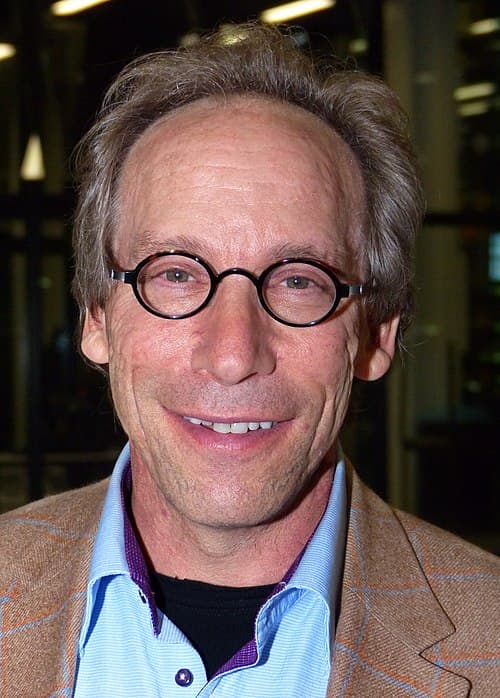
Lawrence Krauss
PERSON7 w/ Milne·8 w/ D.
Wiley
ORGANIZATION4 w/ Milne·9 w/ D.
Prince Charles
PERSON7 w/ Milne·6 w/ D.
Prince Andrew
PERSON8 w/ Milne·5 w/ D.
ET
Emmy Taylor
PERSON6 w/ Milne·7 w/ D.
New York City
LOCATION8 w/ Milne·4 w/ D.
George Mitchell
PERSON6 w/ Milne·6 w/ D.
Psychological Science
ORGANIZATION4 w/ Milne·8 w/ D.
John F. Kennedy
PERSON9 w/ Milne·3 w/ D.
DB
Doug Band
PERSON10 w/ Milne·2 w/ D.
Toronto
LOCATION6 w/ Milne·5 w/ D.
New York
LOCATION4 w/ Milne·7 w/ D.
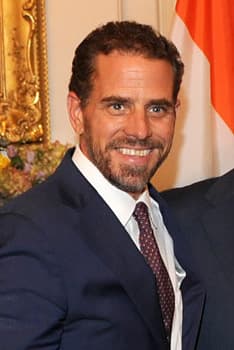
Hunter Biden
PERSON7 w/ Milne·4 w/ D.
Joi Ito
PERSON9 w/ Milne·2 w/ D.