Back to Network















7
Shared Docs
7
Same-Page
7 / 7
Mentions
Document Mentions (7 shared documents)
2 mentions1 same-page
Page ?Same page
y when it comes to negotiations for a Palestinian state. Also part of Saudi unhappiness was last week's headline about Riyadh's declining a seat on the UN Security Council. That rejection was aimed both at the international body and at U.S. leadership. These Saudi concerns are not just Saudi concerns. They are endemic
all, the Ottoman Empire had ruled over Egypt. And, on the Turkish side, there was a sense of superiority vis-à-vis the Arab world. The collapse of the Soviet Union awakened "neo-Ottoman" Turkish ambitions in the Caucasus and Central Asia, and revolution in the Middle East seemed to offer the heirs (if not orph
2 mentions1 same-page
Page ?Same page
7/23/politics/isis-coronavirus-un-terrorism-report/index.html> (7/23, Cruickshank, Analyst, 83.16M) reports that, according to a report submitted to the UN Security Council that was made public on Thursday, there has been "a significant rise in ISIS attacks in Iraq and Syria, with the group exploiting security gaps in
"in opposing any Russian attempts to rewrite history after President Vladimir Putin said the Baltic states had consented to their 1940 annexation by the Soviet Union." In a joint statement with the foreign ministers of the three Baltic countries, Secretary of State Pompeo said, "We stand firmly against any attemp
2 mentions1 same-page
Page ?Same page
ion to intervention lies in the fact that Russia has consistently tried to restrict the U.S. use of force so that Washington must get approval from the UN Security Council where Russia has a veto. Invoking the UN as the supreme and exclusive arbiter of the use of force for the United States has been a systematic plan
y over ideology. Hard-liners, led by Khamenei, believed that compromising on revolutionary ideals could unravel the system, just as perestroika did the Soviet Union. Given the youthful Iranian public's desire for change, Khamenei seemed to have lost the war of ideas by the early 2000s. No one anticipated that
Sponsored
2 mentions1 same-page
Page ?Same page
War and mainly aimed at stopping the two belligerents from obtaining military hardware. The war ended in 1988 when Iran accepted Resolution 598 of the UN Security Council. However, the sanctions imposed remained in place. The reason is that Iran and Iraq failed to agree on a full implementation of EFTA_R1_00440997
pan during the Second World War still remain in their constitutions, especially in relation to the manufacture and deployment of weapons. Although the Soviet Union collapsed two decades ago, some of the sanctions imposed on it, mostly related to dual-use technology and equipment, affected Russia for many years
2 mentions1 same-page
Page ?Same page
ecurity Council resolution to end violence in Syria and their reluctance to impose more sanctions on Iran have raised questions over the ability of the UN Security Council to play an effective role in resolving these crises. This week, the UN General Assembly may take up a draft proposal by Saudi Arabia endorsing the
erent policy or intervention. This is something they've been opposed to, and it was not a Cold War phenomenon. Ironically, interventionism was for the Soviet Union something they did in their part of the world [East Berlin, 1953, Hungary 1956, Czechoslovakia, 1968] and they had no compunction at interventioni
2 mentions1 same-page
Page ?Same page
st secure in the world. If Kerry's mission fails, Israel will be mistaken to assume that America will automatically veto every decision brought to the UN Security Council. Especially if such decisions correspond more or less to Washington's perception of the solution to the Israeli-Palestinian conflict. Israel will
d States would have to prevent a second Holocaust. They worried for decades that American support for Israel would drive the Arabs into the arms of the Soviet Union. But their underlying concern—that a Jewish state, established against the opposition of its neighbors, would prove destabilizing and a threat to A
Sponsored
2 mentions1 same-page
Page ?Same page
d, several Arab delegates at the conference were critical of Russia's role in protecting President Asad, in particular of its veto on 4 February at the UN Security Council of the Resolution calling on him to step down. Professor Naumkin put up a vigorous defence. "We are seeking a new strategy of partnership between
ran's regime gains legitimacy by demonising foreign powers. The cold war seems stable by comparison with a nuclear Middle East—and yet America and the Soviet Union were sometimes scarily close to Armageddon. No wonder some people want a pre-emptive strike. But military action is not the solution to a nuclear
Sponsored
Mutual Connections (716)
Entities connected to both the UN Security Council and the Soviet Union
Barack Obama
PERSON43 w/ the·88 w/ the
United States
LOCATION27 w/ the·86 w/ the
George W. Bush
PERSON27 w/ the·80 w/ the
Bill Clinton
PERSON22 w/ the·72 w/ the
Jeffrey Epstein
PERSON23 w/ the·63 w/ the
Bashar al-Assad
PERSON29 w/ the·51 w/ the
Benjamin Netanyahu
PERSON22 w/ the·52 w/ the
Marc Rich
PERSON17 w/ the·57 w/ the
Lebanon
LOCATION22 w/ the·51 w/ the
LB
Leon Black
PERSON8 w/ the·61 w/ the
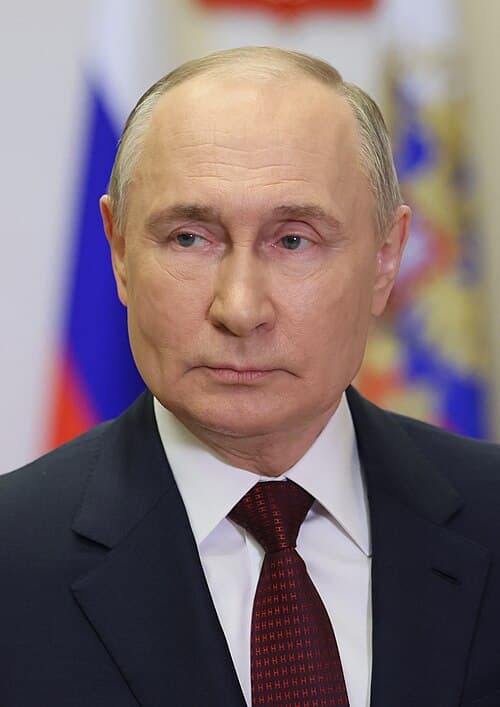
Vladimir Putin
PERSON17 w/ the·51 w/ the
Donald Trump
PERSON19 w/ the·45 w/ the
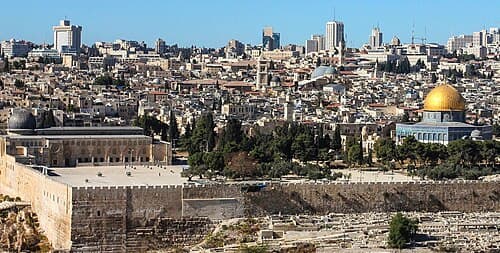
Jerusalem
LOCATION20 w/ the·43 w/ the
Prince Andrew
PERSON15 w/ the·48 w/ the
Department of Justice
ORGANIZATION13 w/ the·50 w/ the
Tehran
LOCATION21 w/ the·41 w/ the
Joe Biden
PERSON7 w/ the·55 w/ the
John F. Kennedy
PERSON13 w/ the·48 w/ the
Middle East
LOCATION14 w/ the·47 w/ the
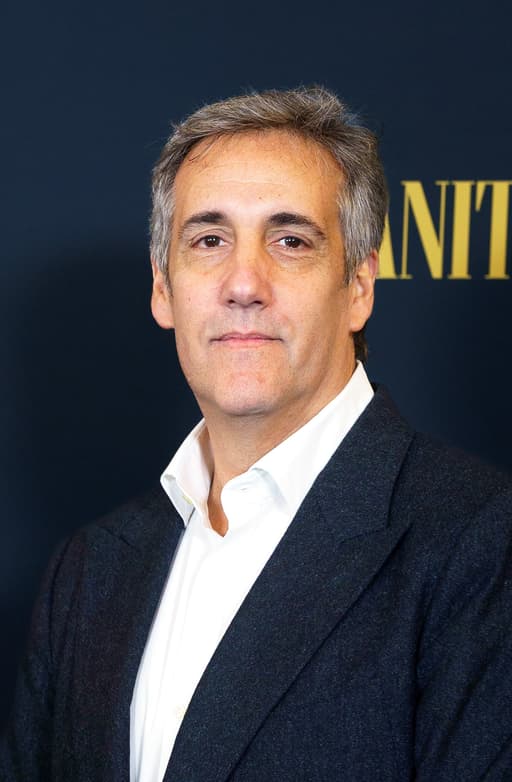
Michael Cohen
PERSON9 w/ the·50 w/ the