Back to Network





3
Shared Docs
3
Same-Page
7 / 3
Mentions
Document Mentions (3 shared documents)
4 mentions1 same-page
Page ?Same page
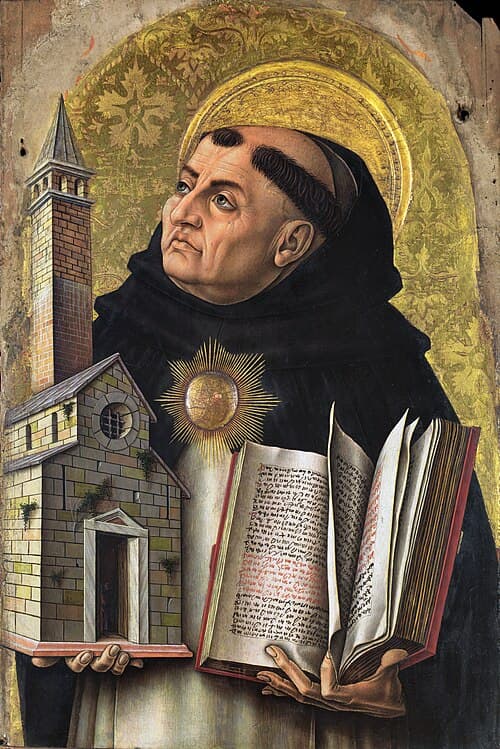
and our deepest motivations with EFTA_R1_01522120 EFTA02444883 Page I36 something like inclusive fitness and kin altruism? Let me start with Aquinas. In the "Supplement" to his Summa Theologica 111, Thomas follows Aristotle and the Roman natural-law theorist Ulpian in asserting that humans sh
ved, by a kind of succession, in the person of the son, it is naturally befitting that the son succeed in the things belonging to the father." 21 Aquinas's main source for this insight was Aristotle's Politics. In one place Aristotle wrote, " In common with other animals and with plants, mankind hav
ntail a step toward metaphysical speculation of the kind science would do better to avoid. Nonetheless, in the view of Christian love developed in Aquinas, the seeds of a religious humanism — in this case a Christian humanism —began to form. I have tried to illustrate how insights from Aristotle an
private experience of God is built through a profoundly social learning process. Belief and Connection 13. Theological Perspectives on God as an Invisible Force The beliefs that religious individuals hold about the way God operates in human life are potential factors affecting perceived social isolation.
4 mentions1 same-page
Page ?Same page
ty ever identify eros and our deepest motivations with HOUSE_OVERSIGHT_021281 something like inclusive fitness and kin altruism? Let me start with Aquinas. In the “Supplement” to his Summa Theologica I, Thomas follows Aristotle and the Roman natural-law theorist Ulpian in asserting that humans share wi
ldren need their parents for a very long period of time and over the course HOUSE_OVERSIGHT_021282 of many contingencies and challenges. This leads Aquinas to develop his theology of marriage as a way of consolidating and stabilizing parental commitment, especially paternal commitment, to their dependent
y entail a step toward metaphysical speculation of the kind science would do better to avoid. Nonetheless, in the view of Christian love developed in Aquinas, the seeds of a religious humanism — in this case a Christian humanism —began to form. I have tried to illustrate how insights from Aristotle and Aq
y private experience of God is built through a profoundly social learning process. Belief and Connection 13. Theological Perspectives on God as an Invisible Force The beliefs that religious individuals hold about the way God operates in human life are potential factors affecting perceived social isolation. My p
2 mentions1 same-page
Page ?Same page
ends the dynamic of inclusive fitness much like in Catholic moral theology caritas (love) builds on and extends eros (desire). Browning writes, "[Aquinas] held — and Christianity has always taught — that Christian love includes more than kin altruism and the care of our familial offspring; it must
Influences presencennecreatonSva— ri,Chistiarit beirci`.t. ld !IC- .. --trelationship wor t ' Chapter 13's Theological Perspectives on God as an Invisible Force An individual's beliefs about God are one factor to be included in a multi-dimensional investigation of the social consequences and possible heal
Sponsored
Mutual Connections (486)
Entities connected to both Aquinas and Invisible Force
Bradley Edwards
PERSON5 w/ Aquinas·3 w/ Invisible
NE
Nicholas Epley
PERSON4 w/ Aquinas·3 w/ Invisible
New York City
LOCATION4 w/ Aquinas·3 w/ Invisible
Judaism
ORGANIZATION4 w/ Aquinas·3 w/ Invisible
BE
Berntson
PERSON4 w/ Aquinas·3 w/ Invisible
WG
Willemsen G
PERSON4 w/ Aquinas·3 w/ Invisible
DC
Dolan CV
PERSON4 w/ Aquinas·3 w/ Invisible
Cacioppo
PERSON4 w/ Aquinas·3 w/ Invisible
Landis KR
ORGANIZATION4 w/ Aquinas·3 w/ Invisible
Samantha Power
PERSON4 w/ Aquinas·3 w/ Invisible
EP
Epley
PERSON4 w/ Aquinas·3 w/ Invisible
Random House
ORGANIZATION4 w/ Aquinas·3 w/ Invisible
Sermons
PERSON4 w/ Aquinas·3 w/ Invisible
University of Oxford
ORGANIZATION4 w/ Aquinas·3 w/ Invisible
Grace
PERSON4 w/ Aquinas·3 w/ Invisible
HL
Hawkley LC
PERSON4 w/ Aquinas·3 w/ Invisible
CM
Chris Masi
PERSON4 w/ Aquinas·3 w/ Invisible
Marc Rich
PERSON4 w/ Aquinas·3 w/ Invisible
Jesus Christ
PERSON4 w/ Aquinas·3 w/ Invisible
Augustine
PERSON4 w/ Aquinas·3 w/ Invisible