Back to Network


















5
Shared Docs
5
Same-Page
5 / 5
Mentions
Document Mentions (5 shared documents)
2 mentions1 same-page
Page ?Same page
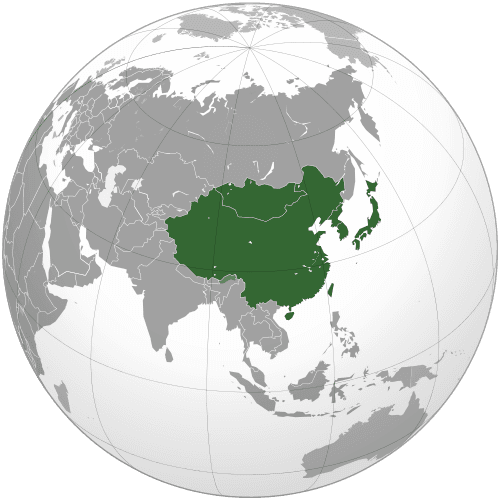
for 15 percent of global poverty in 1990, now accounts for halt The region's increased share of the world's poor is largely explained by poverty in East Asia dropping drastically from 50.6 percent in 1990 to a projected 11.9 percent by the end of 2015, but the situation in Sub-Saharan Africa is exacerbate
less than the rate at which the population is rising, so the number of people living in poverty continues to grow," Laurence Chandy, a fellow with the Brookings Institution, wrote in May. Chandy also pointed to flawed data-collecting practices and a "mismatch between where growth is occurring and where the poor are" in
2 mentions1 same-page
Page ?Same page
eatens to be the first war between two nuclear powers. The administration focused on the EFTA00701625 problems of the past, wasting its energy on East Asia, Europe and the Middle East, and missed the obvious crisis in South Asia. Despite repeated acts of terrorism sponsored by Pakistan against India,
curity studies program at Georgetown University's School of Foreign Service and the research director of the Saban Center for Middle East Policy at the Brookings Institution. Anicic 6. EFTA00701627 The National Interest China's Uncertain Path Jonathan Levine October 12, 2012 -- With the announcement that November 8
2 mentions1 same-page
Page ?Same page
n the South China Sea and generally unnerving most of the region, the Obama administration has reconfirmed the central role of the United States in East Asia. The opening of a new base in Australia is a powerful symbol of America's enduring strategic presence in the region. The opening with Burma obvious
to make the United States a more reliable player in Asia, despite its unconvincing protestations to the contrary. Robert Kagan is senior fellow at the Brookings Institution. His new book, The World America Made, will be published next month. Anne-Marie Slaughter: Overall, Barack Obama has had a very good run on foreig
Sponsored
2 mentions1 same-page
Page ?Same page
from them. In the ultimate irony, for all the apprehension it has unleashed elsewhere, the pivot has not produced an equal degree of reassurance in East Asia. There the promise and rhetoric of the pivot has been measured against tangible realities, like defense cuts that leave the U.S. Air Force scrappin
not be so lucky. Which is why today's ambivalence in those places is already starting to shade over into anxiety. Robert Kagan is senior fellow at the Brookings Institution, chair of the World Economic Forum Global Agenda Council on the United States and author, most recently, of The World America Made. EFTA00684277
2 mentions1 same-page
Page ?Same page
nternational status. But the union has lost its shine. It is slowing down and aging. Its longtime ally, the United States, is shifting attention to East Asia. Its common defense policy is shallow. As Europe's status declines, the already shaky European identity will weaken further and the citizens of the
s Development Program (UNDP) and vice president of the World Bank, is vice president and director of the Global Economy and Development Program at the Brookings Institution. Javier Solana, former Secretary- General of NATO and EU High Representative for the Common Foreign and Security Policy, is Distinguished Senior Fel
Sponsored
Mutual Connections (436)
Entities connected to both East Asia and the Brookings Institution
Barack Obama
PERSON42 w/ East·33 w/ the
Bill Clinton
PERSON33 w/ East·29 w/ the
George W. Bush
PERSON38 w/ East·24 w/ the
United States
LOCATION34 w/ East·23 w/ the
Lebanon
LOCATION30 w/ East·26 w/ the
Jeffrey Epstein
PERSON32 w/ East·16 w/ the
Marc Rich
PERSON27 w/ East·17 w/ the
Middle East
LOCATION26 w/ East·17 w/ the
Tehran
LOCATION21 w/ East·22 w/ the
Bashar al-Assad
PERSON22 w/ East·21 w/ the
Benjamin Netanyahu
PERSON21 w/ East·20 w/ the
Vladimir Putin
PERSON22 w/ East·19 w/ the
Cairo
LOCATION21 w/ East·19 w/ the
Hillary Clinton
PERSON17 w/ East·20 w/ the
Hosni Mubarak
PERSON17 w/ East·19 w/ the
Donald Trump
PERSON15 w/ East·20 w/ the
Department of Justice
ORGANIZATION12 w/ East·22 w/ the
Joe Biden
PERSON17 w/ East·17 w/ the
Terje Rod-Larsen
PERSON22 w/ East·12 w/ the
Damascus
LOCATION15 w/ East·18 w/ the