Back to Network










6
Shared Docs
6
Same-Page
12 / 6
Mentions
Document Mentions (6 shared documents)
3 mentions1 same-page
Page ?Same page
the unamended version of the law implicitly must have permitted victims to sue even after they turned 18. That interpretation not only would render Masha's Law superfluous; it would make Masha's Law's internally redundant, because Masha's Law retained the "legal disability" language from the 2003 vers
amendments were made by § 707 of the Adam Walsh Child Protection and Safety Act, Pub. L. No. 109-248, 120 Stat. 587, 650 (2006), and are known as "Masha's Law." As Senator Kerry—the author of Masha's Law-e xplained: What Masha's law does, and what is incorporated in here, is it changes "any minor" t
t "Twombly expounded the pleading standard for 'all civil actions' and not just pleadings made in the context of an antitrust dispute," Ashcroft v. Iqbal, No. 07-1015 (U.S. May 18, 2009) (slip op. at 20) (quoting Fed. R. Civ. P. 1), the need to enforce these pleading requirements is especially acute i
Sponsored
3 mentions1 same-page
Page ?Same page
the unamended version of the law implicitly must have permitted victims to sue even after they turned 18. That interpretation not only would render Masha's Law superfluous; it would make Masha's Law's internally redundant, because Masha's Law retained the "legal disability" language from the 2003 vers
amendments were made by § 707 of the Adam Walsh Child Protection and Safety Act, Pub. L. No. 109-248, 120 Stat. 587, 650 (2006), and are known as "Masha's Law." As Senator Kerry—the author of Masha's Law-e xplained: What Masha's law does, and what is incorporated in here, is it changes "any minor" t
t "Twombly expounded the pleading standard for 'all civil actions' and not just pleadings made in the context of an antitrust dispute," Ashcroft v. Iqbal, No. 07-1015 (U.S. May 18, 2009) (slip op. at 20) (quoting Fed. R. Civ. P. 1), the need to enforce these pleading requirements is especially acute i
3 mentions1 same-page
Page ?Same page
the unamended version of the law implicitly must have permitted victims to sue even after they turned 18. That interpretation not only would render Masha's Law superfluous; it would make Masha's Law's internally redundant, because Masha's Law retained the "legal disability" language from the 2003 vers
amendments were made by § 707 of the Adam Walsh Child Protection and Safety Act, Pub. L. No. 109-248, 120 Stat. 587, 650 (2006), and are known as "Masha's Law." As Senator Kerry—the author of Masha's Law—explained: What Masha's law does, and what is incorporated in here, is it changes "any minor" to
at "Twombly expounded the pleading standard for 'all civil actions' and not just pleadings made in the context of an antitrust dispute," Ashcroft'. Iqbal No. 07-1015 (U.S. May 18, 2009) (slip op. at 20) (quoting Fed. R. Civ. P. 1), the need to enforce these pleading requirements is especially acute in
Sponsored
Mutual Connections (130)
Entities connected to both Masha Drokova and Ahsan Iqbal
Jeffrey Epstein
PERSON1,158 w/ Masha·16 w/ Ahsan
LB
Leon Black
PERSON37 w/ Masha·9 w/ Ahsan
Paul Ryan
PERSON34 w/ Masha·3 w/ Ahsan
JG
Jack Goldberger
PERSON23 w/ Masha·12 w/ Ahsan
John F. Kennedy
PERSON30 w/ Masha·4 w/ Ahsan
Donald Trump
PERSON29 w/ Masha·3 w/ Ahsan
Steve Bannon
PERSON26 w/ Masha·3 w/ Ahsan
Scarlett Johansson
PERSON16 w/ Masha·12 w/ Ahsan
Alan Dershowitz
PERSON15 w/ Masha·12 w/ Ahsan
MF
Maria Farmer
PERSON22 w/ Masha·3 w/ Ahsan
Prince Andrew
PERSON13 w/ Masha·11 w/ Ahsan
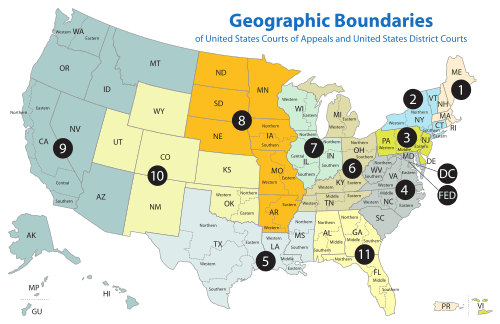
United States
LOCATION11 w/ Masha·13 w/ Ahsan
Abraham Lincoln
PERSON20 w/ Masha·3 w/ Ahsan
Ashcroft
PERSON8 w/ Masha·14 w/ Ahsan
TW
Twombly
PERSON9 w/ Masha·13 w/ Ahsan
Eric Trump
PERSON18 w/ Masha·4 w/ Ahsan
JD
Jane Doe
PERSON12 w/ Masha·9 w/ Ahsan
George W. Bush
PERSON11 w/ Masha·9 w/ Ahsan
Supreme Court
ORGANIZATION8 w/ Masha·11 w/ Ahsan
United States District Court
ORGANIZATION9 w/ Masha·9 w/ Ahsan