Back to Network












3
Shared Docs
3
Same-Page
6 / 3
Mentions
Document Mentions (3 shared documents)
4 mentions1 same-page
Page ?Same page
eper program through Poteyev soon after it began. The issue was how to exploit this knowledge. When I was writing my book on international deception, Angleton had pointed out to me that “the business of intelligence services is understanding precisely the relationship of their opposition to them.” His view,
final move in any sophisticated intelligence game,” Angleton told me in relation to espionage intelligence coup, is “obscuring a success.” Following Angleton’s precept the Russian or Chinese intelligence services, if they had a role in acquiring the product of the self-described “single point of failure,”
s of undelivered NSA documents found in his home, the investigation was never able to assess the total extent of the KGB penetration of NSA secrets. (Angleton suspected Dunlap was murdered the KGB, in what he termed a surreptitiously assisted death, to prevent Dunlap from talking to investigators.) The Rus
conscience, but so do many spies. Such conscience-driven spies are called, in CIA parlance, “ideological agents.” For instance, the British diplomat Donald Maclean, who was one of the most important Russian spies in the Cold War, was an ideological recruit. Maclean stole immensely valuable US nuclear secrets for
3 mentions1 same-page
Page ?Same page
to life imprisonment. Looking at his watch, Cherkashin politely excused himself, saying he had work to do. On parting, I signed a copy of my book on Angleton for him and thanked him for his insights. Through the eyes of the KGB, a penetration of American intelligence was clearly opportunistic. If these pr
Spy Case.” October 31,2011, https://www.fbi.gov/news/stories/201 1/october/russian_103111/russian_10311 1 > Author's interview with James Jesus “Angleton had pointed out...’ Angleton. “The situation suddenly changed...”-- Bill Gertz, “Counterspies hunt Russian mole inside National Security Agency,” Wa
r Source Cc. “Pandora’s Box...”-- Author’s Interview with a Congressional aide with knowledge of investigation, hereinafter Source D. “Guy Burgess, Donald Maclean and Kim Philby, See “The Spy Cases,” Appendix A of this book. Intention of staying in Russia...”-- Snowden NBC Interview. Op cit. Bamford, Wired. O
2 mentions1 same-page
Page ?Same page
970s for my book on deception that intelligence services play by a different set of rules than historians when it comes to their espionage successes. Angleton, a famously baroque thinker himself, impressed on me the complexity of espionage. He said “It’s not enough just to steal a secret. It must be done in
counterintelligence that a spy, fearing arrest, flees to a country that has some reason to offer him protection. When the British spies Guy Burgess, Donald Maclean and Kim Philby, for example, fled to Moscow in the Cold War the presumption was that they had a prior intelligence connection with Russia. And Philby
Sponsored
Mutual Connections (221)
Entities connected to both Angleton and Donald Maclean
Department of Justice
ORGANIZATION5 w/ Angleton·4 w/ Donald
George Mitchell
PERSON5 w/ Angleton·4 w/ Donald
Vladimir Putin
PERSON5 w/ Angleton·4 w/ Donald
John F. Kennedy
PERSON5 w/ Angleton·4 w/ Donald
MO
Morell
PERSON5 w/ Angleton·4 w/ Donald
Jacob Appelbaum
PERSON5 w/ Angleton·4 w/ Donald
James Bamford
PERSON5 w/ Angleton·4 w/ Donald
Barack Obama
PERSON5 w/ Angleton·4 w/ Donald
Aeroflot
ORGANIZATION5 w/ Angleton·4 w/ Donald
Edward Snowden
PERSON5 w/ Angleton·4 w/ Donald
Alan Dershowitz
PERSON5 w/ Angleton·4 w/ Donald
Oliver Stone
PERSON5 w/ Angleton·4 w/ Donald
Laura Poitras
PERSON5 w/ Angleton·4 w/ Donald
Woody Allen
PERSON5 w/ Angleton·4 w/ Donald
Barton Gellman
PERSON5 w/ Angleton·4 w/ Donald
Hawaii
LOCATION5 w/ Angleton·4 w/ Donald
North Korea
LOCATION5 w/ Angleton·4 w/ Donald
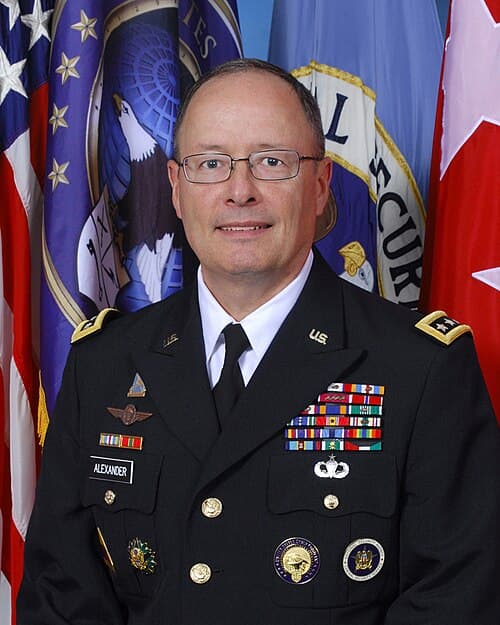
Keith Alexander
PERSON5 w/ Angleton·4 w/ Donald
BW
Ben Wizner
PERSON5 w/ Angleton·4 w/ Donald
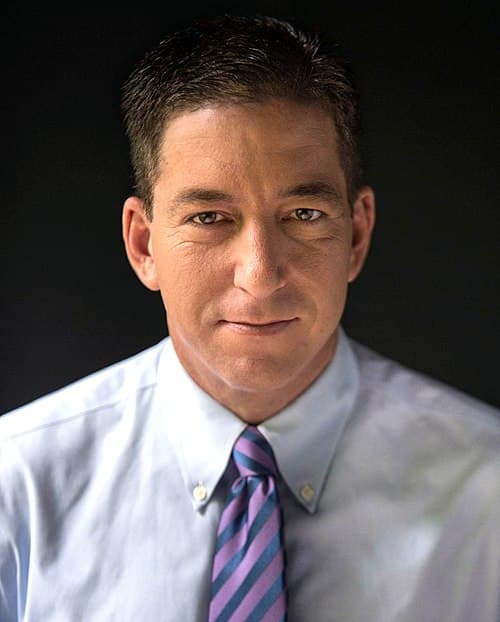
Glenn Greenwald
PERSON5 w/ Angleton·4 w/ Donald