Back to Network















4
Shared Docs
4
Same-Page
7 / 4
Mentions
Document Mentions (4 shared documents)
3 mentions1 same-page
Page ?Same page
War. But the Snowden breach exposing military sources was an order of magnitude greater than any past breach. The CIA’s assessment was no less grim. Morell, the deputy director of the CIA in 2013, wrote that Snowden’s action went beyond taking the handful of documents, such as the FISA order, “that addre
A briefer that it was urgent for the CIA to be brought in on the case. After all, the CIA had employed Snowden only four years earlier. Specifically, Morell said, the CIA needed to find out three things: Had CIA docu- ments been part of Snowden’s haul? How long had Snowden been stealing documents? Had Sno
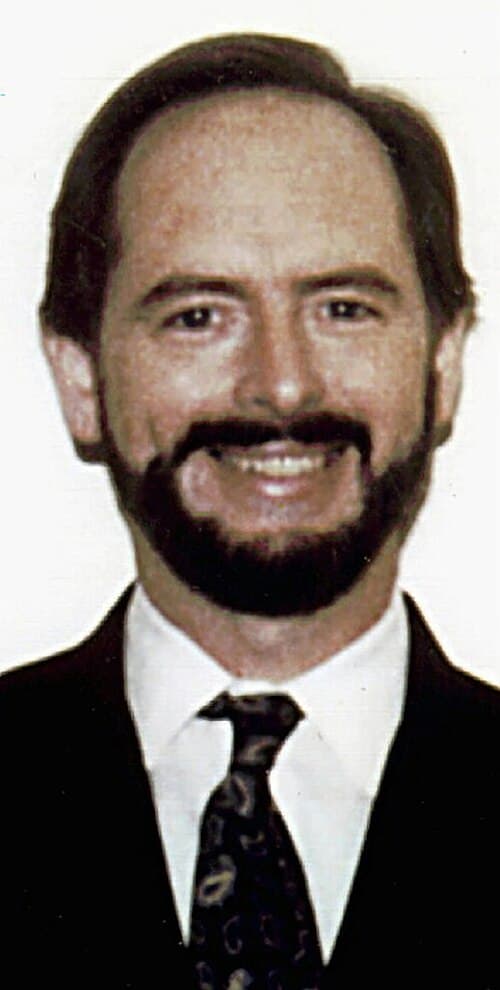
e was | | Epst_9780451494566_2p_all_r1.z.indd 187 @ HOUSE_OVERSIGHT_019675 9/29/16 5:51PM | | 188 | HOW AMERICA LOST ITS SECRETS the CIA officer Harold Nicholson, in 1996. Before it could expand its espionage capabilities, it needed to build a network of Russian agents in the United States. For this network, i
3 mentions1 same-page
Page ?Same page
arrant to investigate U.S. citi- @ zens who use Tor. The NSA is hardly immune from an attack on its own computers. As the former CIA deputy director Morell wrote in his 2015 book, The Great War of Our Time, many financial institutions have “better cyber security than the NSA.” The Internet certainly help
her actors. “For our enemies, having it [the black budget] is like having the playbook of the opposing NFL team,” said the former CIA deputy director Morell in 2015. “I guarantee you that the SVR, the Russian foreign intelligence service, would have paid millions of dollars for such a document.” If unlike
s, and cultural exchanges. They therefore tended to recruit their coun- terparts in adversary services. In this regard, the successful entrapment of Harold Nicholson in the 1990s is highly instructive. From his impressive record, he seemed an unlikely candidate for recruitment. He had been a super- patriotic Ameri
3 mentions1 same-page
Page ?Same page
ay of the 9/11 attack, “Terrorist organizations around the world were already start- ing to modify their actions in light of what Snowden disclosed,” Morell wrote in 2015. “Within weeks of the [Snowden] leaks, com- @ munications sources dried up, tactics were changed.” Even more @ disturbing, suspects on
w with author. 134 The NSA had also notified: Former NSA executive who requested anonymity, interview with author. 136 NSA did not immediately share: Morell, Great War of Our Time, 283-88. 136 briefed by the NSA: See “Unclassified Declaration of David G. Leatherwood,” US. District Court for the District o
nd in Russian Prison,” New York Times, June 4, 1992. 220 He was found dead: Edward Jay Epstein, “The Spy Wars,” New York Times, Sept. 28, 1980. 222 Harold Nicholson: Elizabeth Farnsworth, “Update on the Case of CIA Agent Harold Nicholson,” PBS (transcript), Nov. 19, 1996. See also “Affidavit in Sup- port of Compl
Sponsored
2 mentions1 same-page
Page ?Same page
lations.” (He was correct that Snowden had stolen a larger number of CIA documents that he had not turned over to journalists, as CIA deputy director Morell confirmed.) Whatever this material might reveal, the FSB was presumably aware of its existence. After all, Kucherena was on the FSB’s public oversig
tablishing spies in CIA, FBI, NSA and other American intelligence agencies. The SVR’s last known (or caught) mole in US Intelligence was CIA officer Harold Nicholson in 1996. Before it could now expand its espionage capabilities. It needed to build a network of Russian sleeper agents in the United States. For this
Sponsored
Mutual Connections (304)
Entities connected to both Morell and Harold Nicholson
Barack Obama
PERSON14 w/ Morell·4 w/ Harold
Jeffrey Epstein
PERSON14 w/ Morell·3 w/ Harold
Donald Trump
PERSON13 w/ Morell·3 w/ Harold
Oliver Stone
PERSON12 w/ Morell·4 w/ Harold
Mitch McConnell
PERSON12 w/ Morell·4 w/ Harold
Department of Justice
ORGANIZATION12 w/ Morell·4 w/ Harold
Vladimir Putin
PERSON11 w/ Morell·4 w/ Harold
George Mitchell
PERSON10 w/ Morell·4 w/ Harold
George W. Bush
PERSON10 w/ Morell·4 w/ Harold
Edward Snowden
PERSON10 w/ Morell·4 w/ Harold
Bill Clinton
PERSON10 w/ Morell·3 w/ Harold
Virginia Giuffre
PERSON10 w/ Morell·3 w/ Harold
United States
LOCATION9 w/ Morell·4 w/ Harold
Hawaii
LOCATION8 w/ Morell·4 w/ Harold
Assange
ORGANIZATION8 w/ Morell·4 w/ Harold
North Korea
LOCATION8 w/ Morell·4 w/ Harold
Woody Allen
PERSON8 w/ Morell·4 w/ Harold
WikiLeaks
ORGANIZATION8 w/ Morell·4 w/ Harold
Julie K. Brown
PERSON8 w/ Morell·3 w/ Harold
Ecuador
LOCATION7 w/ Morell·4 w/ Harold