Back to Network








5
Shared Docs
5
Same-Page
5 / 5
Mentions
Document Mentions (5 shared documents)
2 mentions1 same-page
Page ?Same page
l-researched report about Snowden’s arrival there. He proposed we meet at the Foreign Cor- @ respondents’ Club. @ Bradsher told me that he had known Albert Ho, who had been retained as Snowden’s lawyer, for more than a decade. He had inter- viewed him many times, because he was a leader of a political move-
he former CIA station chief, told me in 2014. Snowden blamed his career-ending “derog” on an “e-mail spat” with a superior. From Moscow, he wrote to James Risen of the Times that his superior officer ordered him not “to rock the boat.” Further, he complained that the technical team at the CIA station in Genev
2 mentions1 same-page
Page ?Same page
put and face the music. On the morning of June 10, though, there was apparently a problem. Robert Tibbo and Jonathan Man, the lawyers who, along with Albert Ho, had been retained for Snowden by an unidentified party, received an emergency phone call early in the morning tell- @ ing them to help Snowden move
ith as lawbreakers. All six were indicted, tried, convicted, and sentenced to prison. Sterling, a CIA officer who allegedly turned over a document to James Risen, a Pulitzer Prize-winning reporter for the Times, was sentenced to forty-two months. The most severe sentence was meted out to Pri- vate Manning, who
2 mentions1 same-page
Page ?Same page
scent of where John LeCarre had set the opening chapter of his spy novel The Honourable Schoolboy. When we spoke later, Bradsher told me that he knew Albert Ho, who had been retained as Snowden’s lawyer, for more than a decade, and interviewed him many times as he was a leader of a political movement in Hong
-breakers. All six men were indicted, tried, convicted and received prison sentences. Sterling, a CIA officer who allegedly turned over a document to James Risen, a Pulitzer Prize winning reporter for the New York Times, was sentenced to 42 months, for example. The most severe sentence was meted out to Private
Sponsored
2 mentions1 same-page
Page ?Same page
d. On the morning of June 10", 2013, Snowden’s escape plan apparently ran into a problem. Robert Tibbo and Jonathan Mann, the lawyers who, along with Albert Ho, had been retained for Snowden by an unidentified party, received an emergency phone call early in the morning telling them to help Snowden move to a
. His first exchange with an American journalist after his arrival in Russia was not until October 1°7, 2013. It was conducted over the Internet with James Risen, a Pulitzer-prize winning New York Times reporter. Essentially Snowden supplied answers to a set of questions. In then, Snowden now asserted he took
2 mentions1 same-page
Page ?Same page
uthor’s interview with former DIA officer who requested anonymity. 3. “He had visited Hong Kong. ...”—Lindsay Mills’ blog, op.cit. 4. “According to Albert Ho...”-- Keith Bradsher, “Hasty Exit Started With Pizza inside a Hong Kong Hideout.” New York Times, June 24, 2013. Also, author’s interview with Keith
erican activities, could do immense damage to Western intelligence. Indeed, he said as much once he got to Moscow. In respect to China alone, he told James Risen, the New York Times’ national security reporter, in October 2013 that he had had “access to every [NSA] target, every [NSA] active operation” that co
Sponsored
Mutual Connections (395)
Entities connected to both Albert Ho and James Risen
Barack Obama
PERSON6 w/ Albert·8 w/ James
George W. Bush
PERSON5 w/ Albert·7 w/ James
Department of Justice
ORGANIZATION6 w/ Albert·6 w/ James
Mitch McConnell
PERSON6 w/ Albert·6 w/ James
Oliver Stone
PERSON6 w/ Albert·6 w/ James
Edward Snowden
PERSON6 w/ Albert·6 w/ James
Jeffrey Epstein
PERSON6 w/ Albert·6 w/ James
Prince Charles
PERSON5 w/ Albert·7 w/ James
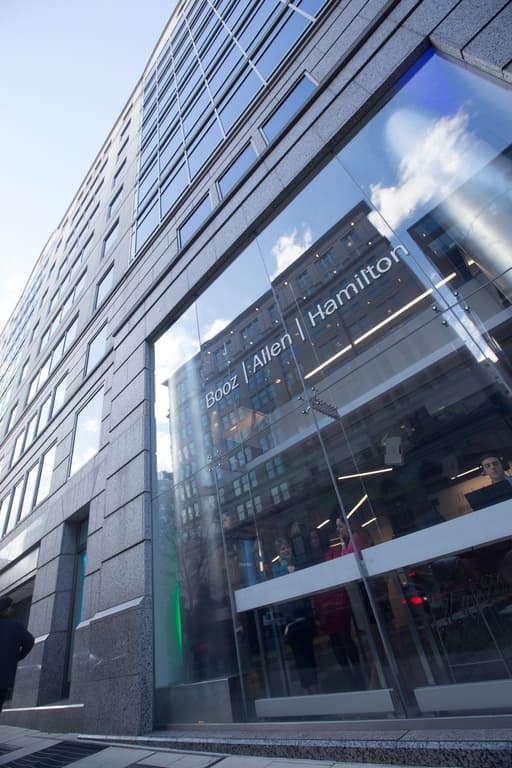
Booz Allen
PERSON6 w/ Albert·5 w/ James
Robin Williams
PERSON6 w/ Albert·5 w/ James
AP
Appelbaum
PERSON6 w/ Albert·5 w/ James
James Clapper
PERSON6 w/ Albert·5 w/ James
Micah Lee
PERSON6 w/ Albert·5 w/ James
MO
Morell
PERSON6 w/ Albert·5 w/ James
Jacob Appelbaum
PERSON6 w/ Albert·5 w/ James
GE
Gellman
PERSON6 w/ Albert·5 w/ James
Manning
PERSON6 w/ Albert·5 w/ James
Assange
ORGANIZATION6 w/ Albert·5 w/ James
Glenn Greenwald
PERSON6 w/ Albert·5 w/ James
Ledgett
PERSON6 w/ Albert·5 w/ James