Back to Network














5
Shared Docs
5
Same-Page
10 / 5
Mentions
Document Mentions (5 shared documents)
4 mentions1 same-page
Page ?Same page
ould not preclude she would not consult with others about the offer he was making her. Since her current documentary project included interviews with Assange, Appelbaum and three ex-NSA executives, intelligence services with sophisticated surveillance capabilities might also have taken a professional inter
ized release of communications intelligence documents could violate US espionage laws. Even so, there was no shortage of activists overseas, such as Assange, who would be willing to publish NSA documents revealing its global surveillance activities. And in answer to his rhetorical question, he no doubt kn
er HOUSE_OVERSIGHT_020154 Chapter Ten Raider of the Inner Sanctum Chapter Eleven Escape Artist Chapter Twelve Whistle Blower Chapter Thirteen Enter Assange Chapter Fourteen Fugitive PART THREE The Counterintelligence Conundrum Chapter Fifteen Did Snowden Act Alone Chapter Sixteen The Question of When C
-breakers. All six men were indicted, tried, convicted and received prison sentences. Sterling, a CIA officer who allegedly turned over a document to James Risen, a Pulitzer Prize winning reporter for the New York Times, was sentenced to 42 months, for example. The most severe sentence was meted out to Private
3 mentions1 same-page
Page ?Same page
rded among hacktiv- ists that Assange chose him as his keynote speaker replacement at the Hackers on Planet Earth (HOPE) convention in New York City. Assange told Rolling Stone, “Jake [Appelbaum] has been a tireless promoter behind the scenes of our cause.” For its part, Rolling Stone titled its profile of
zed release of communications intelligence documents would violate U.S. espionage laws. Even so, there was no shortage of activists overseas, such as Assange, who would be willing to publish NSA documents revealing its global sur- veillance activities. Cyberpunks, as these activists called themselves, tend
he former CIA station chief, told me in 2014. Snowden blamed his career-ending “derog” on an “e-mail spat” with a superior. From Moscow, he wrote to James Risen of the Times that his superior officer ordered him not “to rock the boat.” Further, he complained that the technical team at the CIA station in Genev
3 mentions1 same-page
Page ?Same page
h one of his senior staff members to help him engineer his escape to Russia. That senior staff member was Sarah Harrison, After speaking to Snowden, Assange called Harrison, who was in Melbourne, Australia. She had gone there a month earlier to help organize Assange’s somewhat quixotic election campaign f
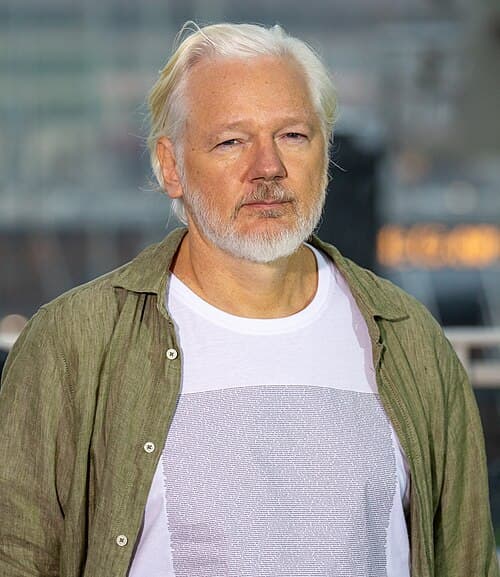
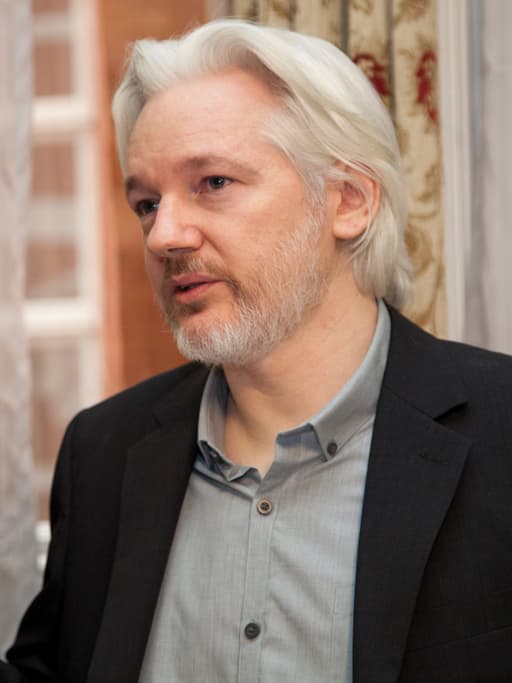
nwhile, Snowden was organizing his own exit from Hong Kong. He placed a call to Julian Assange. HOUSE_OVERSIGHT_020256 105 CHAPTER THIRTEEN Enter Assange “Thanks to Russia (and thanks to WikiLeaks), Snowden remains free.” — Julian Assange Born on July 3, 1971 in Queensland, Australia, Julian Assange h
. His first exchange with an American journalist after his arrival in Russia was not until October 1°7, 2013. It was conducted over the Internet with James Risen, a Pulitzer-prize winning New York Times reporter. Essentially Snowden supplied answers to a set of questions. In then, Snowden now asserted he took
Sponsored
3 mentions1 same-page
Page ?Same page
ardian, January 30, 2011 “Sarah Harrison, his comely...”—Sarah Ellison, “The man who came to dinner,” Vanity Fair, October 2013 “Snowden telephoned Assange...”-- Assange interview in (London) Sunday Times. Giles Whittell, “Julian Assange unmasked.” Times Magazine, August 29, 2015. Also, “Snowden told me
en had been held virtually incommunicado for 20 days. Other than Russian officials, the only person he had been allowed to see during this period was Assange’s aide, Sarah Harrison. “Where in the airport did you meet him?” I asked. Was it in a VIP lounge?” “Tt was in the transit zone,” he replied coyly.
erican activities, could do immense damage to Western intelligence. Indeed, he said as much once he got to Moscow. In respect to China alone, he told James Risen, the New York Times’ national security reporter, in October 2013 that he had had “access to every [NSA] target, every [NSA] active operation” that co
2 mentions1 same-page
Page ?Same page
to The New York Times, and he suggested as punishment “those people should be shot in the balls.” Either he had a change of heart, or he was telling Assange what he believed he wanted to hear. Assange counseled Snowden to go directly to Russia. “My advice was that he should take asylum in Russia despite
ith as lawbreakers. All six were indicted, tried, convicted, and sentenced to prison. Sterling, a CIA officer who allegedly turned over a document to James Risen, a Pulitzer Prize-winning reporter for the Times, was sentenced to forty-two months. The most severe sentence was meted out to Pri- vate Manning, who
Sponsored
Mutual Connections (407)
Entities connected to both Assange and James Risen
Jeffrey Epstein
PERSON38 w/ Assange·6 w/ James
Department of Justice
ORGANIZATION30 w/ Assange·6 w/ James
Mitch McConnell
PERSON28 w/ Assange·6 w/ James
Barack Obama
PERSON26 w/ Assange·8 w/ James
Bill Clinton
PERSON28 w/ Assange·6 w/ James
WikiLeaks
ORGANIZATION28 w/ Assange·4 w/ James
Virginia Giuffre
PERSON28 w/ Assange·4 w/ James
Donald Trump
PERSON28 w/ Assange·4 w/ James
Joe Biden
PERSON27 w/ Assange·4 w/ James
George Mitchell
PERSON24 w/ Assange·5 w/ James
Stephen Hawking
PERSON25 w/ Assange·3 w/ James
Julian Assange
PERSON25 w/ Assange·3 w/ James
United States
LOCATION22 w/ Assange·5 w/ James
Michael Cohen
PERSON24 w/ Assange·3 w/ James
LB
Leon Black
PERSON23 w/ Assange·4 w/ James
Prince Andrew
PERSON21 w/ Assange·4 w/ James
Woody Allen
PERSON19 w/ Assange·5 w/ James
Julie K. Brown
PERSON20 w/ Assange·4 w/ James
Prince Charles
PERSON16 w/ Assange·7 w/ James
Kremlin
ORGANIZATION20 w/ Assange·3 w/ James