Back to Network















5
Shared Docs
4
Same-Page
5 / 5
Mentions
Document Mentions (5 shared documents)
HOUSE_OVERSIGHT_019233 - HOUSE_OVERSIGHT_019296
FH_Authoritarians_Report_2017.indd
2 mentions1 same-page
Page HOUSE_OVERSIGHT_019243Same page
rable. But would the general decline in military budgets hold? Would the new national boundaries that divided the former Soviet Union and the former Yugoslavia be sustainable? As modern authoritarianism has taken root and ex- panded its influence, the answers to these questions are increasingly negative. 1
Page: HOUSE_OVERSIGHT_019243 →at in many cases civil society organizations would play amore important role than governments. Her words seemed prescient in light of later events in Serbia, where student activists organized a campaign that eventually brought about the downfall of President Slobodan MiloSevicé in 2000, and in Ukraine, wh
Page: HOUSE_OVERSIGHT_019243 →2 mentions1 same-page
Page ?Same page
ble. But would the general decline in military budgets hold? Would the new national boundaries that divided the former Soviet Union and the former Yugoslavia be sustainable? As modern authoritarianism has taken root and ex- panded its influence, the answers to these questions are increasingly negative.
n many cases civil society organizations would play a more important role than governments. Her words seemed prescient in light of later events in Serbia, where student activists organized a campaign that eventually brought about the downfall of President Slobodan Milotevio in 2000, and in Ukraine, w
2 mentions1 same-page
Page ?Same page
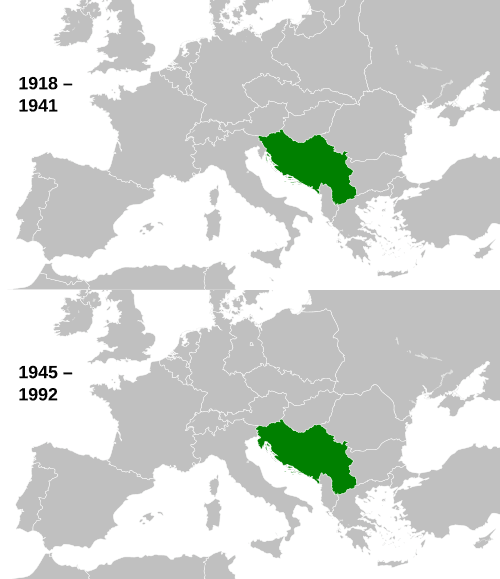
h must have been a Palestinian. Nor have ethnic loyalties always matched political boundaries. Even after the violent dismemberment of multiethnic Yugoslavia, none of the successor states can claim to be wholly homogeneous. Ethnic minorities in Slovenia and Serbia (even with the exclusion of Albanian Kos
violent dismemberment of multiethnic Yugoslavia, none of the successor states can claim to be wholly homogeneous. Ethnic minorities in Slovenia and Serbia (even with the exclusion of Albanian Kosovo) account for between 20-30% of the total population. Dictatorships, unlike democracies, are ill-equippe
Sponsored
2 mentions1 same-page
Page ?Same page
hip in the Middle East carries the potential to send shivers throughout Central Asian authoritarian states. As for the Americans, they don't want a Yugoslavia-style situation where they are under pressure to militarily intervene. One can also argue that from a human rights perspective, chaos can be worse
many declaring that they don't work. First, sanctions against Iran are today just one tool in a larger strategy. In other cases — in South Africa, Serbia and Libya, for example — where sanctions have worked, they were not stand-alone instruments. In past decades, sanctions against Iran have constitut
Page HOUSE_OVERSIGHT_031891
mptions can lead you into as much trouble this quickly. Even in 1989-90, those countries were the exception and not the rule. Think Ukraine, Belarus, Yugoslavia, Romania, Azerbaijan, Kazakhstan, Uzbekistan and of course Russia itself. More people live in countries where the 1989-90 revolutionary wave failed t
Page: HOUSE_OVERSIGHT_031891 →Page HOUSE_OVERSIGHT_031906
xample, I'm on the board of the National Endowment for Democracy, which had an important role in supporting solidarity in Poland in the 1980s, and in Serbia, and the Orange Coalition in Ukraine. So there are ways in which we've encouraged democratic forces around the world. I still believe in that mission
Page: HOUSE_OVERSIGHT_031906 →Sponsored
Mutual Connections (552)
Entities connected to both Yugoslavia and Serbia
Jeffrey Epstein
PERSON57 w/ Yugoslavia·21 w/ Serbia
Donald Trump
PERSON46 w/ Yugoslavia·13 w/ Serbia
Marc Rich
PERSON43 w/ Yugoslavia·9 w/ Serbia
United States
LOCATION31 w/ Yugoslavia·21 w/ Serbia
George W. Bush
PERSON34 w/ Yugoslavia·17 w/ Serbia
Bill Clinton
PERSON40 w/ Yugoslavia·10 w/ Serbia
Alan Dershowitz
PERSON44 w/ Yugoslavia·4 w/ Serbia
Ghislaine Maxwell
PERSON37 w/ Yugoslavia·10 w/ Serbia
Joe Biden
PERSON29 w/ Yugoslavia·9 w/ Serbia
Michael Douglas
PERSON30 w/ Yugoslavia·6 w/ Serbia
LB
Leon Black
PERSON30 w/ Yugoslavia·5 w/ Serbia
Prince Andrew
PERSON32 w/ Yugoslavia·3 w/ Serbia
Barack Obama
PERSON20 w/ Yugoslavia·15 w/ Serbia
John F. Kennedy
PERSON26 w/ Yugoslavia·9 w/ Serbia
Prince Charles
PERSON26 w/ Yugoslavia·7 w/ Serbia
Hillary Clinton
PERSON24 w/ Yugoslavia·8 w/ Serbia
Bashar al-Assad
PERSON16 w/ Yugoslavia·14 w/ Serbia
Barry Diller
PERSON23 w/ Yugoslavia·7 w/ Serbia
Les Wexner
PERSON24 w/ Yugoslavia·5 w/ Serbia
Alfredo Rodriguez
PERSON26 w/ Yugoslavia·2 w/ Serbia