Back to Network







4
Shared Docs
4
Same-Page
4 / 4
Mentions
Document Mentions (4 shared documents)
2 mentions1 same-page
Page ?Same page
: The New Science of Cause and Effect. As a former physicist, I was extremely interested in cybernetics. Though it did not utilize the full power of Turing Machines, it was highly transparent, perhaps because it was founded on classical control theory and information theory. We are losing this transparency now, w
ht Alone: Clement Greenberg’s Modernism and the Bureaucratization of the Senses; Machine in the Studio: Constructing the Postwar American Artist; and The Global Work of Art. David Kaiser is Germeshausen Professor of the History of Science and professor of physics at MIT, and head of its Program in Science, Technology &
2 mentions1 same-page
Page ?Same page
brains conceptually, formally, might work—an artificial neural network. They saw that their brainlike model would do computations in the same way as Turing Machines. From their work, it emerged that we could make brainlike neural networks that would act as general computers. And in fact, the practical work done b
ht Alone: Clement Greenberg’s Modernism and the Bureaucratization of the Senses; Machine in the Studio: Constructing the Postwar American Artist; and The Global Work of Art. Cybernated art is very important, but art for cybernated life is more important. — Nam June Paik, 1966 Artificial intelligence was not what artist
2 mentions1 same-page
Page ?Same page
: The New Science of Cause and Effect. As a former physicist, I was extremely interested in cybernetics. Though it did not utilize the full power of Turing Machines, it was highly transparent, perhaps because it was founded on classical control theory and information theory. We are losing this transparency now, w
ht Alone: Clement Greenberg’s Modernism and the Bureaucratization of the Senses; Machine in the Studio: Constructing the Postwar American Artist; and The Global Work of Art. David Kaiser is Germeshausen Professor of the History of Science and professor of physics at MIT, and head of its Program in Science, Technology &
Sponsored
2 mentions1 same-page
Page ?Same page
brains conceptually, formally, might work—an artificial neural network. They saw that their brainlike model would do computations in the same way as Turing Machines. From their work, it emerged that we could make brainlike neural networks that would act as general computers. And in fact, the practical work done b
ht Alone: Clement Greenberg’s Modernism and the Bureaucratization of the Senses; Machine in the Studio: Constructing the Postwar American Artist; and The Global Work of Art. Cybernated art is very important, but art for cybernated life is more important. — Nam June Paik, 1966 Artificial intelligence was not what artist
Sponsored
Mutual Connections (688)
Entities connected to both Turing Machines and The Global Work of Art
Genetics
ORGANIZATION4 w/ Turing·4 w/ The
BA
Bateson
PERSON4 w/ Turing·4 w/ The
Marc Rich
PERSON4 w/ Turing·4 w/ The
CG
Clement Greenberg
PERSON4 w/ Turing·4 w/ The
LB
Leon Black
PERSON4 w/ Turing·4 w/ The
Harvard-MIT
ORGANIZATION4 w/ Turing·4 w/ The
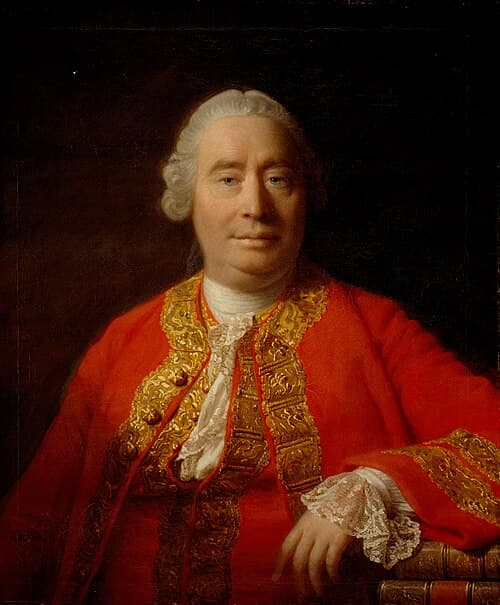
David Hume
PERSON4 w/ Turing·4 w/ The
Oliver Stone
PERSON4 w/ Turing·4 w/ The
J. Robert Oppenheimer
PERSON4 w/ Turing·4 w/ The
UC Berkeley
ORGANIZATION4 w/ Turing·4 w/ The
Elon Musk
PERSON4 w/ Turing·4 w/ The
Makers
ORGANIZATION4 w/ Turing·4 w/ The
Julie K. Brown
PERSON4 w/ Turing·4 w/ The
Joseph Pellegrino University
ORGANIZATION4 w/ Turing·4 w/ The
the Black Hole Initiative
ORGANIZATION4 w/ Turing·4 w/ The
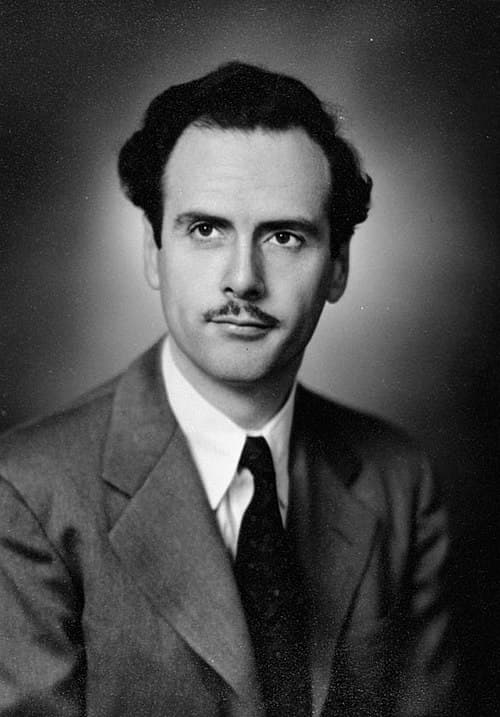
McLuhan
PERSON4 w/ Turing·4 w/ The
Norbert Wiener’s
PERSON4 w/ Turing·4 w/ The
Walter Pitts
PERSON4 w/ Turing·4 w/ The
the Royal Society
ORGANIZATION4 w/ Turing·4 w/ The
PI
Pitts
PERSON4 w/ Turing·4 w/ The