Back to Network












4
Shared Docs
4
Same-Page
4 / 4
Mentions
Document Mentions (4 shared documents)
2 mentions1 same-page
Page ?Same page
use, because this method lacks transparency. While recognizing the impressive achievements in deep learning by colleagues such as Michael Jordan and Geoffrey Hinton, he feels uncomfortable with this kind of opacity. He set out to understand the theoretical limitations of deep-learning systems and points out that
ages, it uses thousands of times more energy than a human brain (a technological limitation that, as he also notes, may be temporary). Its victory in Jeopardy! was a genuine triumph, made possible by the formulaic restrictions of the Jeopardy! rules, but in order for it to compete, even these rules had to b
2 mentions1 same-page
Page ?Same page
euroscience communities need to interact closely, something that is happening already. Some of today’s greatest exponents of machine learning—such as Geoffrey Hinton, Zoubin Ghahramani, and Demis Hassabis—have backgrounds in cognitive neuroscience, and their success has been at least in part due to attempts to mod
its of beam-fabrication methods at around 10-nanometer feature size. Power (energy consumption) issues are also apparent: The great Watson, winner of Jeopardy!, used 85,000 watts real time, while the human brains were using 20 watts each. To be fair, the human body needs 100 watts to operate and twenty year
2 mentions1 same-page
Page ?Same page
use, because this method lacks transparency. While recognizing the impressive achievements in deep learning by colleagues such as Michael Jordan and Geoffrey Hinton, he feels uncomfortable with this kind of opacity. He set out to understand the theoretical limitations of deep-learning systems and points out that
ages, it uses thousands of times more energy than a human brain (a technological limitation that, as he also notes, may be temporary). Its victory in Jeopardy! was a genuine triumph, made possible by the formulaic restrictions of the Jeopardy! rules, but in order for it to compete, even these rules had to b
Sponsored
2 mentions1 same-page
Page ?Same page
euroscience communities need to interact closely, something that is happening already. Some of today’s greatest exponents of machine learning—such as Geoffrey Hinton, Zoubin Ghahramani, and Demis Hassabis—have backgrounds in cognitive neuroscience, and their success has been at least in part due to attempts to mod
its of beam-fabrication methods at around 10-nanometer feature size. Power (energy consumption) issues are also apparent: The great Watson, winner of Jeopardy!, used 85,000 watts real time, while the human brains were using 20 watts each. To be fair, the human body needs 100 watts to operate and twenty year
Sponsored
Mutual Connections (692)
Entities connected to both Geoffrey Hinton and Jeopardy
Jeffrey Epstein
PERSON2 w/ Geoffrey·35 w/ Jeopardy
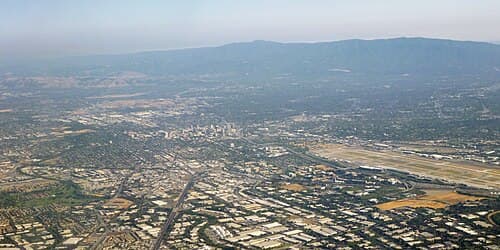
Silicon Valley
LOCATION2 w/ Geoffrey·21 w/ Jeopardy
Marc Rich
PERSON7 w/ Geoffrey·12 w/ Jeopardy
George W. Bush
PERSON5 w/ Geoffrey·10 w/ Jeopardy
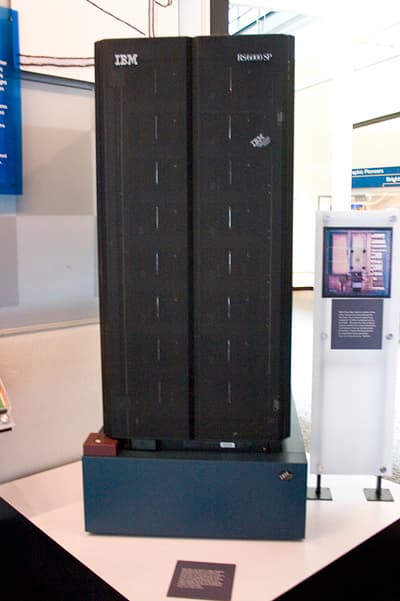
Deep Blue
PERSON4 w/ Geoffrey·10 w/ Jeopardy
Stephen Hawking
PERSON5 w/ Geoffrey·9 w/ Jeopardy
Barack Obama
PERSON4 w/ Geoffrey·9 w/ Jeopardy
Ghislaine Maxwell
PERSON4 w/ Geoffrey·9 w/ Jeopardy
Wilbur Ross
PERSON7 w/ Geoffrey·6 w/ Jeopardy
Prince Andrew
PERSON5 w/ Geoffrey·8 w/ Jeopardy
Julie K. Brown
PERSON5 w/ Geoffrey·7 w/ Jeopardy
LB
Leon Black
PERSON6 w/ Geoffrey·6 w/ Jeopardy
Eric Trump
PERSON5 w/ Geoffrey·7 w/ Jeopardy
Samantha Power
PERSON4 w/ Geoffrey·7 w/ Jeopardy
DB
Doug Band
PERSON4 w/ Geoffrey·7 w/ Jeopardy
Joscha Bach
PERSON3 w/ Geoffrey·8 w/ Jeopardy
Marvin Minsky
PERSON5 w/ Geoffrey·6 w/ Jeopardy
Harvey Weinstein
PERSON5 w/ Geoffrey·5 w/ Jeopardy
Garry Kasparov
PERSON4 w/ Geoffrey·6 w/ Jeopardy
Robert Gates
PERSON4 w/ Geoffrey·6 w/ Jeopardy