Back to Network


















5
Shared Docs
5
Same-Page
7 / 5
Mentions
Document Mentions (5 shared documents)
3 mentions1 same-page
Page ?Same page
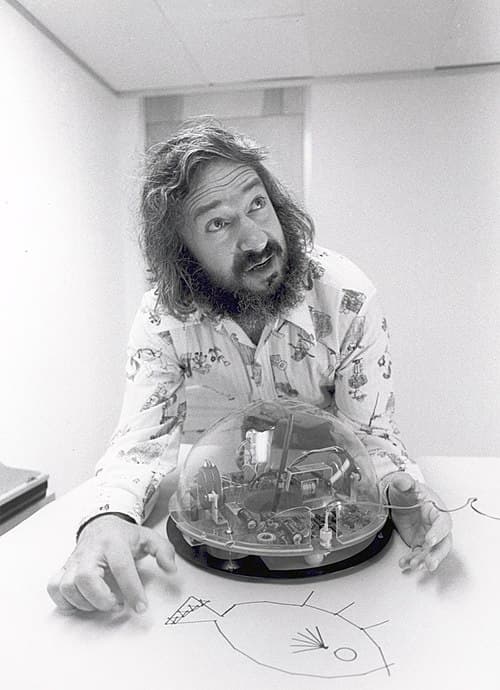
From: Marvin Minslir Sent: Tuesday, May 31, 2011 7:09 PM To: Jeffrey Epstein Subject: Minsky biography / CV Brief Academic Biography of Marvin Minsky Marvin Minsky is Toshiba Professor of Media Arts and Sciences at the Massach=setts Institu
ted and built the first C=nfocal Scanning Microscope, an optical instrument with unprecedented resolu=ion and image quality. Since the early 1950s, Marvin Minsky has worked on using computational ideas=to characterize human psychological processes, as well as working to endow m=chines with intelligence. His 1
ter need to face. The 1=63 paper, "Matter, Mind, and Models" addressed the problem of making self-a=are machines. In "Perceptrons," 1969, Minsky and Seymour Papert characteriz=d the capabilities and limitations of loop-free learning and pattern recogn=tion machines. In "A Framework for Representing Knowledge" (
3 mentions1 same-page
Page ?Same page
Marvin Minsky Artificial Intelligence Laboratory Massachusetts Institute of Technology Cambridge, Massachusetts 02139 Why Do We Like Music? Why do we like mus
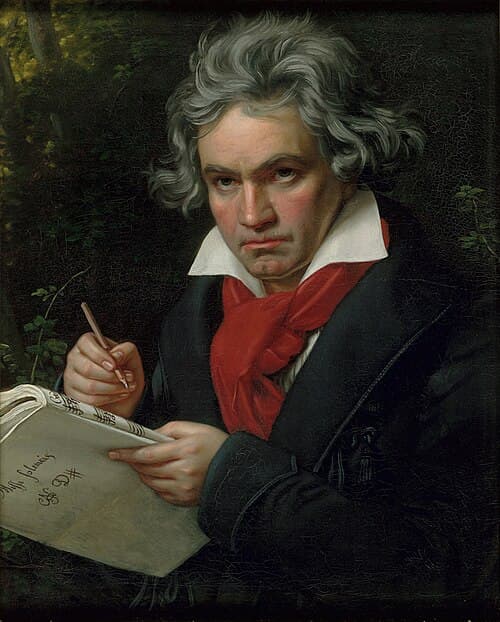
mes before anything larger or more complex is presented. No one remembers word for word all that is said in a lecture or all notes that are played Minsky 29 EFTA00284090 Fig. 1. Introductory mea- sures of Ludwig van Beethoven's Symphony No. 5 in C Minor. Flutes Mote Clarinets in Bb Broca Fla
instead, that inside each mind work many different agents. (The idea of societies of agents (Minsky 1977; 1980a; 19806) originated in my work with Seymour Papert.) All we really need to know about agents is this: each agent knows what happens to some others, but little of what happens to the rest. It means
2 mentions1 same-page
Page ?Same page
using an exploration of his life with music as a major organizing thread. The two works that we envision are: • Musings: An interactive revision of Minsky's 1981 paper — "Music, Mind, and Meaning" — that sits atop a substantial multimedia database: video clips, audio, texts and pictures of Marvin's mu
Cynthia Solomon is a computer scientist, educator and an inventor of the Logo programming language for children. She has been engaged -- along with Seymour Papert, Marvin Minsky, and others -- in foundational research on children constructing knowledge with computers. Holding an MS in Computer Science from Bo
Sponsored
2 mentions1 same-page
Page ?Same page
the 1955 proposal thought to be the first printed usage of the phrase “artificial intelligence,” computer scientist John McCarthy and his colleagues Marvin Minsky, Nathaniel Rochester, and Claude Shannon conjectured that “every aspect of learning or any other feature of intelligence can in principle be so preci
h. Frank Rosenblatt invented a learning device he called the perceptron, which was a one-layer neural network. In the late sixties, Marvin Minsky and Seymour Papert wrote a book titled Perceptrons, in which they basically proved that perceptrons couldn’t do anything interesting, which is correct. Perceptrons coul
2 mentions1 same-page
Page ?Same page
the 1955 proposal thought to be the first printed usage of the phrase “artificial intelligence,” computer scientist John McCarthy and his colleagues Marvin Minsky, Nathaniel Rochester, and Claude Shannon conjectured that “every aspect of learning or any other feature of intelligence can in principle be so preci
h. Frank Rosenblatt invented a learning device he called the perceptron, which was a one-layer neural network. In the late sixties, Marvin Minsky and Seymour Papert wrote a book titled Perceptrons, in which they basically proved that perceptrons couldn’t do anything interesting, which is correct. Perceptrons coul
Sponsored
Mutual Connections (421)
Entities connected to both Marvin Minsky and Seymour Papert
Jeffrey Epstein
PERSON441 w/ Marvin·4 w/ Seymour
Stephen Hawking
PERSON85 w/ Marvin·6 w/ Seymour
Lawrence Krauss
PERSON78 w/ Marvin·2 w/ Seymour
Alan Dershowitz
PERSON61 w/ Marvin·5 w/ Seymour
Prince Andrew
PERSON62 w/ Marvin·4 w/ Seymour
Marc Rich
PERSON60 w/ Marvin·3 w/ Seymour
Ghislaine Maxwell
PERSON54 w/ Marvin·2 w/ Seymour
LB
Leon Black
PERSON49 w/ Marvin·2 w/ Seymour
Prince Charles
PERSON46 w/ Marvin·2 w/ Seymour
Eric Trump
PERSON40 w/ Marvin·5 w/ Seymour
George W. Bush
PERSON39 w/ Marvin·5 w/ Seymour
Joi Ito
PERSON37 w/ Marvin·3 w/ Seymour
Robert Gates
PERSON34 w/ Marvin·4 w/ Seymour
Michael Douglas
PERSON33 w/ Marvin·3 w/ Seymour
Beethoven
PERSON32 w/ Marvin·2 w/ Seymour
Julie K. Brown
PERSON29 w/ Marvin·4 w/ Seymour
Harvey Weinstein
PERSON30 w/ Marvin·2 w/ Seymour
Bill Gates
PERSON27 w/ Marvin·4 w/ Seymour
John Brockman
PERSON27 w/ Marvin·4 w/ Seymour
John F. Kennedy
PERSON28 w/ Marvin·2 w/ Seymour