Back to Network






4
Shared Docs
4
Same-Page
4 / 4
Mentions
Document Mentions (4 shared documents)
2 mentions1 same-page
Page ?Same page
d systems—1* order Cybernetics— moved to the Cybernetics of observing systems—2"™ order Cybernetics—or “the Cybernetics of Cybernetics”, as coined by Heinz von Foerster, who joined the Macy conferences in the mid 1950s, and spearheaded the new movement. Cybernetics, rather than disappearing, was becoming metabolized
the Nobel Prize in Chemistry (2009); current president of the Royal Society; and the author of Gene Machine: The Race to Discover the Secrets of the Ribosome. HOUSE_OVERSIGHT_016806 Stuart Russell is a professor of computer science and Smith-Zadeh Professor in Engineering at UC Berkeley. He is the coauth
2 mentions1 same-page
Page ?Same page
ge making, creativity, and the use of programming as artistic tools. The deep connections between science and art had already been noted by the late Heinz von Foerster, one of the architects of cybernetics, who worked with Norbert Wiener from the mid-1940s and in the 1960s founded the field of second-order cyberneti
the Nobel Prize in Chemistry (2009); current president of the Royal Society; and the author of Gene Machine: The Race to Discover the Secrets of the Ribosome. A former colleague of mine, Gérard Bricogne, used to joke that carbon-based intelligence was simply a catalyst for the evolution of silicon-based i
2 mentions1 same-page
Page ?Same page
d systems—1* order Cybernetics— moved to the Cybernetics of observing systems—2"™ order Cybernetics—or “the Cybernetics of Cybernetics”, as coined by Heinz von Foerster, who joined the Macy conferences in the mid 1950s, and spearheaded the new movement. Cybernetics, rather than disappearing, was becoming metabolized
the Nobel Prize in Chemistry (2009); current president of the Royal Society; and the author of Gene Machine: The Race to Discover the Secrets of the Ribosome. HOUSE_OVERSIGHT_016223 Stuart Russell is a professor of computer science and Smith-Zadeh Professor in Engineering at UC Berkeley. He is the coauth
Sponsored
2 mentions1 same-page
Page ?Same page
ge making, creativity, and the use of programming as artistic tools. The deep connections between science and art had already been noted by the late Heinz von Foerster, one of the architects of cybernetics, who worked with Norbert Wiener from the mid-1940s and in the 1960s founded the field of second-order cyberneti
the Nobel Prize in Chemistry (2009); current president of the Royal Society; and the author of Gene Machine: The Race to Discover the Secrets of the Ribosome. A former colleague of mine, Gérard Bricogne, used to joke that carbon-based intelligence was simply a catalyst for the evolution of silicon-based i
Sponsored
Mutual Connections (688)
Entities connected to both Heinz von Foerster and Ribosome
Julie K. Brown
PERSON7 w/ Heinz·4 w/ Ribosome
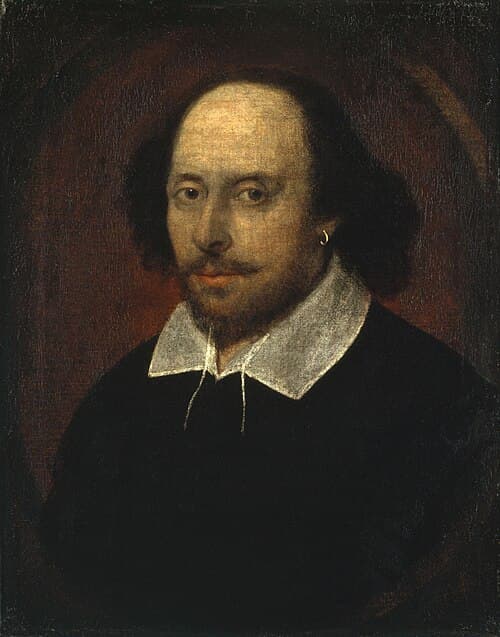
William Shakespeare
PERSON6 w/ Heinz·4 w/ Ribosome
Martha Stewart
PERSON6 w/ Heinz·4 w/ Ribosome
George W. Bush
PERSON6 w/ Heinz·4 w/ Ribosome
John Brockman
PERSON6 w/ Heinz·4 w/ Ribosome
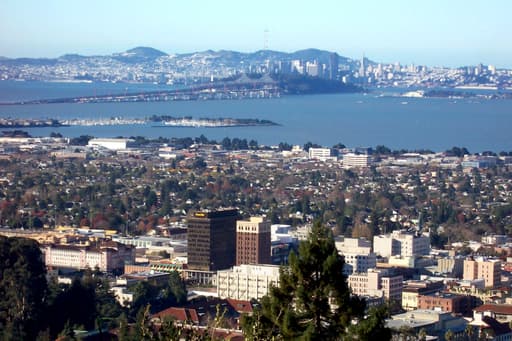
Berkeley
LOCATION5 w/ Heinz·4 w/ Ribosome
BA
Bateson
PERSON5 w/ Heinz·4 w/ Ribosome
Marc Rich
PERSON5 w/ Heinz·4 w/ Ribosome
Alan Dershowitz
PERSON5 w/ Heinz·4 w/ Ribosome
WI
Wiener
PERSON5 w/ Heinz·4 w/ Ribosome
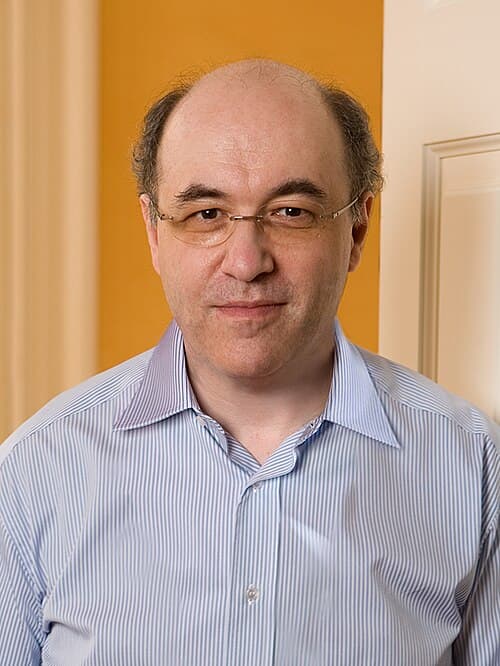
Stephen Wolfram
PERSON4 w/ Heinz·4 w/ Ribosome
UC Berkeley
ORGANIZATION4 w/ Heinz·4 w/ Ribosome
Barack Obama
PERSON4 w/ Heinz·4 w/ Ribosome
George M. Church
PERSON4 w/ Heinz·4 w/ Ribosome
Robert Winthrop
PERSON4 w/ Heinz·4 w/ Ribosome
ER
Ed Regis
PERSON4 w/ Heinz·4 w/ Ribosome
Robert Gates
PERSON4 w/ Heinz·4 w/ Ribosome
Joseph Pellegrino University
ORGANIZATION4 w/ Heinz·4 w/ Ribosome
the Black Hole Initiative
ORGANIZATION4 w/ Heinz·4 w/ Ribosome
the Department of Architecture
ORGANIZATION4 w/ Heinz·4 w/ Ribosome