Back to Network










4
Shared Docs
4
Same-Page
6 / 4
Mentions
Document Mentions (4 shared documents)
3 mentions1 same-page
Page ?Same page
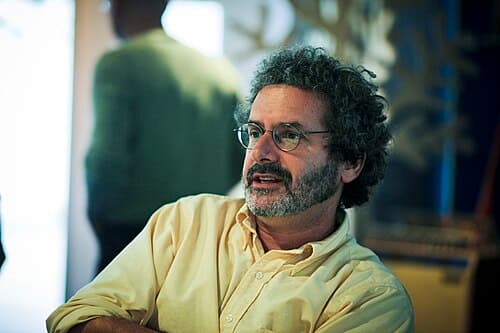
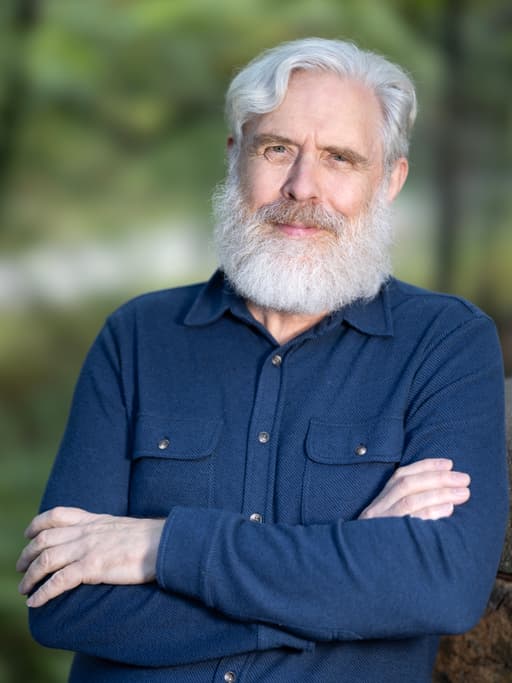
meritus, MIT; former director, MIT Computer Science Lab; and founder, chairman, and CTO of Rethink Robotics. He is the author of //esh and Machines. George M. Church is Robert Winthrop Professor of Genetics at Harvard Medical School; Professor of Health Sciences and Technology, Harvard-MIT; and co-author (with Ed
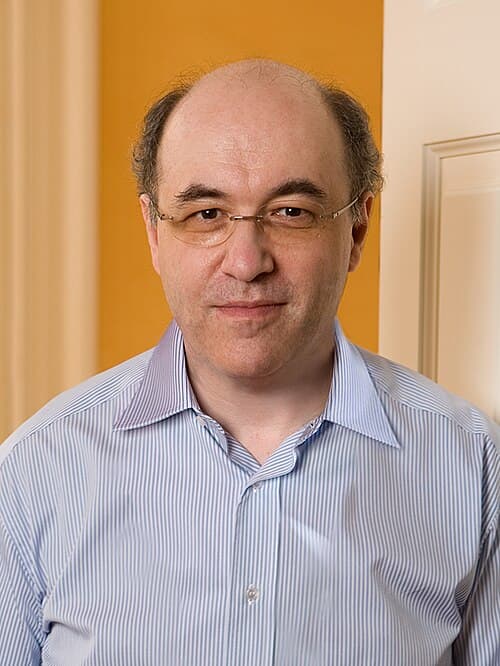
erson, David Kaiser, Neil Gershenfeld, W. Daniel Hillis, Venki Ramakrishnan, Alex “Sandy” Pentland, Hans Ulrich Obrist, Alison Gopnik, Peter Galison, George M. Church, Caroline A. Jones, Stephen Wolfram. I see The Deep Thinking Project as an ongoing dynamical emergent system, a presentation of the ideas of a commu
d systems—1* order Cybernetics— moved to the Cybernetics of observing systems—2"™ order Cybernetics—or “the Cybernetics of Cybernetics”, as coined by Heinz von Foerster, who joined the Macy conferences in the mid 1950s, and spearheaded the new movement. Cybernetics, rather than disappearing, was becoming metabolized
2 mentions1 same-page
Page ?Same page
f teaching them ethical behavior. We’re barely capable of teaching each other ethical behavior.” 165 HOUSE_OVERSIGHT_016968 THE RIGHTS OF MACHINES George M. Church George M. Church is Robert Winthrop Professor of Genetics at Harvard Medical School; Professor of Health Sciences and Technology, Harvard-MIT; and c
ge making, creativity, and the use of programming as artistic tools. The deep connections between science and art had already been noted by the late Heinz von Foerster, one of the architects of cybernetics, who worked with Norbert Wiener from the mid-1940s and in the 1960s founded the field of second-order cyberneti
Sponsored
2 mentions1 same-page
Page ?Same page
f teaching them ethical behavior. We’re barely capable of teaching each other ethical behavior.” 165 HOUSE_OVERSIGHT_016385 THE RIGHTS OF MACHINES George M. Church George M. Church is Robert Winthrop Professor of Genetics at Harvard Medical School; Professor of Health Sciences and Technology, Harvard-MIT; and c
ge making, creativity, and the use of programming as artistic tools. The deep connections between science and art had already been noted by the late Heinz von Foerster, one of the architects of cybernetics, who worked with Norbert Wiener from the mid-1940s and in the 1960s founded the field of second-order cyberneti
Sponsored
Mutual Connections (688)
Entities connected to both George M. Church and Heinz von Foerster
John Brockman
PERSON11 w/ George·6 w/ Heinz
Marc Rich
PERSON11 w/ George·5 w/ Heinz
Julie K. Brown
PERSON9 w/ George·7 w/ Heinz
Martha Stewart
PERSON10 w/ George·6 w/ Heinz
Stephen Hawking
PERSON12 w/ George·4 w/ Heinz
Eric Trump
PERSON12 w/ George·4 w/ Heinz
Alan Dershowitz
PERSON10 w/ George·5 w/ Heinz
Steven Pinker
PERSON13 w/ George·2 w/ Heinz
Ghislaine Maxwell
PERSON11 w/ George·4 w/ Heinz
Frank Wilczek
PERSON10 w/ George·4 w/ Heinz
AG
Ace Greenberg
PERSON9 w/ George·4 w/ Heinz
Genetics
ORGANIZATION9 w/ George·4 w/ Heinz
Molecular Biology
ORGANIZATION9 w/ George·4 w/ Heinz
Prince Andrew
PERSON9 w/ George·4 w/ Heinz
George W. Bush
PERSON5 w/ George·6 w/ Heinz
Neil Gershenfeld
PERSON8 w/ George·2 w/ Heinz
BA
Bateson
PERSON5 w/ George·5 w/ Heinz
Lawrence Krauss
PERSON8 w/ George·2 w/ Heinz
Elon Musk
PERSON6 w/ George·4 w/ Heinz
Stephen Wolfram
PERSON6 w/ George·4 w/ Heinz