Back to Network




















8
Shared Docs
7
Same-Page
8 / 8
Mentions
Document Mentions (8 shared documents)
2 mentions1 same-page
Page ?Same page
ccount the circumstances, repercussions and transformations it is witnessing in the post-revolution phase, and the roles being played by Turkey and the Kingdom of Saudi Arabia. The entry of a new player on the scene connotes change at the level of the rules of the game and its arena, as well as the availability of conditi
has now returned to the administration, this time as the assistant secretary of defense. His new appointment makes him the Pentagon's point man for East Asia and the Pacific at a time whe 38. Jane Harman served nine terms as a congresswoman from California, stepping down in 2011 to lead the Wilson Cen
2 mentions1 same-page
Page ?Same page
gn Relations. Article 2. The Washington Post Saudia Arabia gets tough on foreign policy EFTA00678377 Nawaf Obaid October 24, 2013 -- Last week, Saudi Arabia's Foreign Ministry announced that the kingdom would not join the •. Security Council until the council "reformed so it can effectively and practical
to go, and the world is waiting, watching, and, frankly, wondering. EFTA00678388 Christopher R. Hill, former US Assistant Secretary of State for East Asia, was US Ambassador to Iraq, South Korea, Macedonia, and Poland, a US special envoy for Kosovo, a negotiator of the Dayton Peace Accords, and the c
2 mentions1 same-page
Page ?Same page
it oil to markets in south and east Asia. Saudi trade and investment are increasingly directed toward Asian markets rather than Europe or America. Saudi Arabia's turn to the east began almost a decade ago. King Abdullah bin Abdulaziz's first foreign trip after becoming king was to India and China in January
res the kingdom's pivot to the east. Long before the American pivot, Saudi Arabia has reoriented its economic and political priorities to South and East Asia. Salman arrived in Beijing on March 13 for his first visit to China. Last month, the crown prince visited Pakistan, Japan, India and the Maldives.
Sponsored
2 mentions1 same-page
Page ?Same page
Article 3. Foreign Policy Saudi Arabia Is Arming the EFTA_R1_00230053 EFTA01842748 Syrian Opposition Jonathan Schanzer February 27, 2012 -- Saudi Arabia's King Abdullah scolded Russian President Dmitry Medvedev last week for failing to coordinate with Arab states before vetoing a United Nations resol
sian development model, invented by Japan and followed, EFTA_R1_00230071 EFTA01842766 to varying degrees, by many rapid-growth countries around East Asia. The model, very generally speaking, functions like this: 1) capitalize on low wages to spark growth through exports and industrialize quickly with
2 mentions1 same-page
Page ?Same page
nuclear Iran on the Middle East by confining his analysis to Israel, the =nited States and Iran. Missing are the inevitable and serious effects as S=udi Arabia, Turkey, Egypt and other regional powers respond to the new sit=ation. Even so, Mr. Bracken's view is a powerful one. It holds little comfort for =
.S., Britain, France, Russia, China, India, Pakistan, Israel and Nor=h Korea. More will likely emerge. The author presents detailed case studies on East Asia, South Asia and the =iddle East to bolster his argument that the multipolar nuclear world is al=eady changing the military strategies of regional po
2 mentions1 same-page
Page ?Same page
United States. The second was the so-called Arab spring and what the Saudis regarded as its negative consequences throughout the Arab world. From Saudi Arabia's point of view, the relationship with the United States soured for a number of reasons. First, the Saudis felt that the announced "Asia/Pacific" reo
needed most. The once-hopeful Arab Spring has staggered into civil war and military coup. China is stepping up territorial claims in the waters off East Asia. Longtime allies in Europe and in the Persian Gulf are worried by the inconsistency of a president who came to office promising the end of the Uni
Sponsored
2 mentions1 same-page
Page ?Same page
isn't as stable as like to think." Artick 3. Foreign Policy Saudi Arabia Is Arming the Syrian thnualihm Jonathan Schanzer February 27, 2012 -- Saudi Arabia's King Abdullah scolded Russian President Dmitry Medvedev last week for failing to coordinate with Arab states before vetoing a United Nations resolu
China has adopted a form of the Asian development model, invented by Japan and followed, to varying degrees, by many rapid-growth countries around East Asia. The model, very generally speaking, functions like this: 1) capitalize on low wages to spark growth through exports and industrialize quickly with
Page HOUSE_OVERSIGHT_023462
d its allies worried that it would succeed. For a time it looked like it might. There were large demonstrations and purported antigovernment plots in Saudi Arabia's Eastern Province, which has a large population of Shiite Muslim Arabs, and in Bahrain, where Shiites are a distinct majority and Iran had claimed sov
Page: HOUSE_OVERSIGHT_023462 →Page HOUSE_OVERSIGHT_023481
ton got a number of things wrong. The authoritarian transition was not a universally applicable formula for development. It worked reasonably well in East Asia, where there were a number of figures like Lee Kwan Yew, Park Chung-hee or the Chinese Communist Party leadership, who used their autocratic powers t
Page: HOUSE_OVERSIGHT_023481 →Sponsored
Mutual Connections (636)
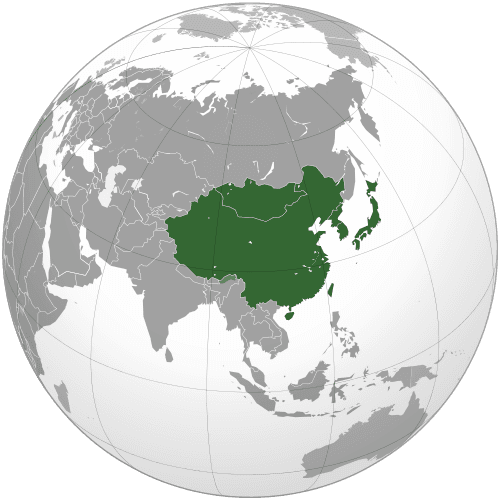
Entities connected to both Saudi Arabia and East Asia
Jeffrey Epstein
PERSON98 w/ Saudi·32 w/ East
Barack Obama
PERSON63 w/ Saudi·42 w/ East
United States
LOCATION54 w/ Saudi·34 w/ East
George W. Bush
PERSON42 w/ Saudi·38 w/ East
Bill Clinton
PERSON47 w/ Saudi·33 w/ East
Middle East
LOCATION48 w/ Saudi·26 w/ East
Marc Rich
PERSON44 w/ Saudi·27 w/ East
Lebanon
LOCATION33 w/ Saudi·30 w/ East
Bashar al-Assad
PERSON41 w/ Saudi·22 w/ East
Bloomberg L.P.
ORGANIZATION51 w/ Saudi·10 w/ East
Riyadh
LOCATION46 w/ Saudi·11 w/ East
Donald Trump
PERSON40 w/ Saudi·15 w/ East
Yemen
LOCATION41 w/ Saudi·14 w/ East
Tehran
LOCATION33 w/ Saudi·21 w/ East
Bahrain
LOCATION42 w/ Saudi·12 w/ East
Benjamin Netanyahu
PERSON31 w/ Saudi·21 w/ East
Cairo
LOCATION28 w/ Saudi·21 w/ East
Vladimir Putin
PERSON27 w/ Saudi·22 w/ East
Terje Rod-Larsen
PERSON26 w/ Saudi·22 w/ East
Department of Justice
ORGANIZATION35 w/ Saudi·12 w/ East