Back to Network















5
Shared Docs
5
Same-Page
5 / 5
Mentions
Document Mentions (5 shared documents)
2 mentions1 same-page
Page ?Same page
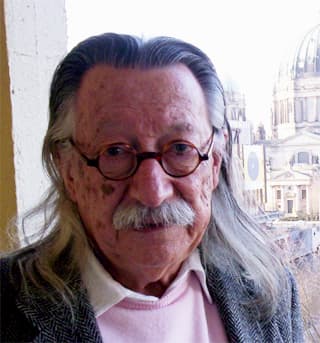
d on interview, rather than practical tests. Could a computer hold a conversation with me and persuade me it is intelligent? Meet Eliza. Invented by Joseph Weizenbaum of the Massachusetts Institute of Technology, and named after George Bernard Shaw’s character in Pygmalion, Eliza runs an algorithm pretending to be
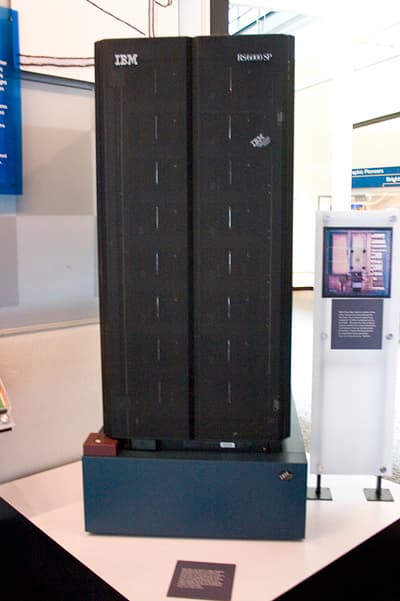
ence to trawl through this vast reservoir of knowledge and answer questions using a statistical approach. In 2011, Watson featured as a contestant on Jeopardy, the American quiz show, where it beat the two record-holding contestants — the one with the highest number of wins and the one with most consecutive
2 mentions1 same-page
Page ?Same page
owing it to detect dissent and subversion as it arises and make resistance to state power futile. Orwell’s telescreens are the prototype, and in 1976 Joseph Weizenbaum, one of the gloomiest tech prophets of all time, warned my class of graduate students not to pursue automatic speech recognition because government s
ages, it uses thousands of times more energy than a human brain (a technological limitation that, as he also notes, may be temporary). Its victory in Jeopardy! was a genuine triumph, made possible by the formulaic restrictions of the Jeopardy! rules, but in order for it to compete, even these rules had to b
2 mentions1 same-page
Page ?Same page
e; the Fair Access to Science and Technology Research Act (FASTR); and the Open Humans Foundation. In his 1976 book Computer Power and Human Reason, Joseph Weizenbaum argued that machines should not replace Homo in situations requiring respect, dignity, or care, while others (author Pamela McCorduck and computer sc
its of beam-fabrication methods at around 10-nanometer feature size. Power (energy consumption) issues are also apparent: The great Watson, winner of Jeopardy!, used 85,000 watts real time, while the human brains were using 20 watts each. To be fair, the human body needs 100 watts to operate and twenty year
Sponsored
2 mentions1 same-page
Page ?Same page
owing it to detect dissent and subversion as it arises and make resistance to state power futile. Orwell’s telescreens are the prototype, and in 1976 Joseph Weizenbaum, one of the gloomiest tech prophets of all time, warned my class of graduate students not to pursue automatic speech recognition because government s
ages, it uses thousands of times more energy than a human brain (a technological limitation that, as he also notes, may be temporary). Its victory in Jeopardy! was a genuine triumph, made possible by the formulaic restrictions of the Jeopardy! rules, but in order for it to compete, even these rules had to b
2 mentions1 same-page
Page ?Same page
e; the Fair Access to Science and Technology Research Act (FASTR); and the Open Humans Foundation. In his 1976 book Computer Power and Human Reason, Joseph Weizenbaum argued that machines should not replace Homo in situations requiring respect, dignity, or care, while others (author Pamela McCorduck and computer sc
its of beam-fabrication methods at around 10-nanometer feature size. Power (energy consumption) issues are also apparent: The great Watson, winner of Jeopardy!, used 85,000 watts real time, while the human brains were using 20 watts each. To be fair, the human body needs 100 watts to operate and twenty year
Sponsored
Mutual Connections (698)
Entities connected to both Joseph Weizenbaum and Jeopardy
Jeffrey Epstein
PERSON2 w/ Joseph·35 w/ Jeopardy
Silicon Valley
LOCATION7 w/ Joseph·21 w/ Jeopardy
Marc Rich
PERSON10 w/ Joseph·12 w/ Jeopardy
Stephen Hawking
PERSON10 w/ Joseph·9 w/ Jeopardy
Samantha Power
PERSON10 w/ Joseph·7 w/ Jeopardy
George W. Bush
PERSON6 w/ Joseph·10 w/ Jeopardy
Deep Blue
PERSON6 w/ Joseph·10 w/ Jeopardy
Prince Andrew
PERSON7 w/ Joseph·8 w/ Jeopardy
DB
Doug Band
PERSON7 w/ Joseph·7 w/ Jeopardy
Robert Gates
PERSON8 w/ Joseph·6 w/ Jeopardy
Barack Obama
PERSON5 w/ Joseph·9 w/ Jeopardy
Alan Dershowitz
PERSON7 w/ Joseph·6 w/ Jeopardy
Bill Gates
PERSON8 w/ Joseph·5 w/ Jeopardy
Cambridge University
ORGANIZATION8 w/ Joseph·5 w/ Jeopardy
LB
Leon Black
PERSON7 w/ Joseph·6 w/ Jeopardy
Ghislaine Maxwell
PERSON4 w/ Joseph·9 w/ Jeopardy
Harvey Weinstein
PERSON7 w/ Joseph·5 w/ Jeopardy
Eric Trump
PERSON5 w/ Joseph·7 w/ Jeopardy
Joe Biden
PERSON4 w/ Joseph·8 w/ Jeopardy
Julie K. Brown
PERSON5 w/ Joseph·7 w/ Jeopardy