Back to Network

















5
Shared Docs
5
Same-Page
5 / 5
Mentions
Document Mentions (5 shared documents)
2 mentions1 same-page
Page ?Same page
ay whom America fought in that war! More than a quarter wrongly believed Columbus sailed to the New World after 1750. Half didn’t know whom Senator Joseph McCarthy investigated. And a third had no clue the Bill of Rights is the source of freedoms of religion and speech. Nearly a third couldn’t tell you who said
roblem is that in real life, the important questions don’t have an- swers that are clearly right or wrong. “Knowing the answer” has made school into Jeopardy. It is nice to win a game show, but important HOUSE_OVERSIGHT_023826 Knowledge-Based Education vs. Process-Based Education 87 decisions are made t
2 mentions1 same-page
Page ?Same page
eagues, including John von Neumann and Claude Shannon, who were interested in the commercialization of the new technologies. Second, computer pioneer John McCarthy disliked Wiener and refused to use Wiener’s term “Cybernetics.” McCarthy, in turn, coined the term “artificial intelligence” and became a founding fa
ages, it uses thousands of times more energy than a human brain (a technological limitation that, as he also notes, may be temporary). Its victory in Jeopardy! was a genuine triumph, made possible by the formulaic restrictions of the Jeopardy! rules, but in order for it to compete, even these rules had to b
2 mentions1 same-page
Page ?Same page
achines should not replace Homo in situations requiring respect, dignity, or care, while others (author Pamela McCorduck and computer scientists like John McCarthy and Bill Hibbard) replied that machines can be more impartial, calm, and consistent and less abusive or mischievous than people in such positions. E
its of beam-fabrication methods at around 10-nanometer feature size. Power (energy consumption) issues are also apparent: The great Watson, winner of Jeopardy!, used 85,000 watts real time, while the human brains were using 20 watts each. To be fair, the human body needs 100 watts to operate and twenty year
Sponsored
2 mentions1 same-page
Page ?Same page
eagues, including John von Neumann and Claude Shannon, who were interested in the commercialization of the new technologies. Second, computer pioneer John McCarthy disliked Wiener and refused to use Wiener’s term “Cybernetics.” McCarthy, in turn, coined the term “artificial intelligence” and became a founding fa
ages, it uses thousands of times more energy than a human brain (a technological limitation that, as he also notes, may be temporary). Its victory in Jeopardy! was a genuine triumph, made possible by the formulaic restrictions of the Jeopardy! rules, but in order for it to compete, even these rules had to b
2 mentions1 same-page
Page ?Same page
achines should not replace Homo in situations requiring respect, dignity, or care, while others (author Pamela McCorduck and computer scientists like John McCarthy and Bill Hibbard) replied that machines can be more impartial, calm, and consistent and less abusive or mischievous than people in such positions. E
its of beam-fabrication methods at around 10-nanometer feature size. Power (energy consumption) issues are also apparent: The great Watson, winner of Jeopardy!, used 85,000 watts real time, while the human brains were using 20 watts each. To be fair, the human body needs 100 watts to operate and twenty year
Sponsored
Mutual Connections (727)
Entities connected to both Joseph McCarthy and Jeopardy
Jeffrey Epstein
PERSON117 w/ Joseph·35 w/ Jeopardy
Marc Rich
PERSON113 w/ Joseph·12 w/ Jeopardy
Prince Andrew
PERSON114 w/ Joseph·8 w/ Jeopardy
LB
Leon Black
PERSON112 w/ Joseph·6 w/ Jeopardy
Donald Trump
PERSON114 w/ Joseph·4 w/ Jeopardy
J. Robert Oppenheimer
PERSON106 w/ Joseph·4 w/ Jeopardy
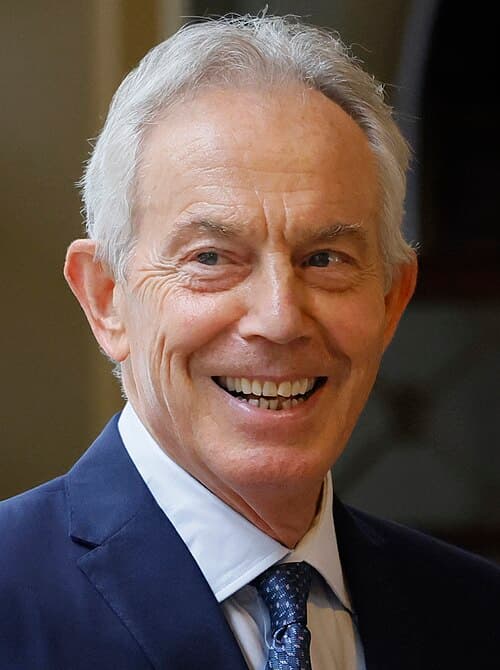
Tony Blair
PERSON106 w/ Joseph·3 w/ Jeopardy
Colorado
LOCATION101 w/ Joseph·2 w/ Jeopardy
George W. Bush
PERSON52 w/ Joseph·10 w/ Jeopardy
Julie K. Brown
PERSON18 w/ Joseph·7 w/ Jeopardy
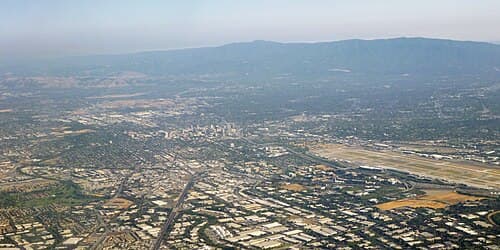
Silicon Valley
LOCATION3 w/ Joseph·21 w/ Jeopardy
Barack Obama
PERSON13 w/ Joseph·9 w/ Jeopardy
Stephen Hawking
PERSON11 w/ Joseph·9 w/ Jeopardy
Joe Biden
PERSON11 w/ Joseph·8 w/ Jeopardy
Harvey Weinstein
PERSON12 w/ Joseph·5 w/ Jeopardy
Eric Trump
PERSON10 w/ Joseph·7 w/ Jeopardy
Marvin Minsky
PERSON9 w/ Joseph·6 w/ Jeopardy
Alan Dershowitz
PERSON9 w/ Joseph·6 w/ Jeopardy
Bill Clinton
PERSON11 w/ Joseph·4 w/ Jeopardy
Ghislaine Maxwell
PERSON5 w/ Joseph·9 w/ Jeopardy