Back to Network















6
Shared Docs
6
Same-Page
6 / 6
Mentions
Document Mentions (6 shared documents)
2 mentions1 same-page
Page ?Same page
the diversity of the mechanisms interacting in intelligence and thought. Marvin is a co-founder of the MIT Artificial intelligence Laboratory (with John McCarthy) and the MIT Media Lab (with Nicholas Negroponte). In 1951 he built the SNARC, the first neural network simulator. His other inventions include me
n of Minsky's 1981 paper — "Music, Mind, and Meaning" — that sits atop a substantial multimedia database: video clips, audio, texts and pictures of Marvin's musical improvisations, compositions, discussions with other musicians about ideas, relationships with music, gossip and shop talk about music. •
2 mentions1 same-page
Page ?Same page
w to represent, organize, and use much of commonsense knowledge, let alone build a machine that could learn all of that automatically on its own. As John McCarthy noted long ago: "in order for a program to be capable of learning something, it must first be able to represent that knowledge." There arc very few
9024857 LENGTH: 7274 words HEADLINE: The St. Thomas common sense symposium: designing architectures for human-level intelligence. BYLINE: Minsky, Marvin; Singh, Push; Stomas, Aaron BODY: To build a machine that has "common sense" was once a principal goal in the field of artificial intelligence. Bu
2 mentions1 same-page
Page ?Same page
w to represent, organize, and use much of commonsense knowledge, let alone build a machine that could learn all of that automatically on its own. As John McCarthy noted long ago: "in order for a program to be capable of learning something, it must first be able to represent that knowledge? There are very few
9024857 LENGTH: 7274 words HEADLINE: The St. Thomas common sense symposium: designing architectures for human-level intelligence. BYLINE: Minsky, Marvin; Singh, Push; Sloman, Aaron BODY: To build a machine that has 'common sense" was once a principal goal in the field of artificial intelligence. Bu
Sponsored
2 mentions1 same-page
Page ?Same page
eagues, including John von Neumann and Claude Shannon, who were interested in the commercialization of the new technologies. Second, computer pioneer John McCarthy disliked Wiener and refused to use Wiener’s term “Cybernetics.” McCarthy, in turn, coined the term “artificial intelligence” and became a founding fa
visiting Marvin Minsky, one of the original AI pioneers, and asked him about Dan. “He’s our best current philosopher—the next Bertrand Russell,” said Marvin, adding that unlike traditional philosophers, Dan was a student of neuroscience, linguistics, artificial intelligence, computer science, and psycholo
2 mentions1 same-page
Page ?Same page
eagues, including John von Neumann and Claude Shannon, who were interested in the commercialization of the new technologies. Second, computer pioneer John McCarthy disliked Wiener and refused to use Wiener’s term “Cybernetics.” McCarthy, in turn, coined the term “artificial intelligence” and became a founding fa
visiting Marvin Minsky, one of the original AI pioneers, and asked him about Dan. “He’s our best current philosopher—the next Bertrand Russell,” said Marvin, adding that unlike traditional philosophers, Dan was a student of neuroscience, linguistics, artificial intelligence, computer science, and psycholo
2 mentions1 same-page
Page ?Same page
w to represent, organize, and use much of commonsense knowledge, let alone build a machine that could learn all of that automatically on its own. As John McCarthy noted long ago: "in order for a program to be capable of learning something, it must first be able to represent that knowledge." There are very few
9024857 LENGTH: 7274 words HEADLINE: The St. Thomas common sense symposium: designing architectures for human-level intelligence. BYLINE: Minsky, Marvin; Singh, Push; Sloman, Aaron BODY: To build a machine that has "common sense" was once a principal goal in the field of artificial intelligence. Bu
Sponsored
Mutual Connections (1,000)
Entities connected to both Joseph McCarthy and Marvin
Jeffrey Epstein
PERSON117 w/ Joseph·389 w/ Marvin
Marc Rich
PERSON113 w/ Joseph·32 w/ Marvin
LB
Leon Black
PERSON112 w/ Joseph·29 w/ Marvin
Marvin Minsky
PERSON9 w/ Joseph·127 w/ Marvin
Prince Andrew
PERSON114 w/ Joseph·20 w/ Marvin
Donald Trump
PERSON114 w/ Joseph·17 w/ Marvin
MW
Martin Weinberg
PERSON102 w/ Joseph·15 w/ Marvin
Bear Stearns
ORGANIZATION103 w/ Joseph·10 w/ Marvin
Alexander Acosta
PERSON107 w/ Joseph·5 w/ Marvin
Steve Bannon
PERSON107 w/ Joseph·4 w/ Marvin
J. Robert Oppenheimer
PERSON106 w/ Joseph·4 w/ Marvin
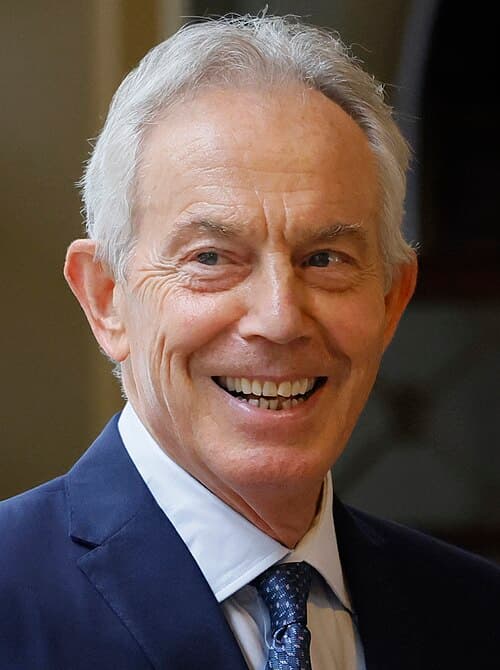
Tony Blair
PERSON106 w/ Joseph·4 w/ Marvin
Michael Cohen
PERSON105 w/ Joseph·4 w/ Marvin
Jared Kushner
PERSON105 w/ Joseph·3 w/ Marvin
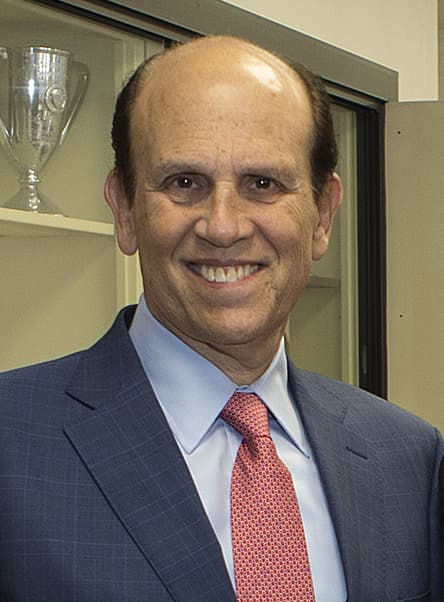
Michael Milken
PERSON104 w/ Joseph·3 w/ Marvin
William Barr
PERSON101 w/ Joseph·3 w/ Marvin
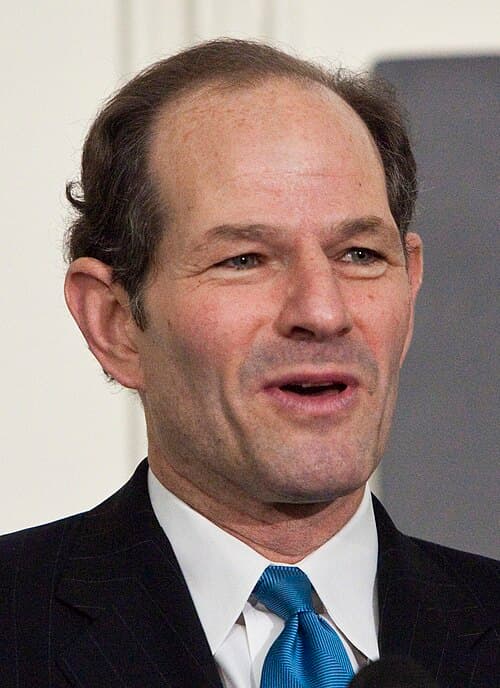
Eliot Spitzer
PERSON101 w/ Joseph·2 w/ Marvin
Martin Nowak
PERSON3 w/ Joseph·71 w/ Marvin
George W. Bush
PERSON52 w/ Joseph·15 w/ Marvin
Stephen Hawking
PERSON11 w/ Joseph·51 w/ Marvin