Back to Network


















4
Shared Docs
4
Same-Page
4 / 6
Mentions
Document Mentions (4 shared documents)
3 mentions1 same-page
Page ?Same page
eagues, including John von Neumann and Claude Shannon, who were interested in the commercialization of the new technologies. Second, computer pioneer John McCarthy disliked Wiener and refused to use Wiener’s term “Cybernetics.” McCarthy, in turn, coined the term “artificial intelligence” and became a founding fa
meritus, MIT; former director, MIT Computer Science Lab; and founder, chairman, and CTO of Rethink Robotics. He is the author of //esh and Machines. George M. Church is Robert Winthrop Professor of Genetics at Harvard Medical School; Professor of Health Sciences and Technology, Harvard-MIT; and co-author (with Ed
erson, David Kaiser, Neil Gershenfeld, W. Daniel Hillis, Venki Ramakrishnan, Alex “Sandy” Pentland, Hans Ulrich Obrist, Alison Gopnik, Peter Galison, George M. Church, Caroline A. Jones, Stephen Wolfram. I see The Deep Thinking Project as an ongoing dynamical emergent system, a presentation of the ideas of a commu
3 mentions1 same-page
Page ?Same page
eagues, including John von Neumann and Claude Shannon, who were interested in the commercialization of the new technologies. Second, computer pioneer John McCarthy disliked Wiener and refused to use Wiener’s term “Cybernetics.” McCarthy, in turn, coined the term “artificial intelligence” and became a founding fa
meritus, MIT; former director, MIT Computer Science Lab; and founder, chairman, and CTO of Rethink Robotics. He is the author of //esh and Machines. George M. Church is Robert Winthrop Professor of Genetics at Harvard Medical School; Professor of Health Sciences and Technology, Harvard-MIT; and co-author (with Ed
erson, David Kaiser, Neil Gershenfeld, W. Daniel Hillis, Venki Ramakrishnan, Alex “Sandy” Pentland, Hans Ulrich Obrist, Alison Gopnik, Peter Galison, George M. Church, Caroline A. Jones, Stephen Wolfram. I see The Deep Thinking Project as an ongoing dynamical emergent system, a presentation of the ideas of a commu
2 mentions1 same-page
Page ?Same page
achines should not replace Homo in situations requiring respect, dignity, or care, while others (author Pamela McCorduck and computer scientists like John McCarthy and Bill Hibbard) replied that machines can be more impartial, calm, and consistent and less abusive or mischievous than people in such positions. E
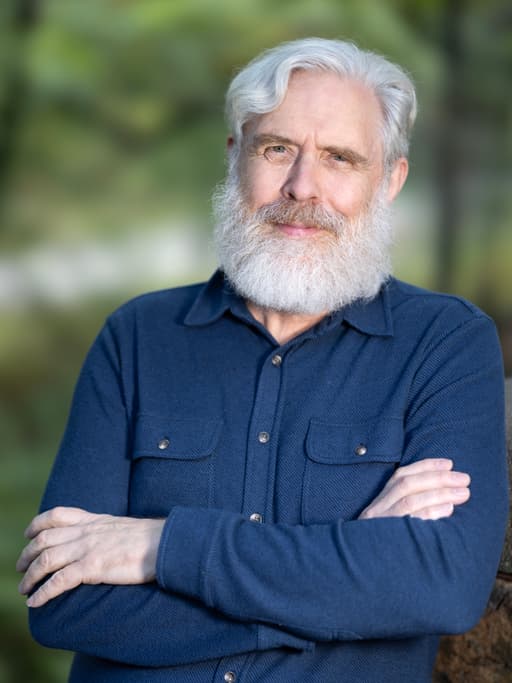
f teaching them ethical behavior. We’re barely capable of teaching each other ethical behavior.” 165 HOUSE_OVERSIGHT_016968 THE RIGHTS OF MACHINES George M. Church George M. Church is Robert Winthrop Professor of Genetics at Harvard Medical School; Professor of Health Sciences and Technology, Harvard-MIT; and c
Sponsored
2 mentions1 same-page
Page ?Same page
achines should not replace Homo in situations requiring respect, dignity, or care, while others (author Pamela McCorduck and computer scientists like John McCarthy and Bill Hibbard) replied that machines can be more impartial, calm, and consistent and less abusive or mischievous than people in such positions. E
f teaching them ethical behavior. We’re barely capable of teaching each other ethical behavior.” 165 HOUSE_OVERSIGHT_016385 THE RIGHTS OF MACHINES George M. Church George M. Church is Robert Winthrop Professor of Genetics at Harvard Medical School; Professor of Health Sciences and Technology, Harvard-MIT; and c
Sponsored
Mutual Connections (713)
Entities connected to both Joseph McCarthy and George M. Church
Jeffrey Epstein
PERSON117 w/ Joseph·14 w/ George
Marc Rich
PERSON113 w/ Joseph·11 w/ George
Prince Andrew
PERSON114 w/ Joseph·9 w/ George
Donald Trump
PERSON114 w/ Joseph·6 w/ George
LB
Leon Black
PERSON112 w/ Joseph·6 w/ George
Alexander Acosta
PERSON107 w/ Joseph·5 w/ George
Jared Kushner
PERSON105 w/ Joseph·5 w/ George
J. Robert Oppenheimer
PERSON106 w/ Joseph·4 w/ George
MW
Martin Weinberg
PERSON102 w/ Joseph·5 w/ George
Colorado
LOCATION101 w/ Joseph·5 w/ George
George W. Bush
PERSON52 w/ Joseph·5 w/ George
Julie K. Brown
PERSON18 w/ Joseph·9 w/ George
Stephen Hawking
PERSON11 w/ Joseph·12 w/ George
Eric Trump
PERSON10 w/ Joseph·12 w/ George
Alan Dershowitz
PERSON9 w/ Joseph·10 w/ George
Steven Pinker
PERSON5 w/ Joseph·13 w/ George
Frank Wilczek
PERSON7 w/ Joseph·10 w/ George
Barack Obama
PERSON13 w/ Joseph·4 w/ George
Lawrence Krauss
PERSON9 w/ Joseph·8 w/ George
Bill Clinton
PERSON11 w/ Joseph·5 w/ George