Back to Network

















4
Shared Docs
4
Same-Page
4 / 4
Mentions
Document Mentions (4 shared documents)
2 mentions1 same-page
Page ?Same page
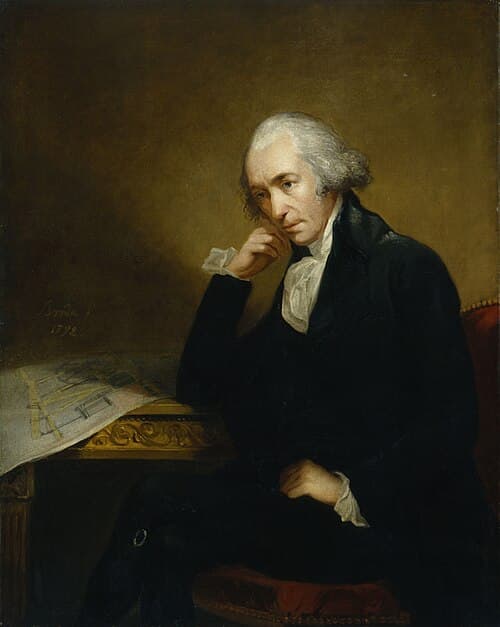
ocess of control via feedback. (“Cybernetics,” from the ancient Greek for “helmsman,” is the etymological basis of our word “governor,” which is what James Watt called his pathbreaking feedback control device that transformed the use of steam engines.) Because he was immersed in problems of control, Wiener sa
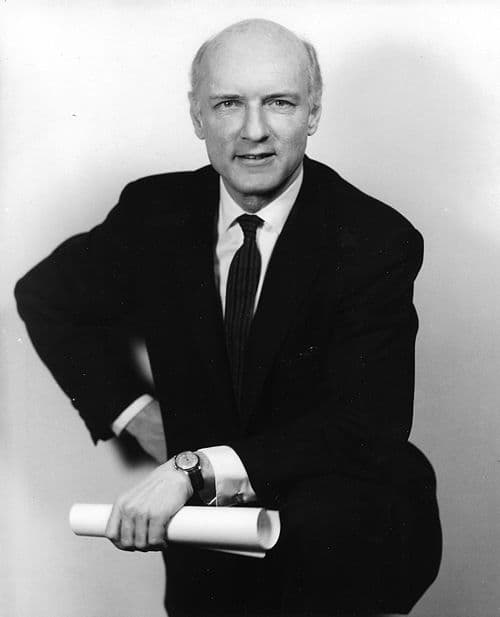
d systems—1* order Cybernetics— moved to the Cybernetics of observing systems—2"™ order Cybernetics—or “the Cybernetics of Cybernetics”, as coined by Heinz von Foerster, who joined the Macy conferences in the mid 1950s, and spearheaded the new movement. Cybernetics, rather than disappearing, was becoming metabolized
2 mentions1 same-page
Page ?Same page
ntury. 174 HOUSE_OVERSIGHT_016977 from kuber- to guber—the root of “gubernatorial” and “governor,” another term for masculine control, deployed by James Watt to describe his 19th-century device for modulating a runaway steam engine. Cybernetics thus took ideas that had long analogized people and devices an
ge making, creativity, and the use of programming as artistic tools. The deep connections between science and art had already been noted by the late Heinz von Foerster, one of the architects of cybernetics, who worked with Norbert Wiener from the mid-1940s and in the 1960s founded the field of second-order cyberneti
2 mentions1 same-page
Page ?Same page
ocess of control via feedback. (“Cybernetics,” from the ancient Greek for “helmsman,” is the etymological basis of our word “governor,” which is what James Watt called his pathbreaking feedback control device that transformed the use of steam engines.) Because he was immersed in problems of control, Wiener sa
d systems—1* order Cybernetics— moved to the Cybernetics of observing systems—2"™ order Cybernetics—or “the Cybernetics of Cybernetics”, as coined by Heinz von Foerster, who joined the Macy conferences in the mid 1950s, and spearheaded the new movement. Cybernetics, rather than disappearing, was becoming metabolized
Sponsored
2 mentions1 same-page
Page ?Same page
ntury. 174 HOUSE_OVERSIGHT_016394 from kuber- to guber—the root of “gubernatorial” and “governor,” another term for masculine control, deployed by James Watt to describe his 19th-century device for modulating a runaway steam engine. Cybernetics thus took ideas that had long analogized people and devices an
ge making, creativity, and the use of programming as artistic tools. The deep connections between science and art had already been noted by the late Heinz von Foerster, one of the architects of cybernetics, who worked with Norbert Wiener from the mid-1940s and in the 1960s founded the field of second-order cyberneti
Sponsored
Mutual Connections (688)
Entities connected to both James Watt and Heinz von Foerster
Julie K. Brown
PERSON13 w/ James·7 w/ Heinz
George W. Bush
PERSON11 w/ James·6 w/ Heinz
Marc Rich
PERSON10 w/ James·5 w/ Heinz
LB
Leon Black
PERSON11 w/ James·4 w/ Heinz
Martha Stewart
PERSON8 w/ James·6 w/ Heinz
Prince Andrew
PERSON10 w/ James·4 w/ Heinz
Ghislaine Maxwell
PERSON10 w/ James·4 w/ Heinz
Stephen Hawking
PERSON9 w/ James·4 w/ Heinz
John Brockman
PERSON7 w/ James·6 w/ Heinz
Eric Trump
PERSON9 w/ James·4 w/ Heinz
Barack Obama
PERSON8 w/ James·4 w/ Heinz
Berkeley
LOCATION7 w/ James·5 w/ Heinz
Samantha Power
PERSON8 w/ James·4 w/ Heinz
Alan Dershowitz
PERSON6 w/ James·5 w/ Heinz
Joe Biden
PERSON9 w/ James·2 w/ Heinz
Bill Gates
PERSON7 w/ James·4 w/ Heinz
Daniel Kahneman
PERSON6 w/ James·4 w/ Heinz
William Shakespeare
PERSON4 w/ James·6 w/ Heinz
DB
Doug Band
PERSON6 w/ James·4 w/ Heinz
Robert Gates
PERSON6 w/ James·4 w/ Heinz