Back to Network
















7
Shared Docs
5
Same-Page
10 / 7
Mentions
Document Mentions (7 shared documents)
3 mentions1 same-page
Page ?Same page
0818 embrace of capitalism would lead inevitably to democratic reforms, the proof has yet to emerge in any sort of pudding. Published in time for Davos, the Economist ran a special report on the vitality of state capitalism — as seen in authoritarian and quasi-authoritarian countries like China and
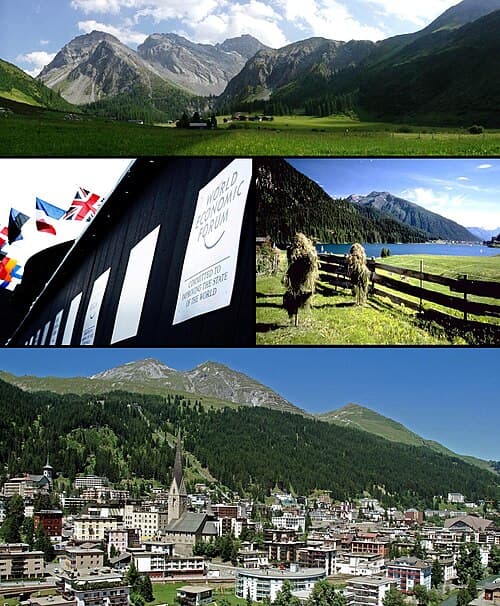
nomy EFTA00660816 Ishaan Tharoor January 24, 2012 -- Despite its rugged alpine beauty, there are few places where the world seems more flat than Davos, Switzerland. The World Economic Forum's grand annual conclave, set to kick off this Wednesday, draws myriad heads of state, global power brokers a
n the South China Sea and generally unnerving most of the region, the Obama administration has reconfirmed the central role of the United States in East Asia. The opening of a new base in Australia is a powerful symbol of America's enduring strategic presence in the region. The opening with Burma obvious
3 mentions1 same-page
Page ?Same page
in global governance. This new, more troubled mood is reflected at this year's World Economic Forum. In the 20 years before the financial crisis, Davos was almost a festival of globalization -- as political leaders from all over the world bought into the same ideas about the mutual benefits of trade
ought into the same ideas about the mutual benefits of trade and investment and wooed the same investment bankers and multinational executives. At Davos, this year, the mood is more questioning -- with numerous sessions on rethinking capitalism and on the crisis in the eurozone. The European Union is
erations, waves of democracy had swept over other regions, from southern and EFTA_R1_00234067 EFTA01845121 eastern Europe to Latin America, from East Asia to Africa. But not the Middle East. There, tyrants had closed up the political world, become owners of their countries in all but name. It was a b
3 mentions1 same-page
Page ?Same page
will be "America is back". Predictions that the US economy will grow by 3 per cent this year — added to worries about emerging markets — mean that Davos is likely to be bullish on America for the first time in years. But a revival of the US economy should not be confused with a EFTA_R1_02211214 EF
kaku Islands to the Central African Republic. Who EFTA_R1_02211217 EFTA02724390 knows — it is a thought that might even disturb a few dinners at Davos. Gideon Rachman has been the Financial Times chief foreign affairs commentator since July 2006. Artick Bloomberg Israel-Turkey Pipeline Can Fix
le. Exports in the form of liquefied natural gas would maximize Israel's options, providing access to the world's highest gas prices, currently in East Asia. Unfortunately, building a liquefaction plant on Israeli territory appears politically impossible, given concerns about environmental and physical
Sponsored
2 mentions1 same-page
Page ?Same page
ty about American imperialism. Over the past year, the World Economic Forum—the same folks who run the annual gathering in the Swiss resort town of Davos—organized a unique set of discussions around the world with dozens of international leaders, from Saudi bankers to Singaporean academics, African
from them. In the ultimate irony, for all the apprehension it has unleashed elsewhere, the pivot has not produced an equal degree of reassurance in East Asia. There the promise and rhetoric of the pivot has been measured against tangible realities, like defense cuts that leave the U.S. Air Force scrappin
2 mentions1 same-page
Page ?Same page
istaken.” This same analyst sees the American media as complicit in echoing Chinese perspectives, noting that when Xi Jinping delivered his speech in Davos in January 2017, few reporters understood that the Chinese were in the midst of a major propaganda campaign to promote globalization 2.0. He also sug
ce in Asian affairs. The government in Beijing was seen as preoccupied with domestic affairs, no longer opposed to the presence of American forces in East Asia, and anxious to work with the United States and other noncommunist countries to offset Soviet pressure against China. The Americans saw the Taiwan qu
Page HOUSE_OVERSIGHT_029736
s end," Nasr, dean of the Paul H. Nitze School of Advanced International Studies at Johns Hopkins University, said during the World Economic Forum in Davos. And he warned that unless there is a diplomatic breakthrough - or, alternatively, an attack on Iran — "you really are looking at a scenario where Ir
Page: HOUSE_OVERSIGHT_029736 →Page HOUSE_OVERSIGHT_029738
security, improve productivity, and give North Americans an edge in manufacturing and other industries that are already experiencing rising wages in East Asia. A politically acceptable immigration policy, and a push for educational innovation using new technologies and competition, could lead to a more pros
Page: HOUSE_OVERSIGHT_029738 →Sponsored
Page HOUSE_OVERSIGHT_029823
s end," Nasr, dean of the Paul H. Nitze School of Advanced International Studies at Johns Hopkins University, said during the World Economic Forum in Davos. And he warned that unless there is a diplomatic breakthrough - or, alternatively, an attack on Iran — "you really are looking at a scenario where Ir
Page: HOUSE_OVERSIGHT_029823 →Page HOUSE_OVERSIGHT_029825
security, improve productivity, and give North Americans an edge in manufacturing and other industries that are already experiencing rising wages in East Asia. A politically acceptable immigration policy, and a push for educational innovation using new technologies and competition, could lead to a more pros
Page: HOUSE_OVERSIGHT_029825 →Sponsored
Mutual Connections (428)
Entities connected to both Davos and East Asia
Jeffrey Epstein
PERSON490 w/ Davos·32 w/ East
Boris Nikolic
PERSON82 w/ Davos·7 w/ East
Barack Obama
PERSON45 w/ Davos·42 w/ East
Terje Rod-Larsen
PERSON55 w/ Davos·22 w/ East
Marc Rich
PERSON48 w/ Davos·27 w/ East
Ehud Barak
PERSON56 w/ Davos·14 w/ East
Bill Clinton
PERSON34 w/ Davos·33 w/ East
United States
LOCATION28 w/ Davos·34 w/ East
Woody Allen
PERSON54 w/ Davos·8 w/ East
George W. Bush
PERSON24 w/ Davos·38 w/ East
Donald Trump
PERSON45 w/ Davos·15 w/ East
Robert Gates
PERSON46 w/ Davos·12 w/ East
John F. Kennedy
PERSON45 w/ Davos·10 w/ East
Prince Charles
PERSON42 w/ Davos·11 w/ East
Vladimir Putin
PERSON28 w/ Davos·22 w/ East
LB
Leon Black
PERSON37 w/ Davos·9 w/ East
Lebanon
LOCATION14 w/ Davos·30 w/ East
Prince Andrew
PERSON32 w/ Davos·12 w/ East
Larry Summers
PERSON38 w/ Davos·3 w/ East
Tehran
LOCATION18 w/ Davos·21 w/ East