Back to Network











4
Shared Docs
4
Same-Page
4 / 4
Mentions
Document Mentions (4 shared documents)
2 mentions1 same-page
Page ?Same page
d to the designs and desires of other people that we are hypersensitive to signs of "agents": thinking minds like ow own. In what anthro- pologist Pascal Boyer of Washington Univer- sity in St. Louis in Missouri has described as a "hypertrophy of social cognition;' we tend to attribute random events or nat
, but I haven't seen lots of empirical evidence that you can get from there to religious beliefs," says social psychologist Ara Norenzayan of the University of British Columbia, Vancouver, in Canada. Indeed, even if more data are forthcom- ing, such models are a long way from explaining the complex systems of gods and ri
2 mentions1 same-page
Page ?Same page
to the designs and desires of other people that we are hypersensitive to signs of - agents": thinking minds like ow own. In what anthro- pologist Pascal Boyer of Washington Univer- sity in St. Louis in Missouri has described as a "hypertrophy of social cognition,- we tend to attribute random events or na
, but I haven't seen lots of empirical evidence that you can get from there to religious beliefs," says social psychologist Ara Norenzayan of the University of British Columbia, Vancouver, in Canada. Indeed, even if more data are forthcom- ing, such models are a long way from explaining the complex systems of gods and ri
2 mentions1 same-page
Page ?Same page
Blog, NEW YORK TIMES Adam Bly, Editor, SEED Magazine David Bodanis, Science Writer, London Jean Shinoda Bolen, Jungian psychologist, Mill Valley Pascal Boyer, Cognitive Scientist, Washington University, St. Louis EFTA00629472 Stewart Brand, Editor and Author, Sausalito, CA Larry Brilliant, Pandemic Res
hulman, Journalist, Watertown, Mass. Dimitri Simes, Political Scientist, Nixon Center For Peace And Freedom Edward Slingerland, Cognitive Linguist, University of British Columbia Laurence C. Smith, Easth & Atmospheric Scientist, UCLA Lee Smolin, Physicist, Perimeter Institute George Smoot, Research Astrophysicist, Nobel Pri
Sponsored
2 mentions1 same-page
Page ?Same page
d to the designs and desires of other people that we arc hypersensitive to signs of "agents": thinking minds like ow own. In what anthro- pologist Pascal Boyer of Washington Univer- sity in St. Louis in Missouri has described as a "hypertrophy of social cognition:" we tend to attribute random events or nat
a, but I haven't seen lots of empirical evidence that you can get from there to religious beliefs." says social psychologist Am Norenzayan of the University of British Columbia. Vancouver, in Canada. Indeed, even if more data are forthcom- ing, such models are a long way from explaining the complex systems of gods and ri
Sponsored
Mutual Connections (80)
Entities connected to both Pascal Boyer and University of British Columbia
Prince Charles
PERSON7 w/ Pascal·7 w/ University
Marc Rich
PERSON7 w/ Pascal·6 w/ University
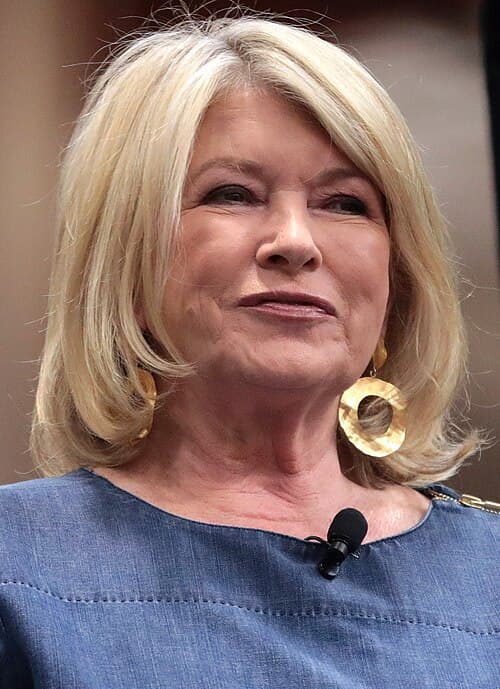
Martha Stewart
PERSON6 w/ Pascal·6 w/ University
Harvard University
ORGANIZATION5 w/ Pascal·5 w/ University
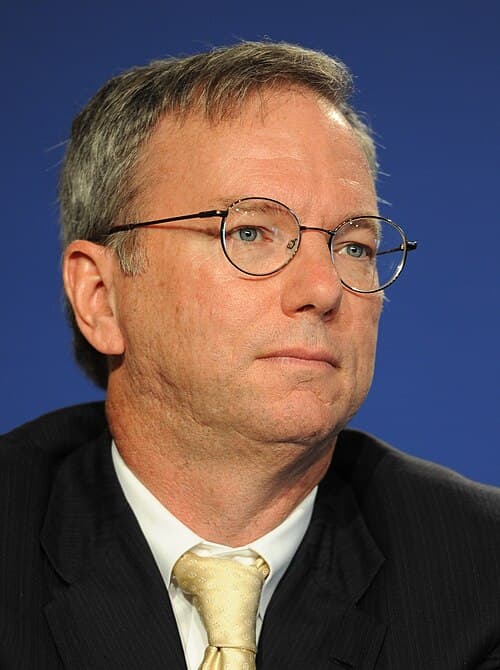
Eric Schmidt
PERSON3 w/ Pascal·6 w/ University
Justin Trudeau
PERSON5 w/ Pascal·4 w/ University
SG
Stewart Guthrie
PERSON5 w/ Pascal·3 w/ University
St. Louis
LOCATION4 w/ Pascal·4 w/ University
PB
Paul Bloom
PERSON4 w/ Pascal·4 w/ University
CW
Courtney Wild
PERSON4 w/ Pascal·4 w/ University
United Kingdom
LOCATION3 w/ Pascal·5 w/ University
Prince Andrew
PERSON4 w/ Pascal·4 w/ University
Columbia University
LOCATION4 w/ Pascal·3 w/ University
Vancouver
LOCATION3 w/ Pascal·4 w/ University
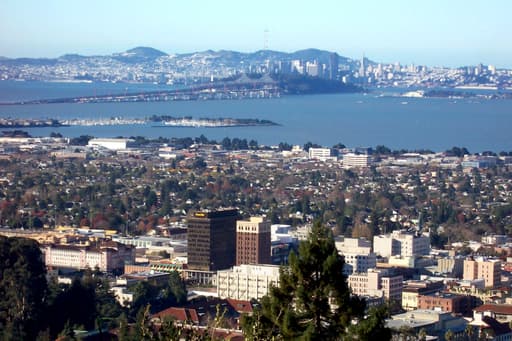
Berkeley
LOCATION4 w/ Pascal·3 w/ University
HO
Hodder
PERSON4 w/ Pascal·3 w/ University
ET
Emmy Taylor
PERSON4 w/ Pascal·3 w/ University
George W. Bush
PERSON4 w/ Pascal·3 w/ University
the University of Reading
ORGANIZATION3 w/ Pascal·3 w/ University
Stephen Hawking
PERSON3 w/ Pascal·3 w/ University