Back to Network



















4
Shared Docs
4
Same-Page
4 / 6
Mentions
Document Mentions (4 shared documents)
3 mentions1 same-page
Page ?Same page
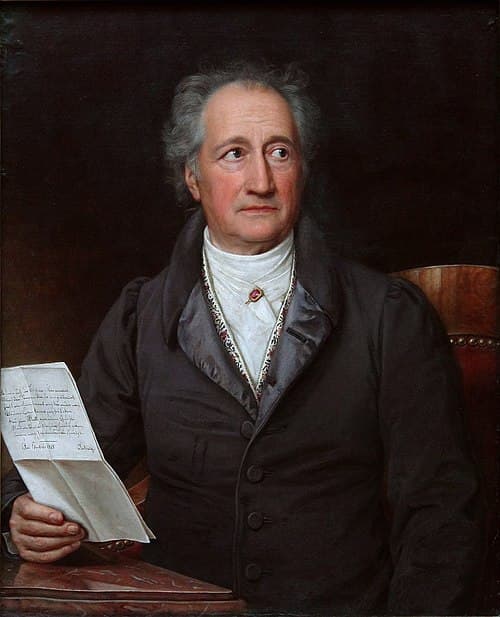
particular, sun-scorched, caterpillar-chewed clover found outside your house in an atlas. No, you aimed—if you were a genius natural philosopher like Goethe, Albinus, or Cheselden—to observe nature but then to perfect the object in question, to abstract it visually to the ideal. Take a skeleton, view it t
rid like evanescent neural impulses or bioluminescent clusters of diatoms. In Stephen Hawking’s 2012 film The Meaning of Life, the narrator describes Conway’s mathematical model as simulating “how a complex thing like the mind might come about from a basic set of rules,” revealing the overweening ambition
es. The drawings and binary figures are animated using algorithms from mathematician John Horton Conway’s 1970 Game of Life, a “cellular automaton.” Conway set up parameters for any square (“cell”) to be lit (“alive”) or dark (“dead”) in an infinite, two-dimensional grid. The rules are summarized as foll
3 mentions1 same-page
Page ?Same page
particular, sun-scorched, caterpillar-chewed clover found outside your house in an atlas. No, you aimed—if you were a genius natural philosopher like Goethe, Albinus, or Cheselden—to observe nature but then to perfect the object in question, to abstract it visually to the ideal. Take a skeleton, view it t
rid like evanescent neural impulses or bioluminescent clusters of diatoms. In Stephen Hawking’s 2012 film The Meaning of Life, the narrator describes Conway’s mathematical model as simulating “how a complex thing like the mind might come about from a basic set of rules,” revealing the overweening ambition
es. The drawings and binary figures are animated using algorithms from mathematician John Horton Conway’s 1970 Game of Life, a “cellular automaton.” Conway set up parameters for any square (“cell”) to be lit (“alive”) or dark (“dead”) in an infinite, two-dimensional grid. The rules are summarized as foll
2 mentions1 same-page
Page ?Same page
r, they are worth learning about and exploring. They stand out as trailguides to a fresh sensibility in the same way Nijinsky’s 20" century dances or Goethe’s 19" century poetry once did. We flip back and forth between real and virtual in our every day lives now, popping our head from screen to street. O
our old ideas, our current fortunes and - if we're not careful - our safety. Engineers know this idea that network design shapes the real world as “Conway’s Law.”21 Melvin Conway was an early AT&T systems designer who noticed that the organization of any connected telephone system had an impact on the c
Sponsored
2 mentions1 same-page
Page ?Same page
ese sacrifices marked sailing adventure. But they knew the rewards for areal mastery of the sea: Fame, riches, knowledge, adventure. Sloterdijk cites Goethe, who reflecting on the power of nautical life in 1787, defined the edgy advantage of that ocean-mapping caste in his age: They had perspective. “No o
s possible. That Cap’n Crunch thrill, the dream of whistling up control over the thick, helpless trunk of a network, that remains the dream. Remember Conway’s Law: The design and activity and control of a network redounds on, even determines the real world. If the whole network is, in a sense, filled with
Sponsored
Mutual Connections (468)
Entities connected to both Goethe and Conway
Jeffrey Epstein
PERSON5 w/ Goethe·57 w/ Conway
Stephen Hawking
PERSON6 w/ Goethe·42 w/ Conway
George W. Bush
PERSON8 w/ Goethe·37 w/ Conway
Prince Andrew
PERSON6 w/ Goethe·37 w/ Conway
Ghislaine Maxwell
PERSON2 w/ Goethe·37 w/ Conway
Marc Rich
PERSON7 w/ Goethe·32 w/ Conway
Department of Justice
ORGANIZATION2 w/ Goethe·36 w/ Conway
Donald Trump
PERSON4 w/ Goethe·34 w/ Conway
Michael Cohen
PERSON2 w/ Goethe·34 w/ Conway
LB
Leon Black
PERSON4 w/ Goethe·31 w/ Conway
Michael Jackson
PERSON4 w/ Goethe·27 w/ Conway
Barack Obama
PERSON4 w/ Goethe·26 w/ Conway
Julie K. Brown
PERSON6 w/ Goethe·24 w/ Conway
Virginia Giuffre
PERSON2 w/ Goethe·25 w/ Conway
John F. Kennedy
PERSON4 w/ Goethe·20 w/ Conway
Eric Trump
PERSON4 w/ Goethe·20 w/ Conway
Prince Charles
PERSON3 w/ Goethe·20 w/ Conway
Wilbur Ross
PERSON2 w/ Goethe·21 w/ Conway
Oliver Stone
PERSON2 w/ Goethe·20 w/ Conway
Samantha Power
PERSON4 w/ Goethe·17 w/ Conway