Back to Network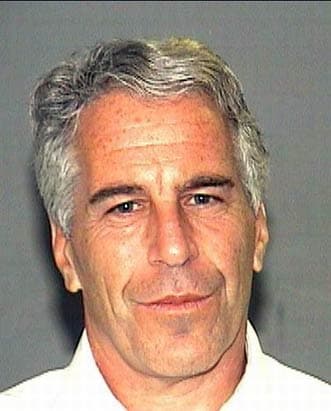








7
Shared Docs
7
Same-Page
7 / 9
Mentions
Document Mentions (7 shared documents)
3 mentions1 same-page
Page ?Same page
to spend time with physicists, the reason being that they think about the universe, 1.e. everything. And no physicist was reputed to be articulate as Feynman. I couldn’t wait to meet him. I accepted. That said, I am not a scientist, and I had never entertained the idea of getting on a stage and delivering
ct with any precision when such a development might occur.” e You're just a Luddite. It’s an odd definition of Luddite that includes Turing, Wiener, Minsky, Musk, and Gates, who rank among the most prominent contributors to technological progress in the 20th and 21st centuries.* Furthermore, the epithet
g organized by Heinz Pagels, the president of the New York Academy of Sciences. I had a seat at the table alongside the leaders of the 1“ generation, Marvin Minsky and John McCarthy, the 2"! generation, Edward Feigenbaum 13 HOUSE_OVERSIGHT_016816 and Roger Schank, and Joseph Traub, head of the National Superc
3 mentions1 same-page
Page ?Same page
to spend time with physicists, the reason being that they think about the universe, 1.e. everything. And no physicist was reputed to be articulate as Feynman. I couldn’t wait to meet him. I accepted. That said, I am not a scientist, and I had never entertained the idea of getting on a stage and delivering
ct with any precision when such a development might occur.” e You're just a Luddite. It’s an odd definition of Luddite that includes Turing, Wiener, Minsky, Musk, and Gates, who rank among the most prominent contributors to technological progress in the 20th and 21st centuries.* Furthermore, the epithet
g organized by Heinz Pagels, the president of the New York Academy of Sciences. I had a seat at the table alongside the leaders of the 1“ generation, Marvin Minsky and John McCarthy, the 2"! generation, Edward Feigenbaum 13 HOUSE_OVERSIGHT_016233 and Roger Schank, and Joseph Traub, head of the National Superc
2 mentions1 same-page
Page ?Same page
hard Feynman provide a model for us particularly because each work provides a different access point "according to the way a person has already met Feynman". Also, Feynman was a great friend of Minsky and they shared a view of the world: that iconclastic genius is commonsense and fun. Some books that p
using an exploration of his life with music as a major organizing thread. The two works that we envision are: • Musings: An interactive revision of Minsky's 1981 paper — "Music, Mind, and Meaning" — that sits atop a substantial multimedia database: video clips, audio, texts and pictures of Marvin's mu
Sponsored
2 mentions1 same-page
Page ?Same page
ivity versus 312 program equivalence problem 250 programmer 235, 238, 263 programming geniuses 271 super-programmers 266 progressive cipher 214 proof Feynman’s proof 157 indirect 244 mathematical 156 philosophical 246 Index 415 PSPACE problem 168 Pulitzer Prize 365, 367 purpose on the planet 9 puzzle tw
H PROBLEM: What Can We Do with Diophantine Equations?. Accessed April 13, 2014. http://logic.pdmi-ras. ru/~yumat/Journal/H10history/H10histe.pdf.gz. Minsky, Marvin Lee. Computation. Prentice-Hall Englewood Cliffs, 1967. http:// cba.mit.edu/events/03.11.ASE/docs/Minsky.pdf. Nagel, Ernest, and James R. Ne
2 mentions1 same-page
Page ?Same page
was the time that Hillis asked Nobel-prize winning physicist Richard Feynman to tip him off about any smart scientists Thinking Machines might hire. Feynman, pushing 60, volunteered himself and spent his summer vacations for the next ten years with Hillis and his team.1?! When it came time to test the fir
ons of a human mind,” Hillis wrote at the start of his PhD thesis a few years later. “A thinking machine.”188 What Hillis and others like his mentor Marvin Minsky, realized was that the human brain works differently than machine logic. Life, after all, is not a series of linear math problems. (Much as we might
2 mentions1 same-page
Page ?Same page
ard Feynman, at which the celebrated physicist remarked, “That is positively the dopiest idea I ever heard.” Maybe “despite” is the wrong word, since Feynman had a well-known predilection for playing with dopey ideas. In the event, he showed up on the day the company was incorporated and stayed on, for sum
the 1955 proposal thought to be the first printed usage of the phrase “artificial intelligence,” computer scientist John McCarthy and his colleagues Marvin Minsky, Nathaniel Rochester, and Claude Shannon conjectured that “every aspect of learning or any other feature of intelligence can in principle be so preci
Sponsored
2 mentions1 same-page
Page ?Same page
ard Feynman, at which the celebrated physicist remarked, “That is positively the dopiest idea I ever heard.” Maybe “despite” is the wrong word, since Feynman had a well-known predilection for playing with dopey ideas. In the event, he showed up on the day the company was incorporated and stayed on, for sum
the 1955 proposal thought to be the first printed usage of the phrase “artificial intelligence,” computer scientist John McCarthy and his colleagues Marvin Minsky, Nathaniel Rochester, and Claude Shannon conjectured that “every aspect of learning or any other feature of intelligence can in principle be so preci
Sponsored
Mutual Connections (792)
Entities connected to both Feynman and Marvin Minsky
Jeffrey Epstein
PERSON32 w/ Feynman·441 w/ Marvin
MA
Marvin
PERSON3 w/ Feynman·127 w/ Marvin
Martin Nowak
PERSON3 w/ Feynman·99 w/ Marvin
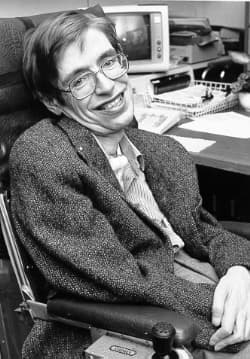
Stephen Hawking
PERSON13 w/ Feynman·85 w/ Marvin
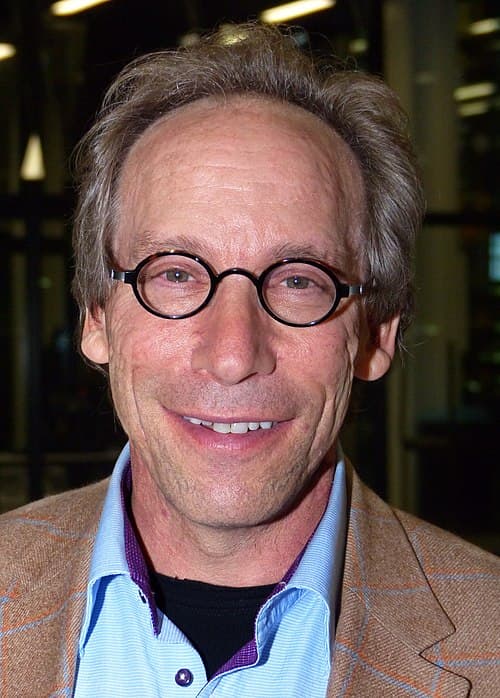
Lawrence Krauss
PERSON14 w/ Feynman·78 w/ Marvin
Alan Dershowitz
PERSON15 w/ Feynman·61 w/ Marvin
Prince Andrew
PERSON10 w/ Feynman·62 w/ Marvin
Marc Rich
PERSON11 w/ Feynman·60 w/ Marvin
Ghislaine Maxwell
PERSON10 w/ Feynman·54 w/ Marvin
LB
Leon Black
PERSON9 w/ Feynman·49 w/ Marvin
Prince Charles
PERSON8 w/ Feynman·46 w/ Marvin
Eric Trump
PERSON11 w/ Feynman·40 w/ Marvin
George W. Bush
PERSON9 w/ Feynman·39 w/ Marvin
Donald Trump
PERSON4 w/ Feynman·44 w/ Marvin
Harvey Weinstein
PERSON14 w/ Feynman·30 w/ Marvin
Michael Douglas
PERSON10 w/ Feynman·33 w/ Marvin
Robert Gates
PERSON6 w/ Feynman·34 w/ Marvin
Julie K. Brown
PERSON10 w/ Feynman·29 w/ Marvin
Joe Biden
PERSON6 w/ Feynman·33 w/ Marvin
Woody Allen
PERSON3 w/ Feynman·36 w/ Marvin